3-axis
X, Y and Z: prismatic parts, one face at a time.
Manufacturing services · Chapter C · Method 15
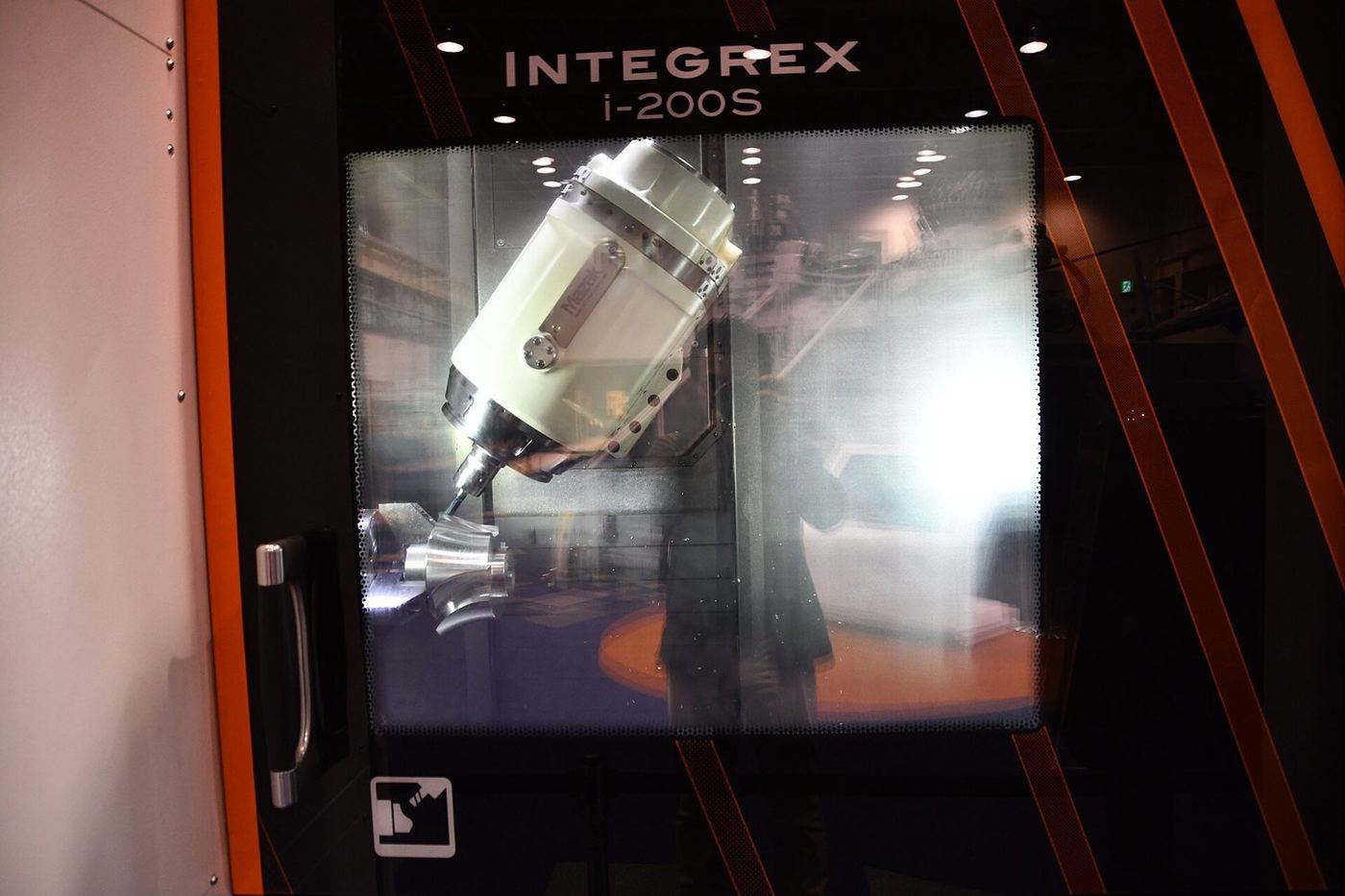
Extra rotary axes let the cutter reach more faces in one set-up. Essential for complex mould cores and sculpted master patterns.
How it works
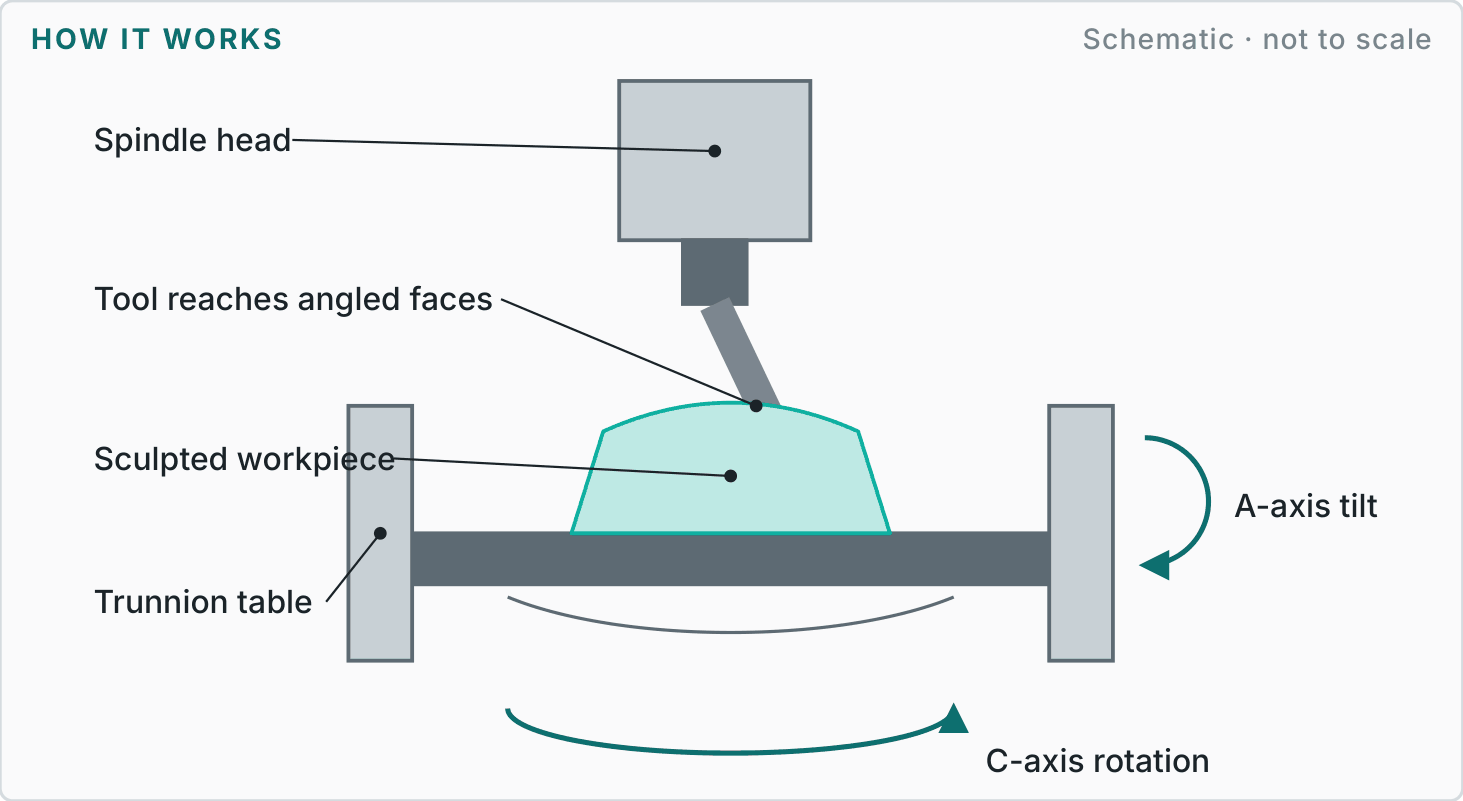
A labelled schematic of the process (not to scale), and the four steps every job goes through.
X, Y and Z: prismatic parts, one face at a time.
Adds rotation about one axis for side features.
Two rotary axes: tilted tools reach undercuts.
Fewer re-clamps mean better feature alignment.
Reference figures
Typical industry values to help you plan. We agree the figures for your part on the drawing.
| Materials | Aluminium, tool steels, stainless, titanium; tooling board and engineering plastics. |
|---|---|
| Finishes | Fine finishing passes give smooth freeform surfaces; polishing for mould tools. |
| Design guidance |
|
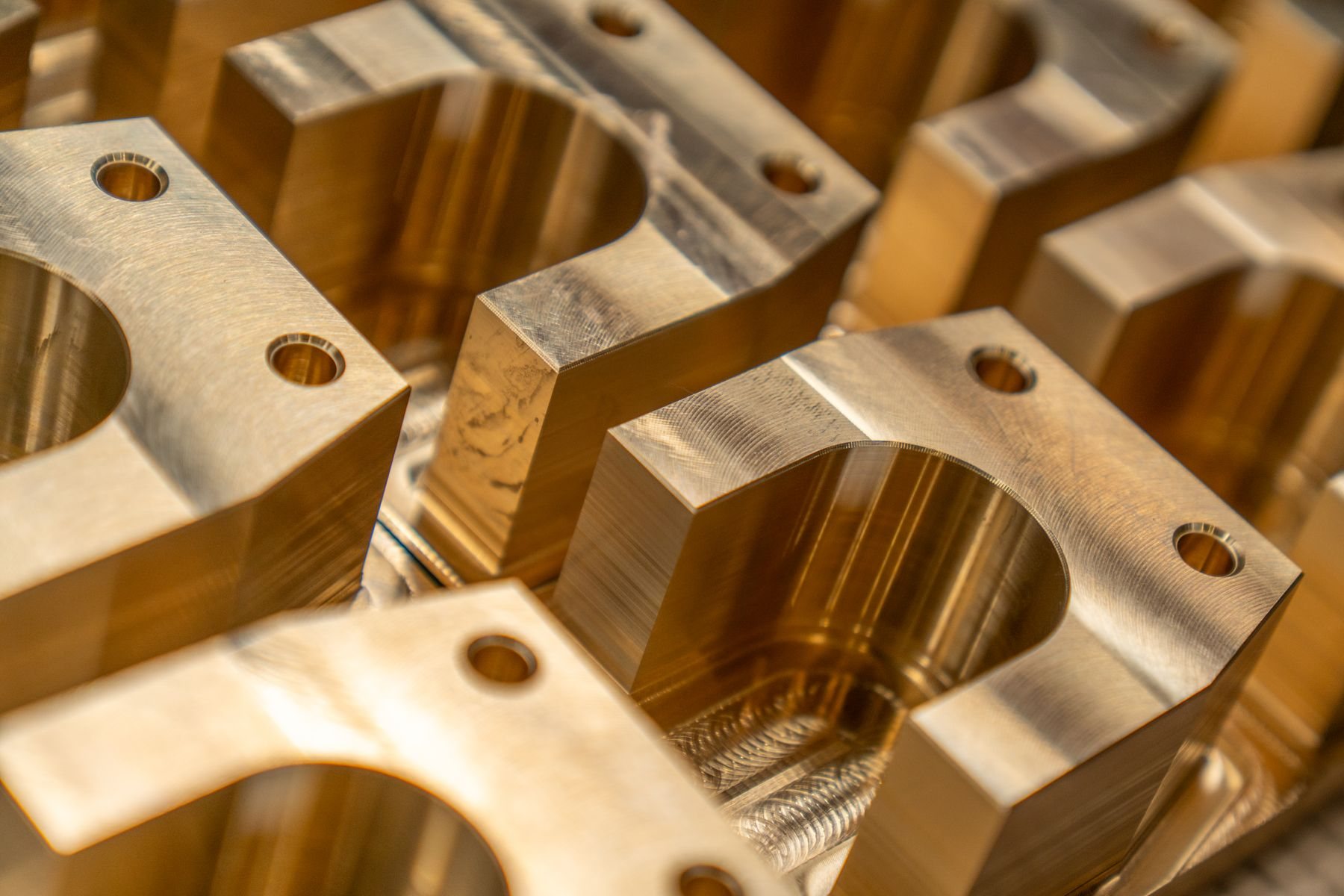
| Best suited to | Mould cores and cavities, impellers, sculpted masters and aerospace parts. |
| Watch-outs | Programming time is significant for one-offs. |
More in chapter C
Next step
Send a sketch, photo, sample or CAD file with your quantity and target date. We will recommend the most sensible route and explain the trade-offs before quoting.
Reference figures are typical published industry values for planning, not a guarantee; final tolerances, materials and finishes are agreed in writing for each project.