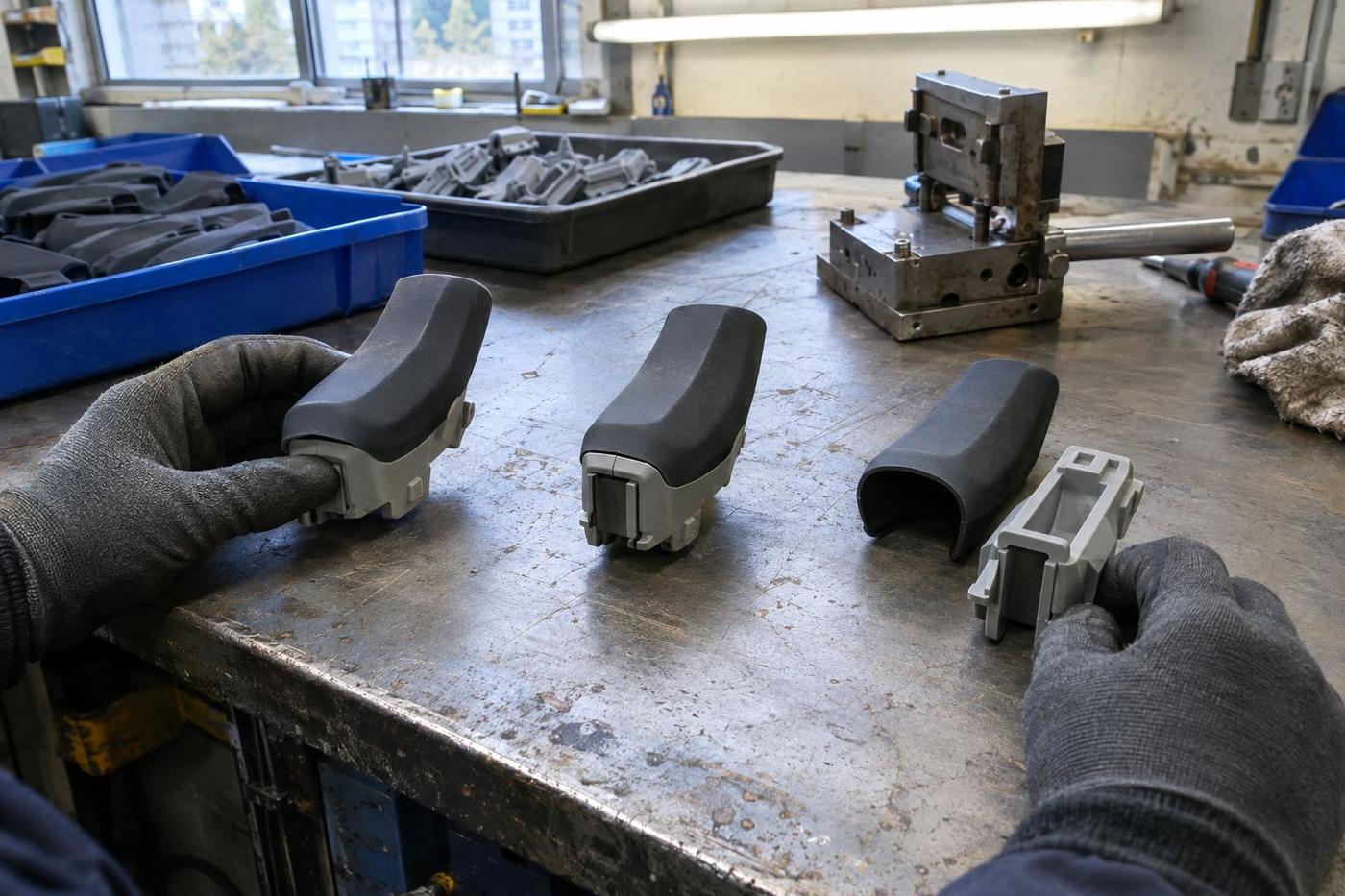
Consumer product with soft-touch grip
2K if volume is over 50k a year; overmoulding if lower. Bonded rarely — the interface shows.
Silicone manufacturing guide
Overmoulding, two-shot, and bonded assembly are all ways to end up with a silicone part attached to a rigid substrate. Each has a case; each has a price. This is the conversation we have with OEMs before the tool is drawn.
The setup
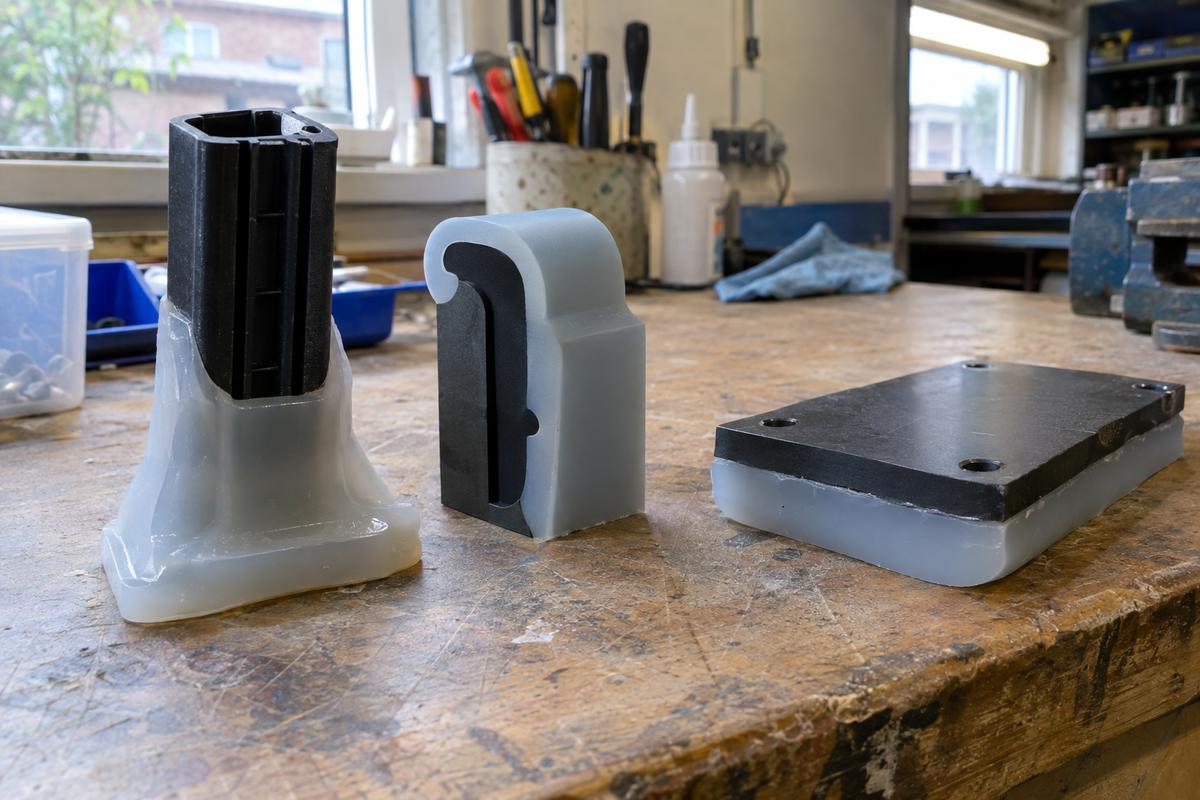
Three routes get you to a rigid substrate with silicone bonded onto it. The alternatives all produce similar-looking parts; they cost different amounts and behave differently in the field.
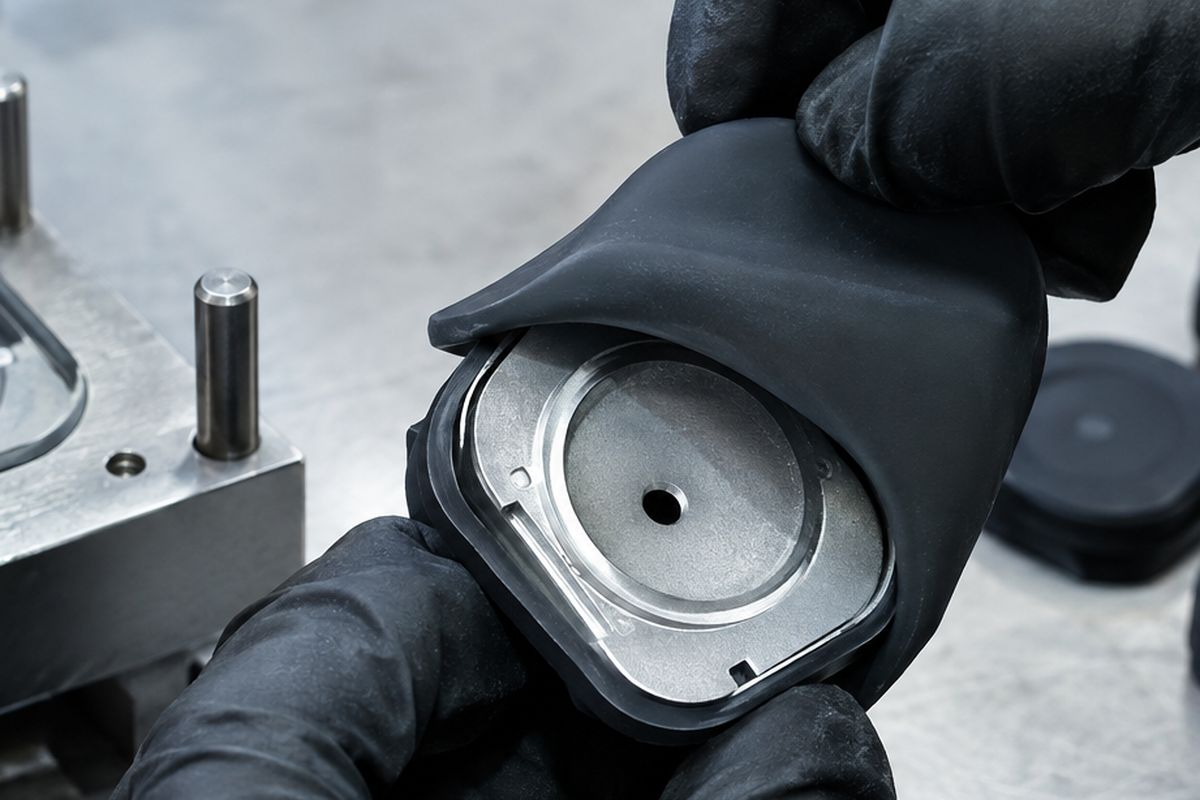
Overmoulding takes a pre-made substrate, loads it into a silicone moulding tool, and moulds silicone around it. Bond formed during silicone cure. One press cycle, one supplier, one part number.
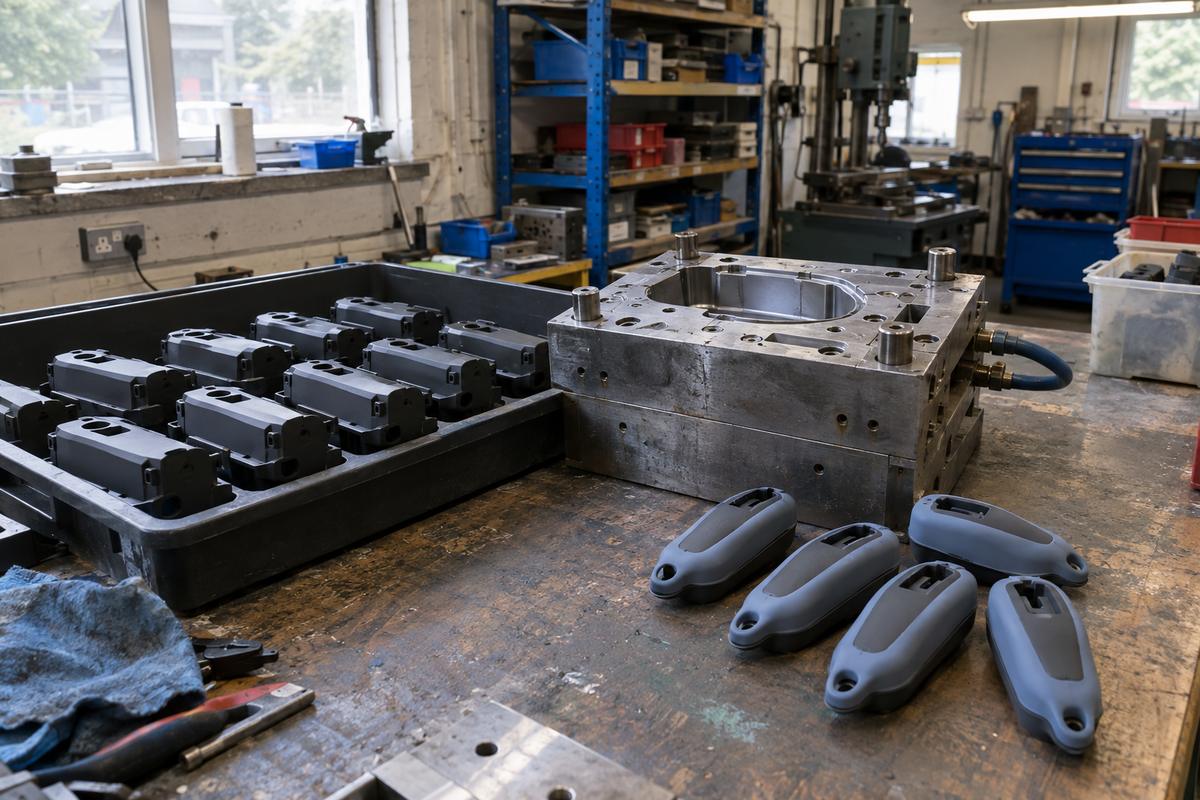
Two-shot (2K) moulding moulds both materials in the same tool on the same press in one cycle. Substrate injected first, tool rotates, silicone injected onto it. Higher tooling investment; stronger bond; higher throughput on suitable geometry.
Bonded assembly — mould the two parts separately, glue them together afterwards. Cheapest tooling investment, most process steps, weakest interface at the bond line.
The default choice
Overmoulding as a separate operation is the most common OEM route because it fits volumes and complexities where 2K would be overkill.
A few thousand to tens of thousands a year. 2K tooling investment doesn't recover; bonded assembly labour costs more over the run.
You already have a plastic housing supply. Overmoulding adds silicone onto your existing part without redesigning the substrate.
Same silicone geometry across multiple substrate variants. Standard overmoulding handles this cleanly; 2K would require multiple base tools.
You want to prove the assembly at real volume without committing to full 2K tooling investment. Overmoulding lets you validate cheaply, migrate later.
The higher-volume answer
Above roughly fifty thousand a year with a stable design, 2K cycle time savings offset the extra tooling investment.
2K bonds are formed under ideal conditions — substrate still hot, still perfectly located. On parts where bond integrity is critical, 2K wins.
If loading substrates by hand into an overmould tool is your cycle-time constraint, 2K removes that step entirely.
The right answer sometimes
Under a few thousand a year, no bond justifies moulding investment. Assemble by hand or with cell fixtures.
Some substrates — thin PCBs, sensitive electronics assemblies — can't tolerate the heat or clamping of an overmould cycle.
If the interface is designed to be serviceable — the silicone part might be replaced during the product's life — bonded assembly with a defeatable adhesive is better than a moulded-in bond.
In practice
2K if volume is over 50k a year; overmoulding if lower. Bonded rarely — the interface shows.
Overmoulding usually. 2K if the seal is critical enough that the extra bond integrity justifies the tooling investment.
Overmoulding for most; bonded assembly if the enclosure design allows a serviceable seal.
Overmoulding — tolerates modest volumes cleanly, no need for 2K sophistication.
Keep reading
Three material families that look and feel similar to a non-specialist, but behave very differently in production and in service.…
Read the guideMost silicone parts are designed by someone who's designed one before. If this is your first, or if the last one taught you…
Read the guideA moulded part isn't always a finished part. Understanding what happens between the press and the shipment helps you specify the…
Read the guideAt a glance
How overmoulding works
Swipe to see the whole diagram
Get in touch
Rough annual volume, target unit price, and any deadlines. That's enough to work out whether compression, LSR injection or something else is the right tool.
Real people, a real workshop
No call centre and no middlemen. When you contact TCI Products, you speak to the team who design, build and check your mould.
 Thomas LaneManaging Director
 George PrestonDesign & Project Manager
 Kelly BallingerHead of Partnerships
 Jim AndertonProduction Manager
 TheodoreEmployee Welfare