Spec the finish you can see, not the finish you can measure
A finish tolerance no human eye can detect adds cost with no benefit. Spec what a customer will notice.
Manufacturing guide for OEM buyers
A moulded part isn't always a finished part. Understanding what happens between the press and the shipment helps you specify the finish you actually need, and stops you paying for finish you don't.
The starting point
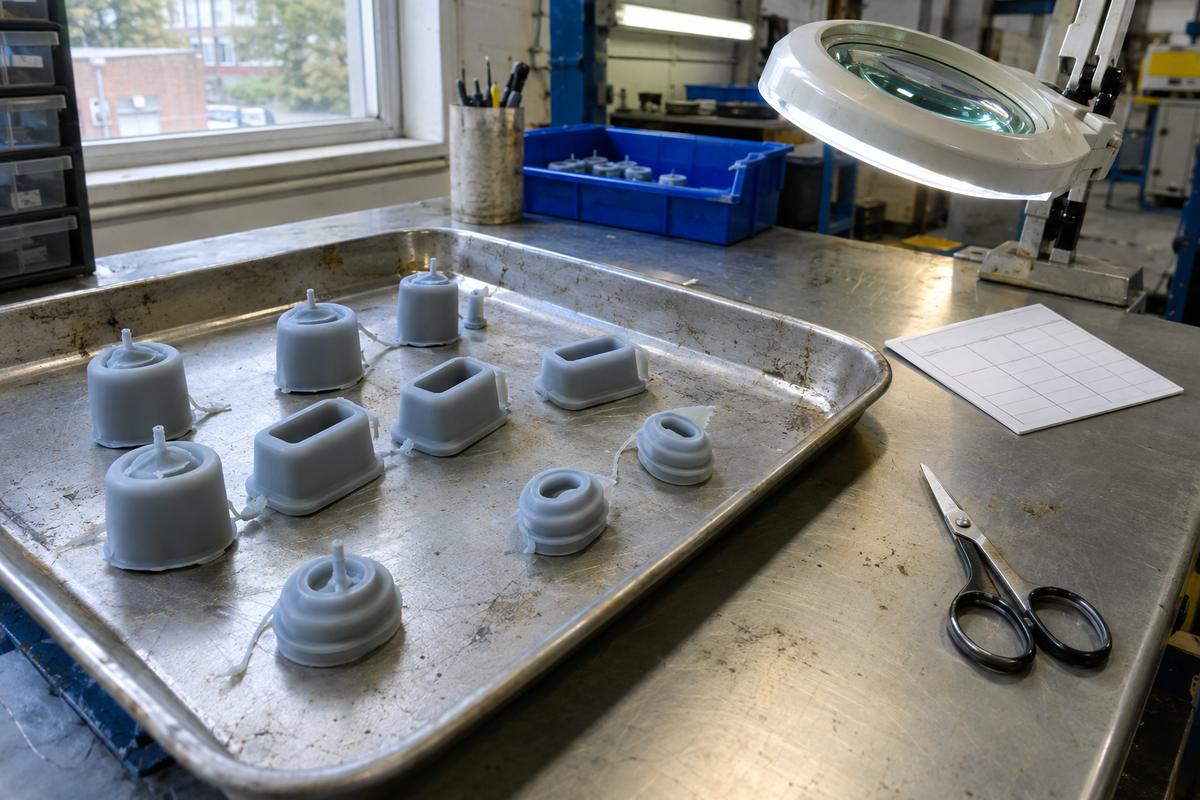
Even on a well-designed LSR tool with a cold runner, some parts come off the press with a small sprue, a gate witness, or a light flash line. On compression tools, flash is more or less always present — it's how the process works.
The question isn't whether finishing happens, it's how much, and whether it's done at the moulder or at your end. Both are valid. Getting it done at the moulder collapses the paperwork and catches defects earlier; getting it done at your end lets you inspect against your own criteria.
This guide covers the finishing operations we run in-house — cryogenic tumble deflash, hand deflash, secondary trim, printing, coating and inspection — and how to specify them without over- or under-buying.
Removing flash
There are three main deflash routes. Which one fits depends on the part, the volume, and the finish criteria.
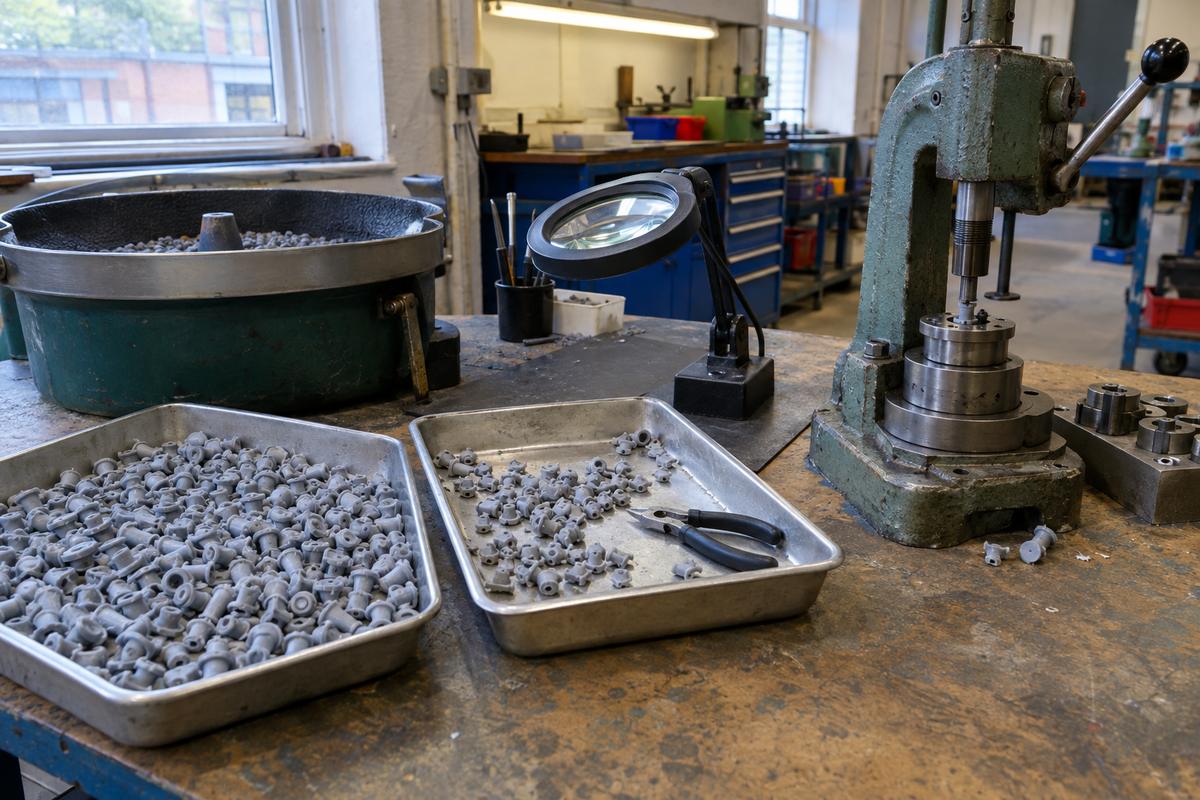
Parts are cooled below the glass transition of the flash and tumbled with plastic media. Flash breaks off cleanly; the part body is unaffected. Best for high-volume small parts with acceptable cosmetic tolerance for a slight witness.
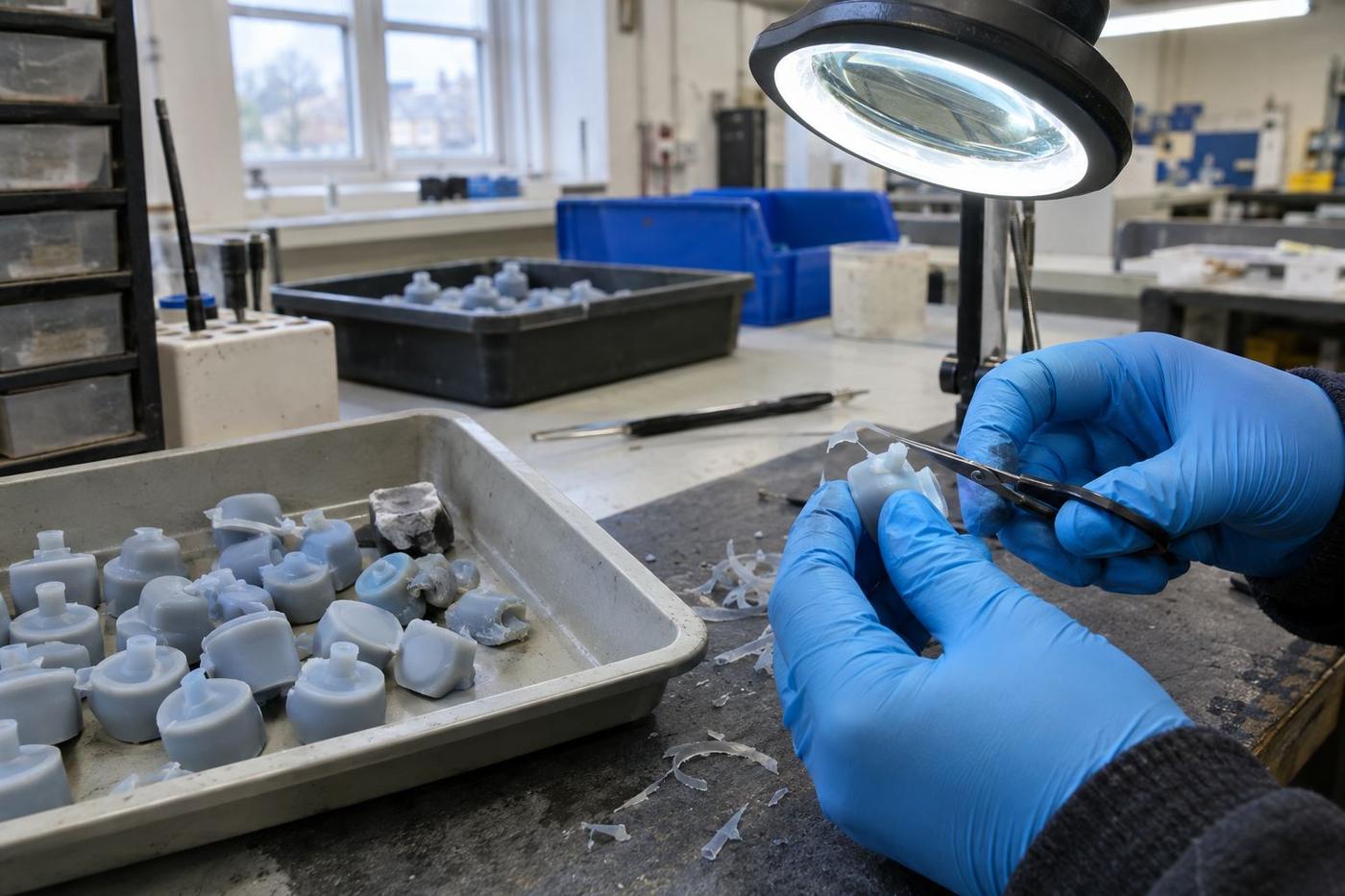
Operator trims flash with a blade or scissors under magnification. Slow but precise. Best for parts with cosmetic or sealing-critical faces where a witness line isn't acceptable.
A dedicated cutter blade or fixture removes specific flash features on a defined path. Best for parts with repetitive flash geometry — sealing lips, membrane rings — at moderate volume.
On some LSR tools, the ejector plate or a stripper mechanism removes the runner during ejection. No secondary operation needed. Best for high-volume parts designed for it from the start.
Most real programmes use two routes — cryo for bulk deflash, hand-finish on cosmetic faces. We'll spec the combination that hits your finish criteria for the least cost.
Post-mould inspection
First parts from every run compared to the signed-off golden sample. Any drift raised before the run continues.
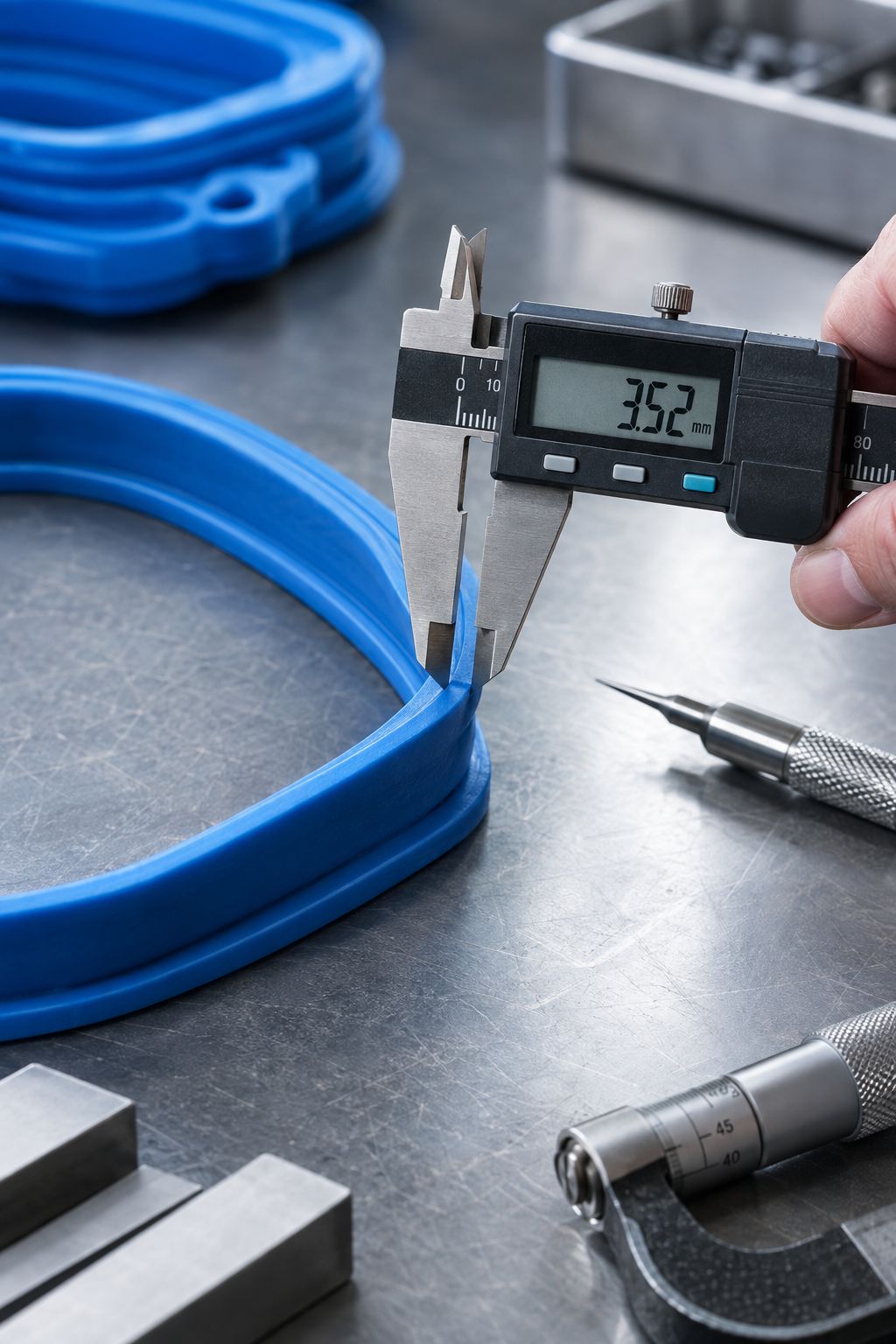
Not every dimension gets measured on every part — that would double the cost. Critical-to-function dimensions are checked on a defined sample rate.
For visible or skin-contact parts, cosmetic acceptance criteria applied under magnification. Signed off against the golden sample and any photographic reference.
Adding features after moulding
Sometimes the finish involves more than just cleaning the part up. Here's what we run in-house.
Silicone-compatible inks pad-printed onto the moulded surface. Standard for graphics, logos, and small decorative features.
Laser marks the silicone surface directly. Permanent, no ink. Best for permanent codes, serial numbers, batch traceability.
UV-cured or thermal-cured coating applied for scratch resistance, matte finish, or specific tactile properties. Applied on defined parts of the surface.
Colour matched in the material batch itself. Not a post-process, but often confused with one. Colour is locked at material spec, not applied later.
In practice
A finish tolerance no human eye can detect adds cost with no benefit. Spec what a customer will notice.
The face that's visible and the face that's hidden don't need the same finish. Spec each separately in the drawing.
A physical reference is worth more than any drawing note. Spec the finish by comparison to it.
Sealing faces are critical, cosmetic faces are cosmetic. Inspection criteria and reject rules follow that split.
Keep reading
For anything a customer will see, colour is one of the two things they judge (feel is the other). Getting the colour right is…
Read the guideYour product is real. You've made prototypes, maybe pilot runs. The design is stable and the volume forecast is starting to be…
Read the guideShore A is the number that appears on nearly every silicone drawing and is understood by almost nobody outside the rubber trade.…
Read the guideGet in touch
Rough annual volume, target unit price, and any deadlines. That's enough to work out whether compression, LSR injection or something else is the right tool.
Real people, a real workshop
No call centre and no middlemen. When you contact TCI Products, you speak to the team who design, build and check your mould.


 Thomas LaneManaging Director
 George PrestonDesign & Project Manager
 Kelly BallingerHead of Partnerships
 Jim AndertonProduction Manager
 TheodoreEmployee Welfare