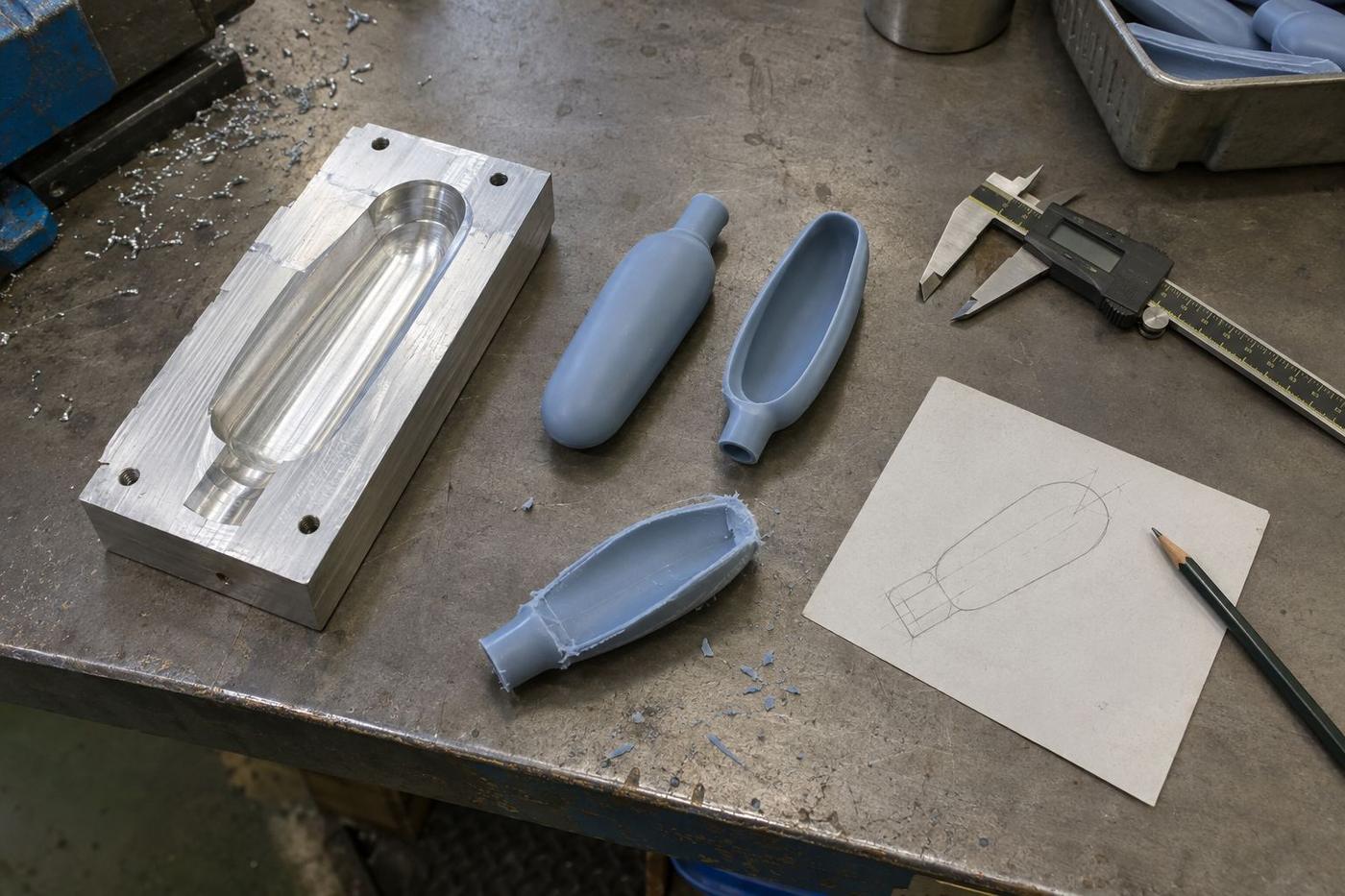
The CAD, in whatever state it's in
STEP files are ideal. A sketch with key dimensions is fine for a first conversation.
Before steel · prove the part
A part that looks right in CAD can still feel wrong in the hand. Prototype tooling gives you real parts in the real material family, cheaply enough that changing your mind is allowed.
Why bother
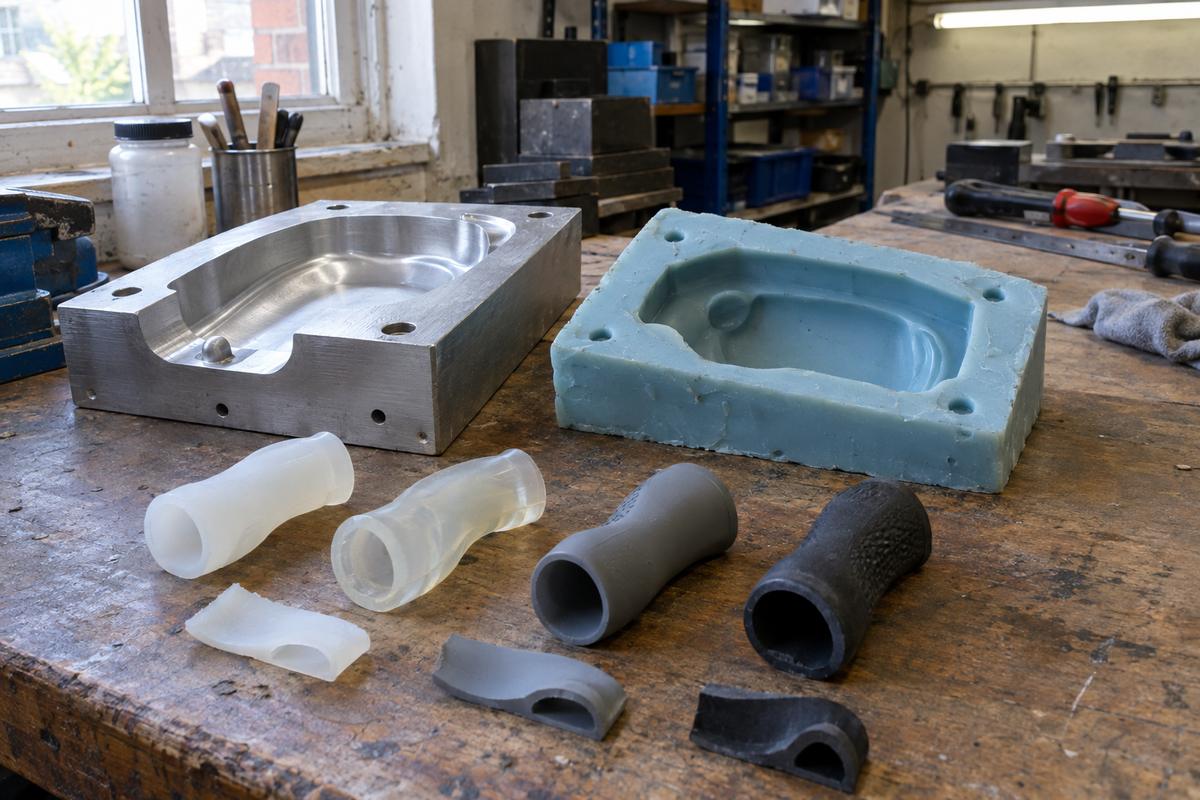
A 3D print tells you whether a part fits. It can't tell you whether a seal compresses the way you expect, whether a keypad dome clicks, or whether a strap feels cheap against a wrist. Those answers only come from the actual elastomer at the actual hardness.
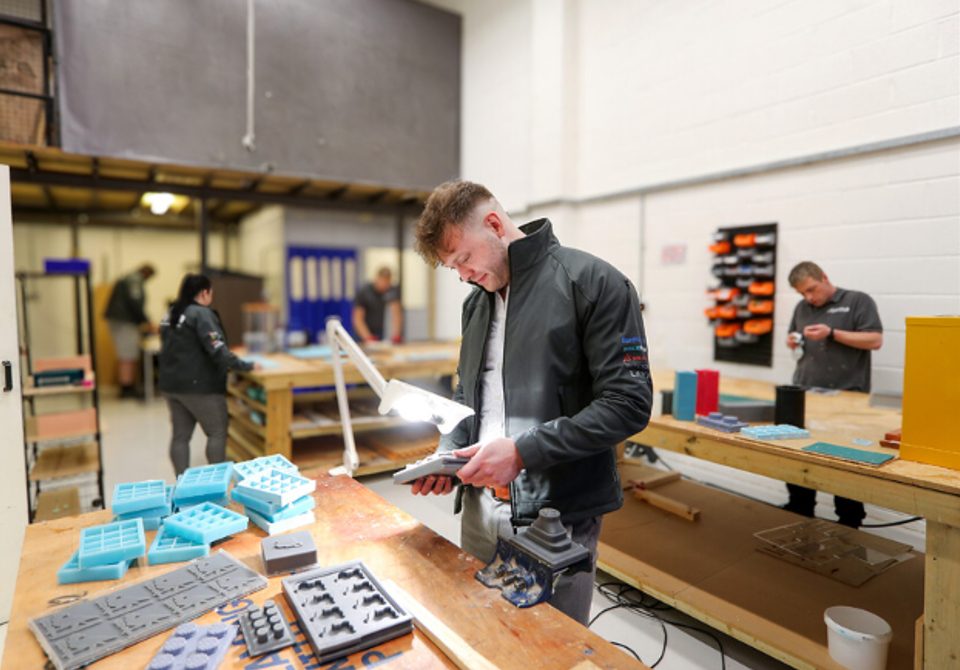
Prototype tooling sits between the print and the production tool. Depending on the part, that might be a machined aluminium tool, a simple compression tool with a single cavity, or a cast silicone tool made from a master pattern. Each is quick to make and inexpensive to throw away.
The point isn't to make lots of parts. The point is to make enough parts to test properly — drop tests, compression set checks, user panels, assembly trials — and to change the design between rounds without writing off a steel tool each time.
When the design settles, we carry what we learned straight into production tooling. Same engineer, same notes, no hand-over gap.
Three kinds of prototype tool
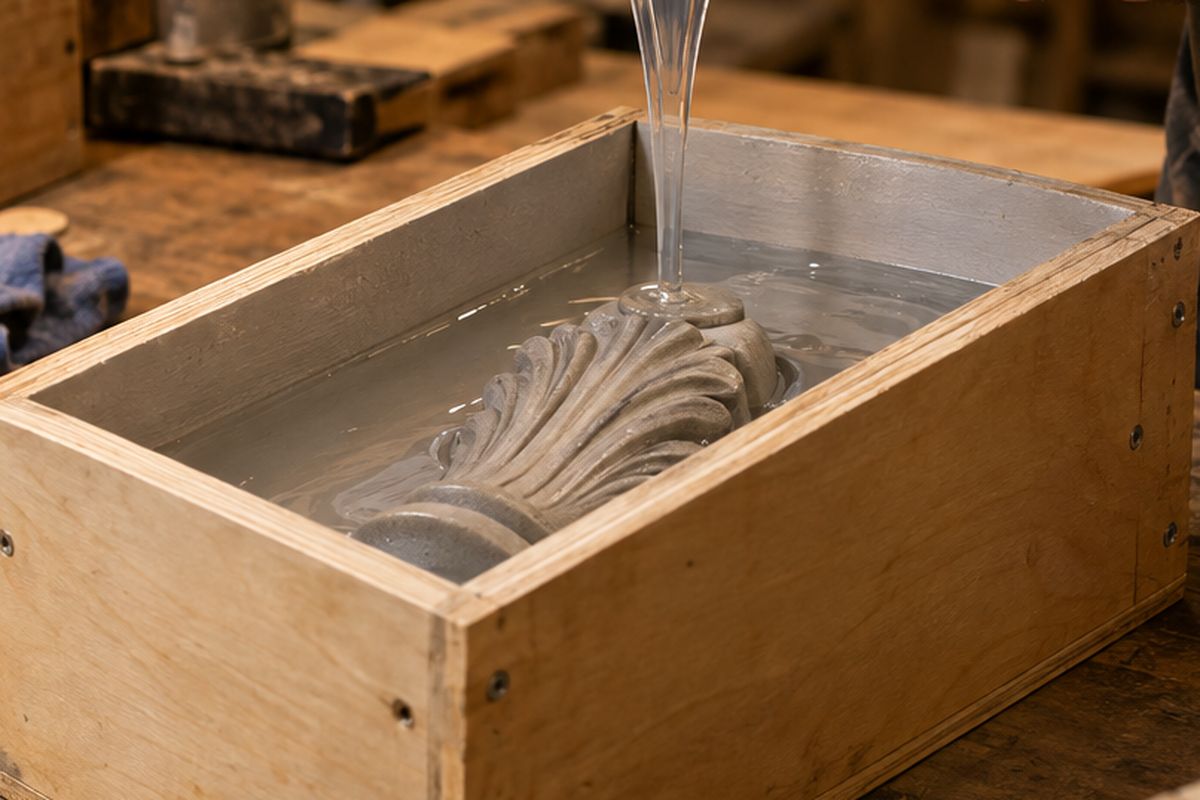
Poured around a printed or machined master. The fastest way to get a handful of parts in a castable silicone. Good for look-and-feel and early fit checks.
Machined, single or low cavity, run in our presses with production-family materials. The closest match to how the final part will behave.
A simplified version of the production tool that can supply your first customer batches while the steel tool is being made. Useful when launch dates won't wait.
How a prototype round runs
Each round has a question it's trying to answer. If we can't name the question, we're not ready to cut the tool.
Fit, feel, sealing, durability, appearance — pick the one or two things this round has to prove. That decides the tool type and the material.
Cast, machined or bridged, depending on the question. Draft, parting line and gating are designed as they would be in production, so the lessons transfer.
Parts are moulded, trimmed and checked. We record hardness, cure conditions and any moulding issues alongside the parts.
You test the parts in your product. We compare notes and decide what changes. Changes are cheap at this stage, so we encourage them.
Once the design stops moving, the prototype record becomes the brief for the production tool.
To quote it
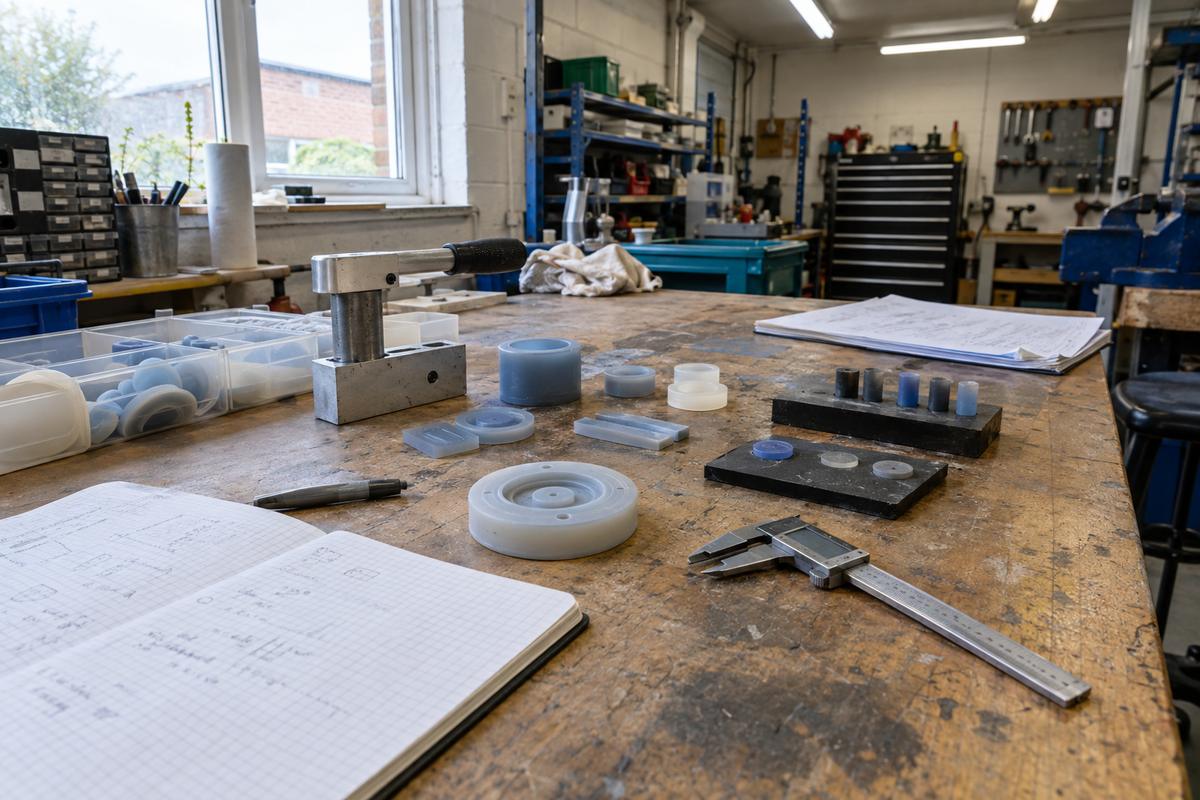
STEP files are ideal. A sketch with key dimensions is fine for a first conversation.
A fit check needs a different tool from a compression-set test. Tell us what the parts are for.
Five for a design review and a few hundred for a user trial are different jobs.
If we know the likely production route, we design the prototype so it teaches you about that route — more on that here.
Related routes
Solid silicone or rubber pre-formed, loaded into a heated steel tool, and pressed under cure. Sensible tooling cost, thousands of parts per tool, and…
Read moreFor parts that will be in production for years — components inside a device family, sealing parts on long-lived equipment, consumer parts on a…
Read moreFor volumes measured in the hundreds or low thousands per batch, released on your schedule rather than ours. Bridge tooling, dedicated compression,…
Read moreAt a glance
Which route suits your quantity
Swipe to see the whole diagram
Get in touch
Rough annual volume, target unit price, and any deadlines. That's enough to work out whether compression, LSR injection or something else is the right tool.
Real people, a real workshop
No call centre and no middlemen. When you contact TCI Products, you speak to the team who design, build and check your mould.
 Thomas LaneManaging Director
 George PrestonDesign & Project Manager
 Kelly BallingerHead of Partnerships
 Jim AndertonProduction Manager
 TheodoreEmployee Welfare