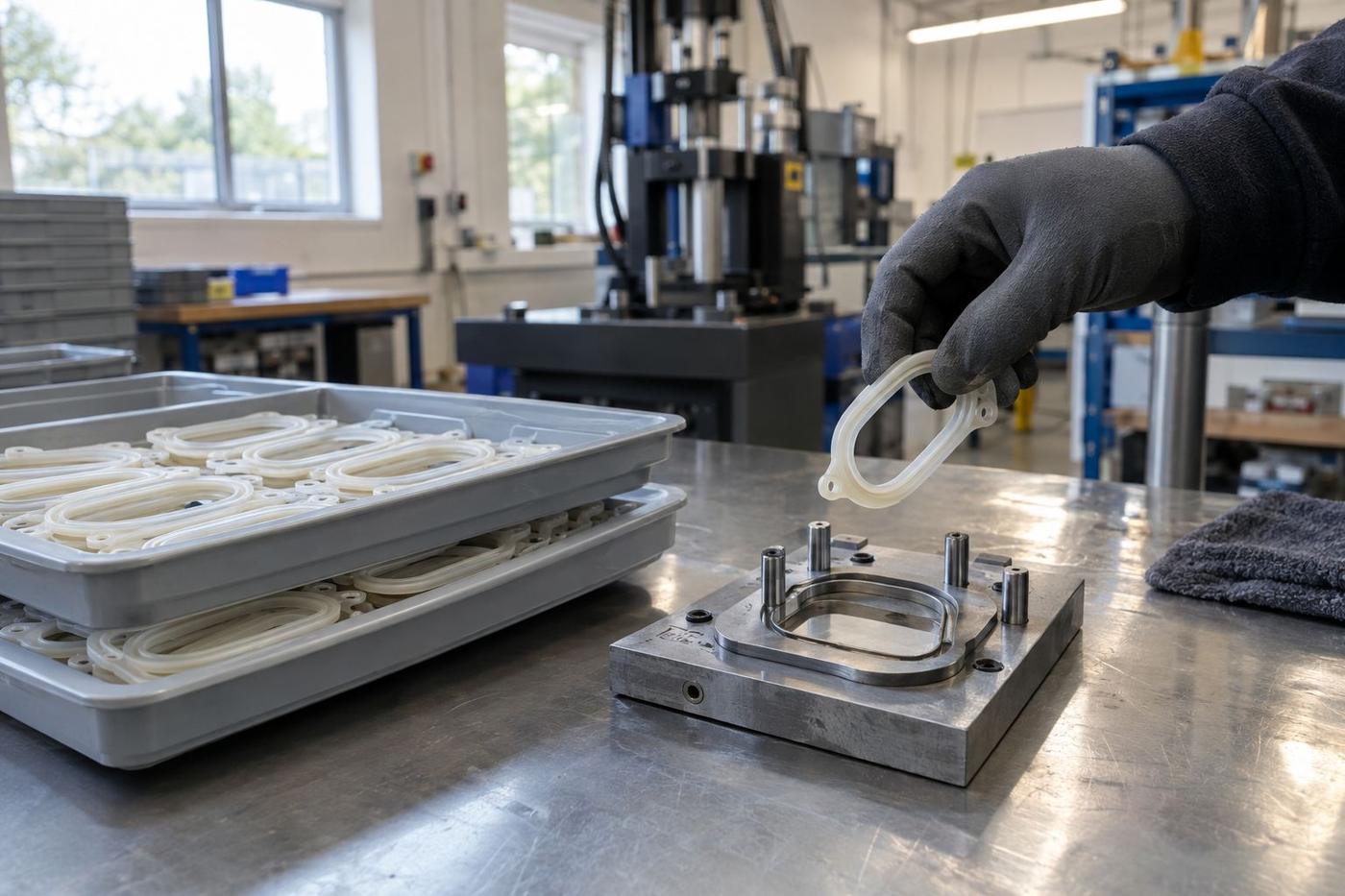
LSR injection moulding
Two-part liquid silicone metered, mixed, injected cold and cured hot. The cleanest route we have for medical, wearable and electronics parts at…
See the serviceProject record · Medical device · LSR
A sealing gasket for a housing on a device that gets held all day. Compression-moulded worked, but every part needed a hand-trim on the sealing face. At volume, that stopped scaling.
The brief
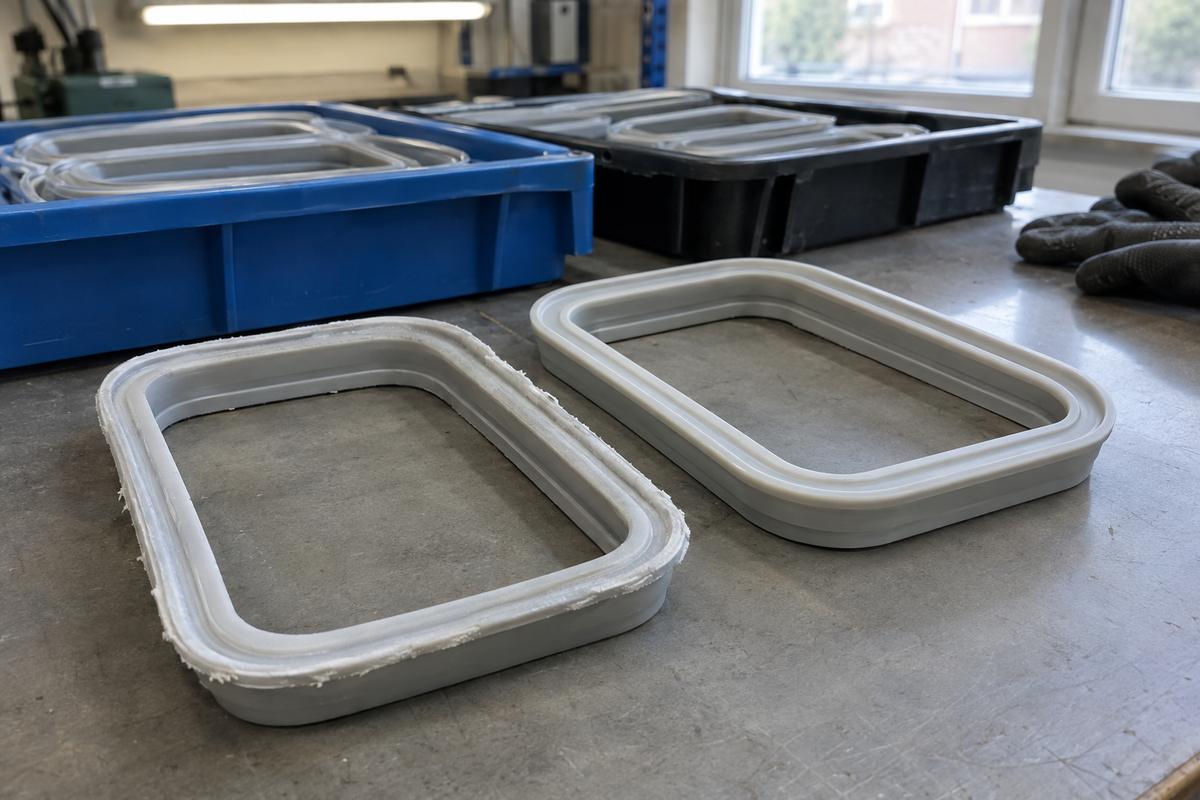
A medical device OEM produces a hand-held diagnostic device. It has a sealed enclosure with a silicone gasket around the perimeter — the gasket keeps dust and moisture out during clinical use and cleaning.
The gasket had been running on compression tooling for two years. It worked, but every part needed hand-trimming on the sealing lip because the parting line landed just at the edge of the sealing face. A skilled operator could produce good parts, but the process wasn't scaling — annual volumes had doubled, and hand-trim was becoming the bottleneck.
Cosmetic acceptance was tightening too. The device had been through a design revision that made the gasket more visible in use. What had been acceptable in year one wasn't acceptable in year three.
The problem
The compression tool had been designed with the parting line at the widest point of the gasket cross-section — the easiest place to machine. Unfortunately, that was also the sealing face. Every part came off the tool with a fine witness line on the seal, and hand-trim brought back the problem the trim was supposed to solve.
Compound the design issue with rising volume, and hand-trim capacity was the constraint on the entire programme. Adding operators was expensive and slow to train. The right answer wasn't more people — it was a tool that didn't need trim.
We proposed migrating to LSR with a cold-runner tool. The parting line would be relocated onto the hidden underside of the gasket; cold-runner design would eliminate the sprue witness; the cavity finish would be specified to leave the sealing face untouched.
What we changed
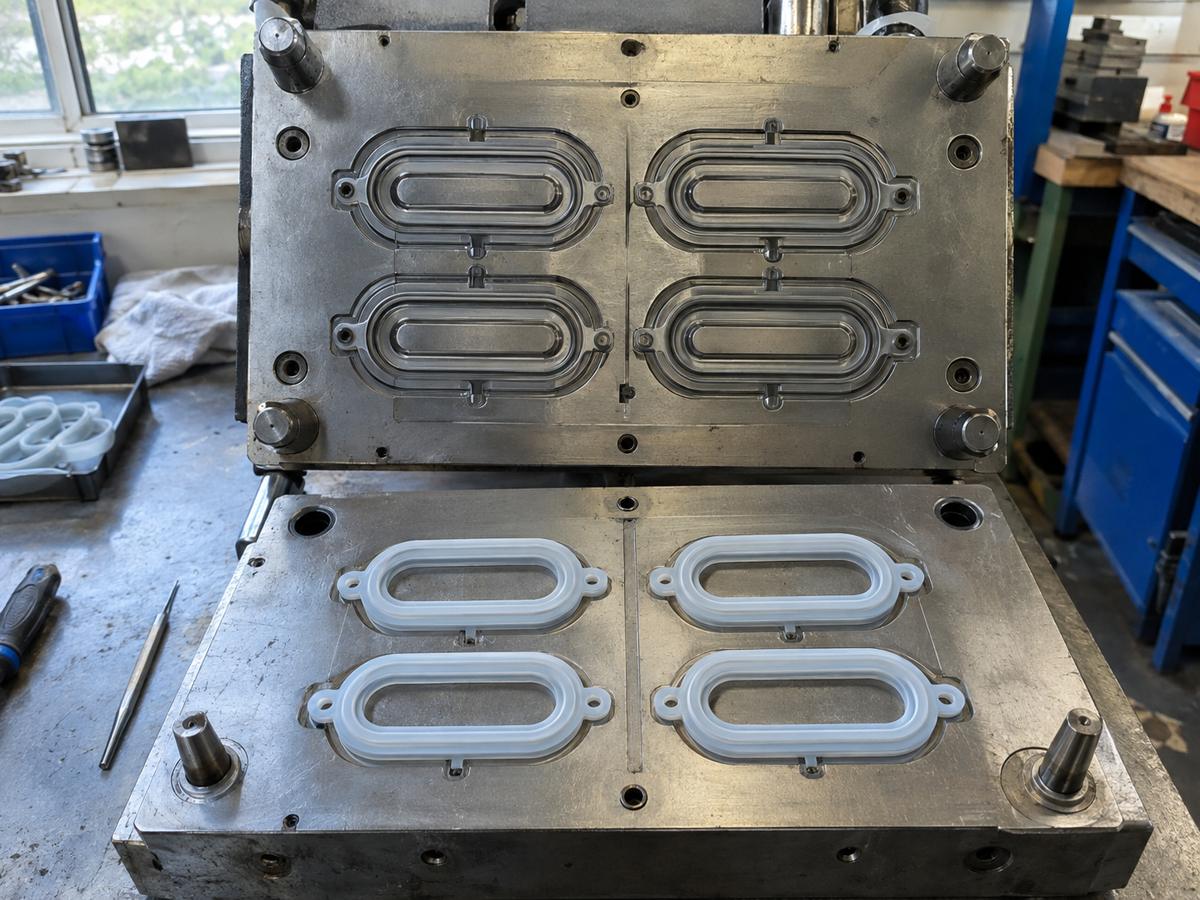
The design change was one geometry decision. The manufacturing route change did the rest.
The parting line now runs across the underside of the gasket, where it seats into the enclosure housing. Any witness is hidden by the assembly.
Same silicone family, LSR grade documented for medical device applications. Material batch traceability built into the run record.
Cold-runner design meant essentially no sprue on the finished part. What little witness remained landed on the underside.
The cavity was polished specifically on the sealing face to leave a defined finish. First-off inspection focused on the sealing lip, not on the whole part.
Three validation batches produced, dimensional and cosmetic inspection at full spec. Sign-off achieved without any hand-trim on any part.
Old supply on compression continued for two batches while the LSR tool proved itself. Then the customer switched entirely.
The commercial shape
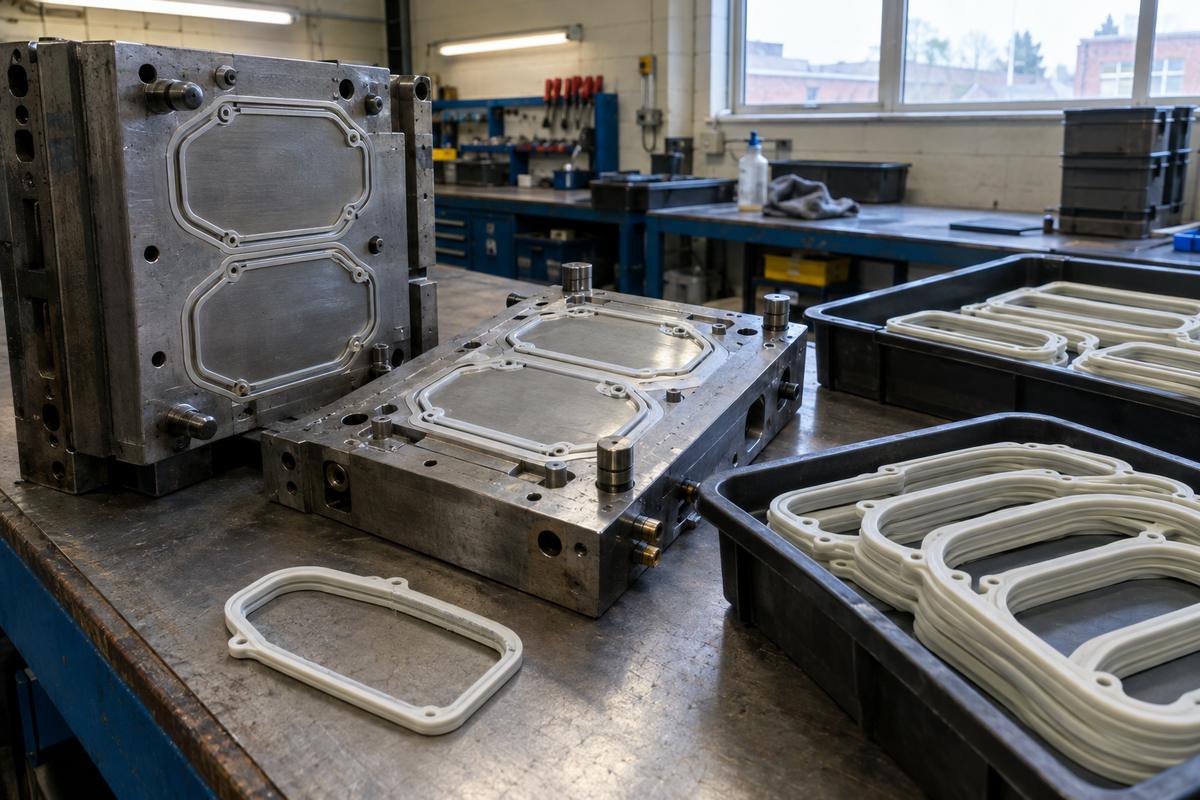
LSR tooling investment was several times the compression tool cost. Per-part cost dropped once the trim operation was eliminated. The bottleneck — hand-trim capacity — went away entirely, freeing capacity for other programmes.
The medical documentation shifted: LSR batch traceability was simpler to record than the compression-plus-trim process, because the operator step disappeared. The device history file benefits went beyond just the trim savings.
For this customer, LSR was the right answer once annual volumes had grown past their earlier threshold. Two years earlier, compression had been correct. Neither decision was wrong for its time.
“The compression tool was right for year one. The LSR tool was right for year three. Nobody made a mistake — the volumes moved.”
Services used
Two-part liquid silicone metered, mixed, injected cold and cured hot. The cleanest route we have for medical, wearable and electronics parts at…
See the serviceSilicone moulding for medical device makers using medical-grade materials to a documented specification, with batch traceability from drum to…
See the serviceSilicone and rubber gaskets moulded to your drawing, in the grade and hardness your sealing job actually needs. Enclosure gaskets, static fluid…
See the serviceMore project records
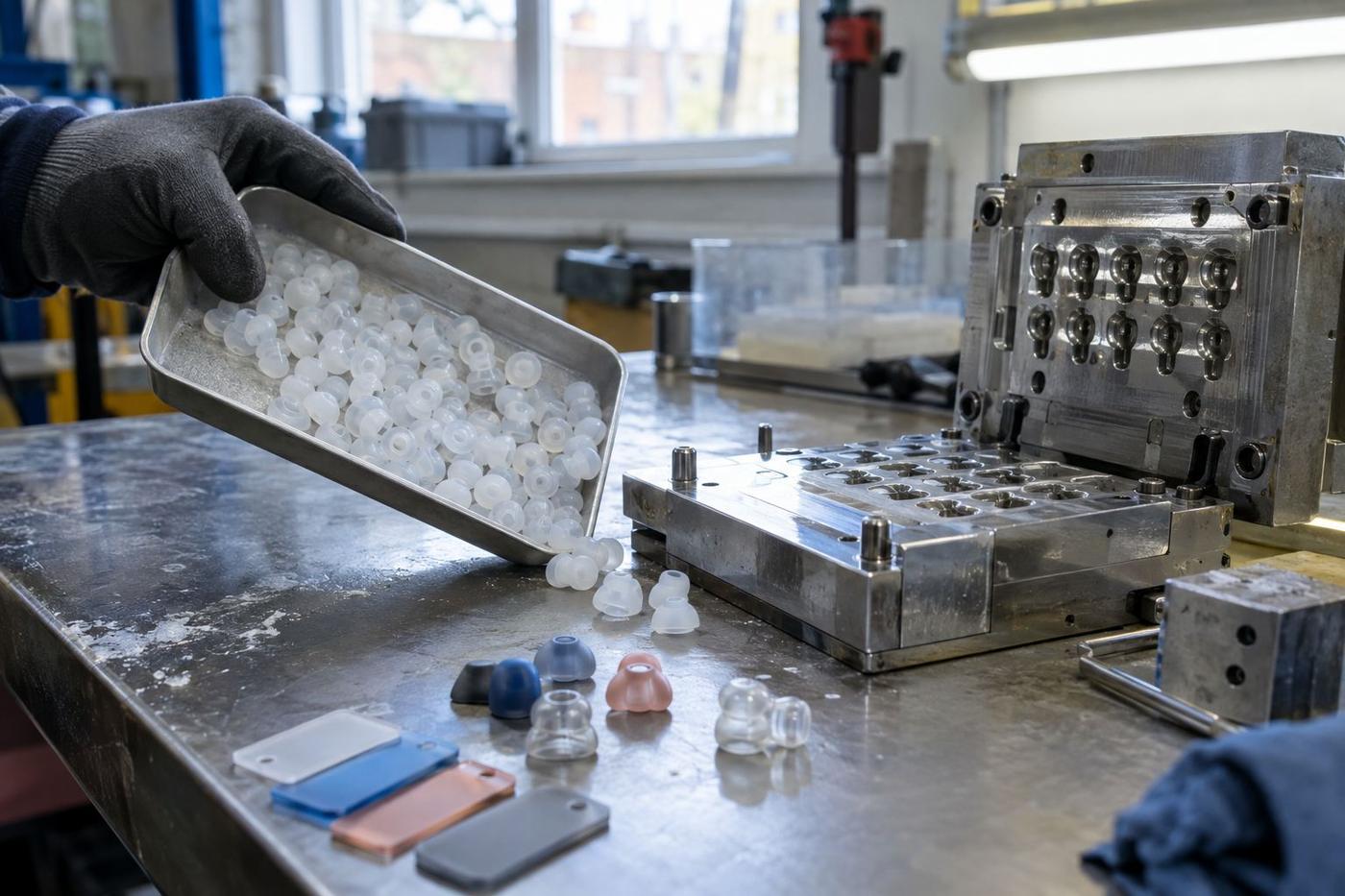
Small, soft, colour-critical parts that customers hold to their heads for hours. Hand-cast pilot samples proved the design; production tooling had to hold the…
Read the record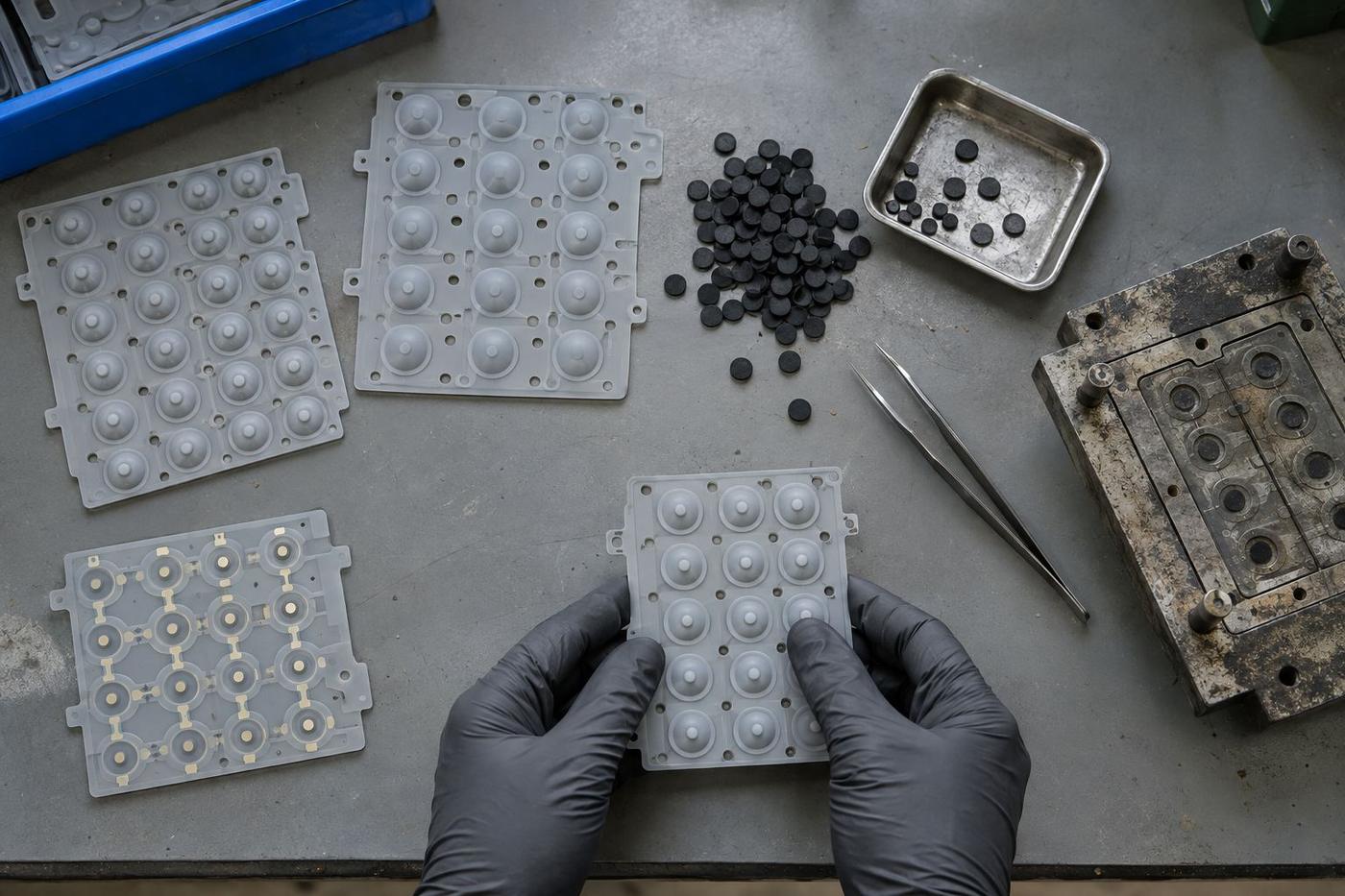
A silicone keypad mat for a hand-held industrial device. Buttons that had to feel decisive without being noisy, conductive contacts that had to make circuit…
Read the record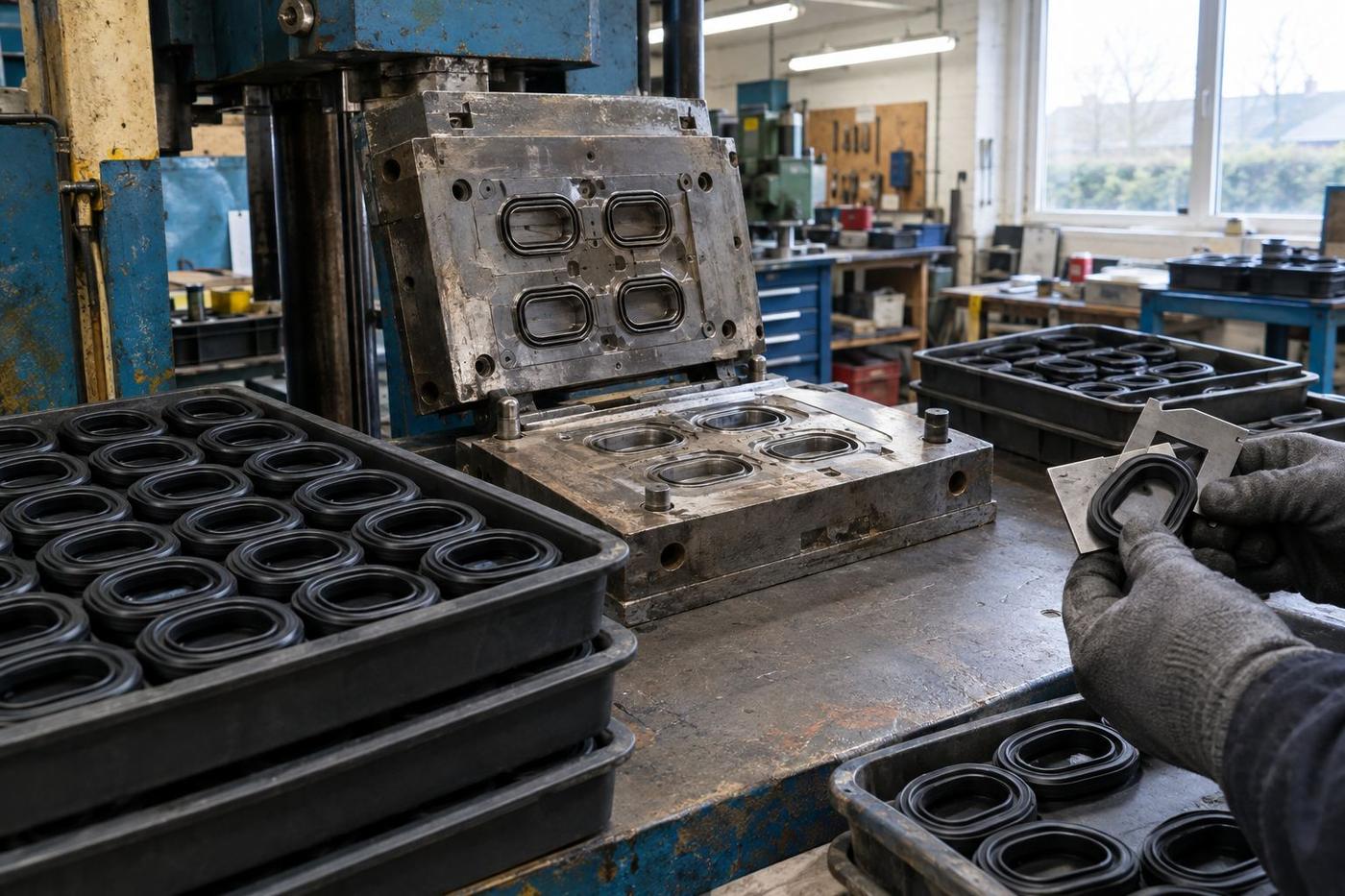
A rubber sealing component supplied into a tier-1 that fits it into a vehicle. Not exotic; not complex; just needs to arrive when the build schedule needs it.…
Read the recordNext step
The commercial shapes described in our project records are examples of what's worked, not prices we're quoting today. Every programme sizes differently based on part geometry, annual volume, material family and paperwork requirements.
For a first conversation about whether we'd be the right supplier for your part, send a drawing or a sample with your rough annual volume. That's enough to know if the fit is real.
At a glance
Which route suits your quantity
Swipe to see the whole diagram
Get in touch
Rough annual volume, target unit price, and any deadlines. That's enough to work out whether compression, LSR injection or something else is the right tool.
Real people, a real workshop
No call centre and no middlemen. When you contact TCI Products, you speak to the team who design, build and check your mould.

 Thomas LaneManaging Director
 George PrestonDesign & Project Manager
 Kelly BallingerHead of Partnerships
 Jim AndertonProduction Manager
 TheodoreEmployee Welfare