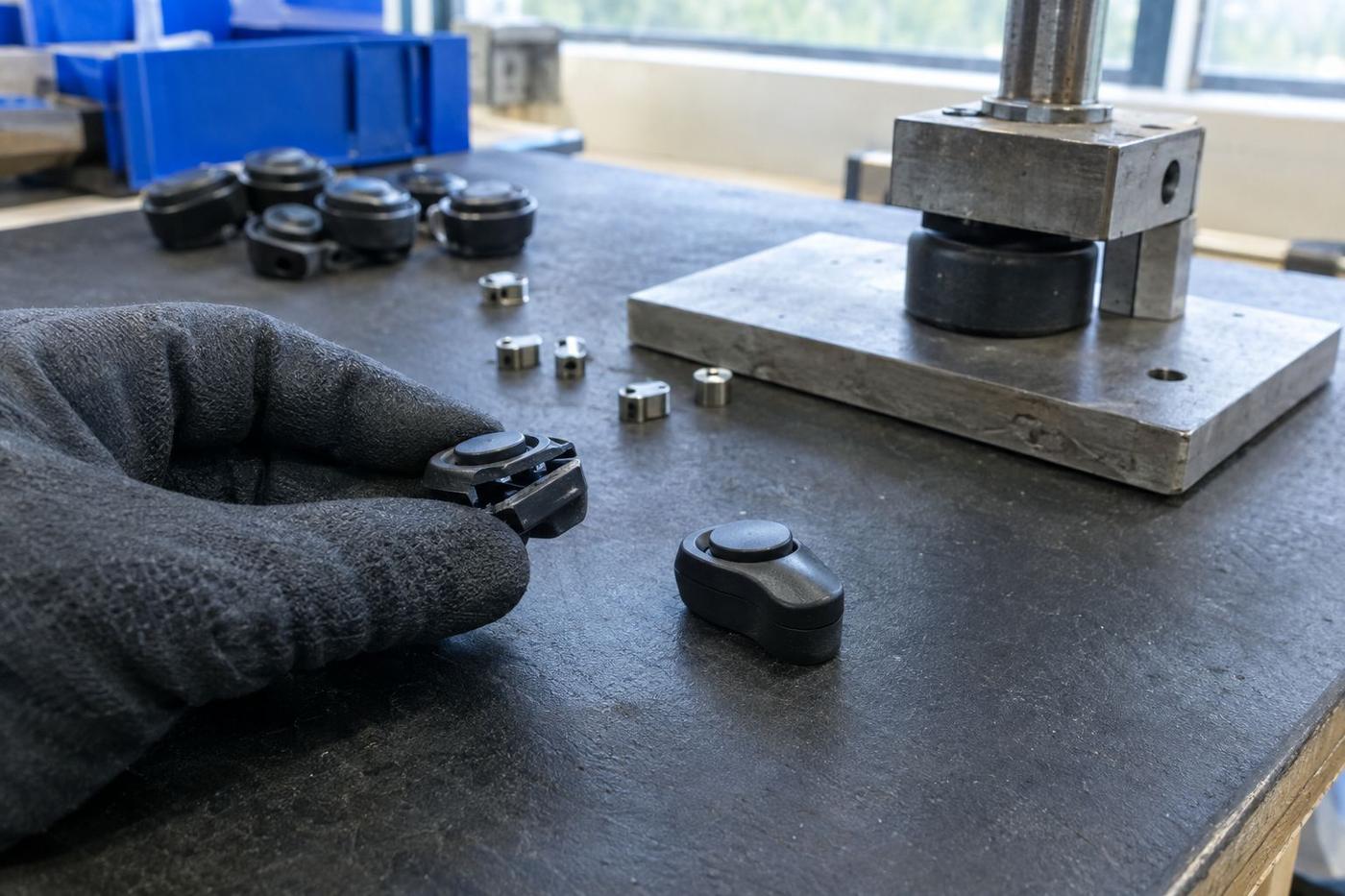
Overmoulding
Silicone or rubber moulded directly onto a pre-made substrate — a plastic housing, a metal insert, a printed circuit assembly — so the finished part…
See the serviceProject record · UK wearables · Overmoulding
Three separate parts, bonded together by hand, kept failing the drop test at the bond line. We moved the assembly to a single overmoulded part. The bond became structural, and the assembly line lost two steps.
The brief
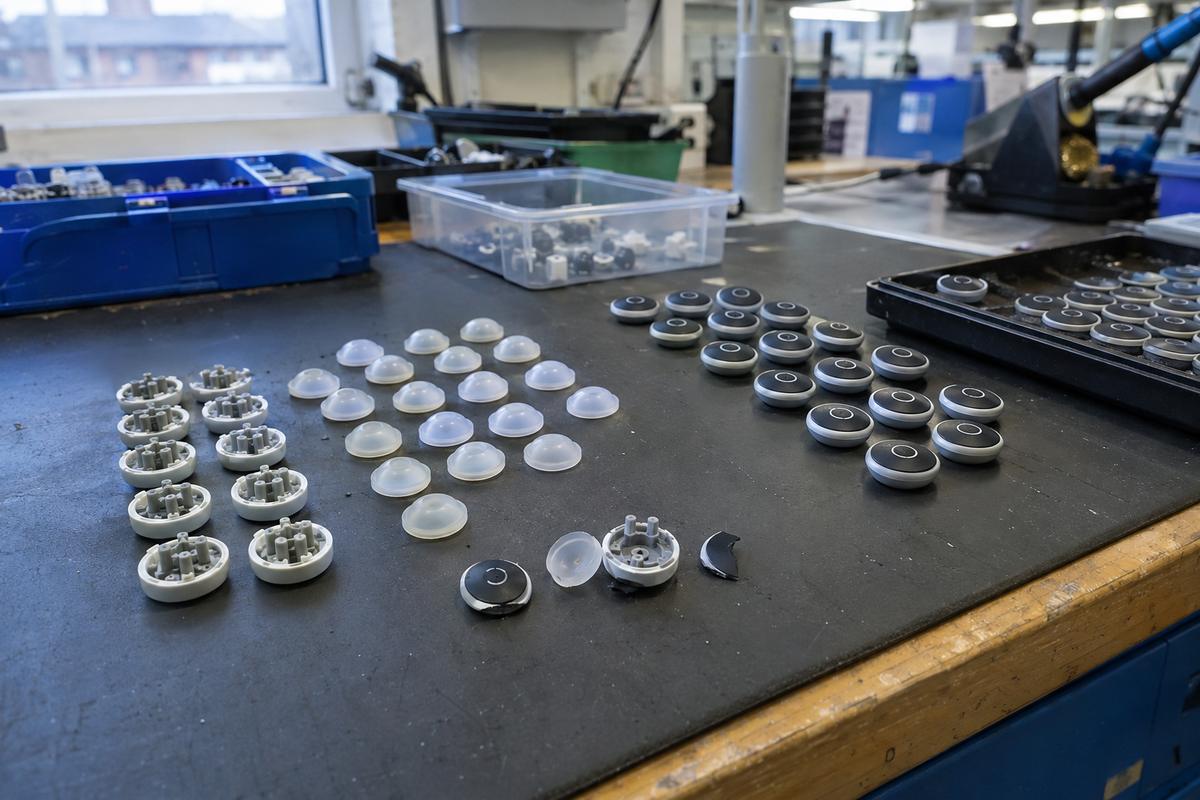
A UK wearables brand was struggling with a control button on a sports-adjacent product. The button had to survive drops onto hard surfaces, contact with sweat and rainwater, and being pressed thousands of times over the product's life. It also had to feel right — a defined click, no wobble, no visible bond lines.
The original design used three parts bonded together: a rigid plastic backing, a silicone dome, and a printed cap. Adhesive assembled on a fixture in the OEM's factory. The assembly worked, most of the time. Drop testing showed failures at the bond between the backing and the dome — enough to worry the QA team, and enough to expect field failures once the product was in customer hands.
The customer came to us to move the moulded part of the assembly closer to us and, if possible, reduce the assembly step count. They'd already tried two other UK moulders who quoted the existing three-part design.
The problem
In the original build, the silicone dome and plastic backing were made by different suppliers and bonded during assembly. The bond depended on operator technique, adhesive age, and cure conditions — all of which vary in a manual assembly line. Field failure was a matter of time.
The fix wasn't better glue. The fix was to make the bond structural — formed under controlled moulding conditions rather than under variable assembly conditions. Overmoulding.
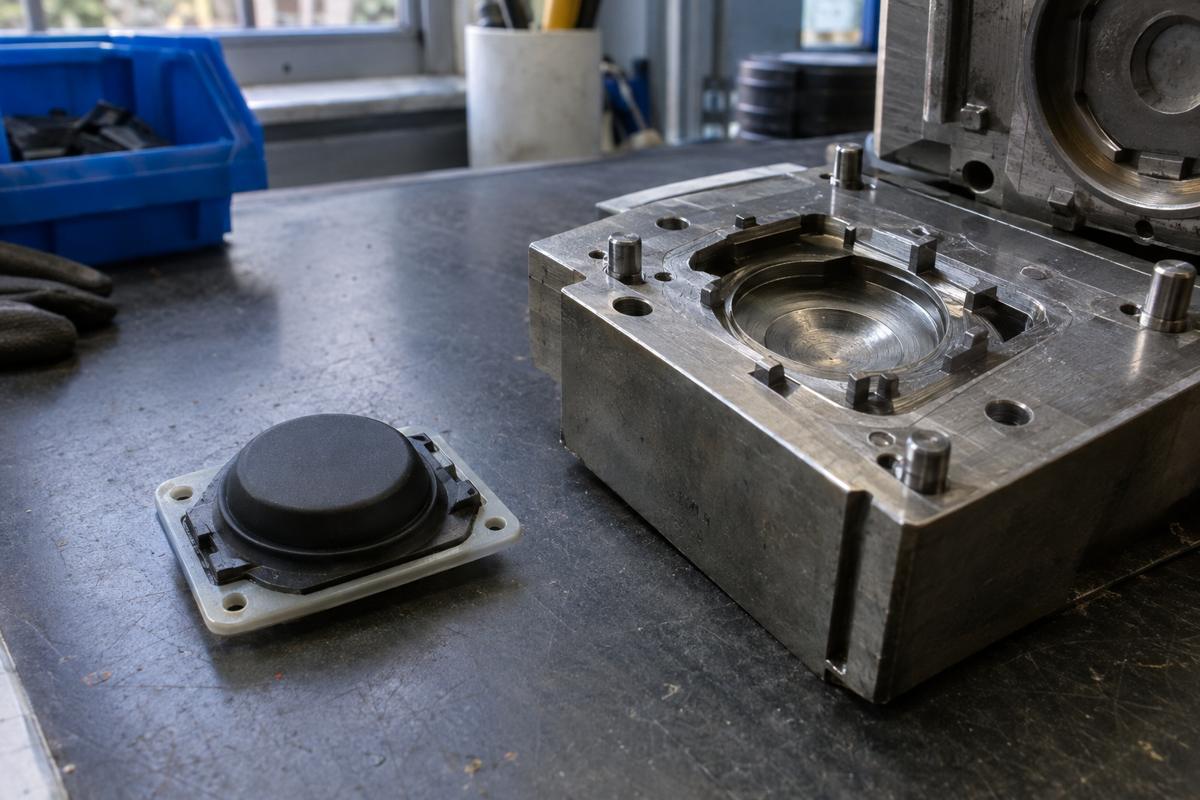
We proposed a single overmoulded assembly: the plastic backing supplied by the customer's existing plastic supplier, arriving at us; we overmould the silicone dome onto it in one step with a primed chemical bond plus mechanical interlock features moulded into the backing. Print on the finished part happens as the last step at our end.
What we changed
The design change was small. The manufacturing change collapsed two assembly steps.
Added small mechanical interlock features — three ribs around the perimeter — so the silicone locks in place even if the chemical bond ever fails.
The customer's plastic supplier added a light primer coat before shipping to us. The primer bonds chemically to the silicone during cure.
Silicone injected around the primed and interlocked backing. Single press cycle, no assembly step, no adhesive.
The moulded assembly moved to a pad-printing cell in the same building. Graphics applied, cured, inspected.
The customer's QA team dropped fifty parts. All fifty survived. Bond line failure disappeared from the field failure predictions.
The customer's assembly line now receives one part per button instead of three, with no bonding step in the middle.
The commercial shape
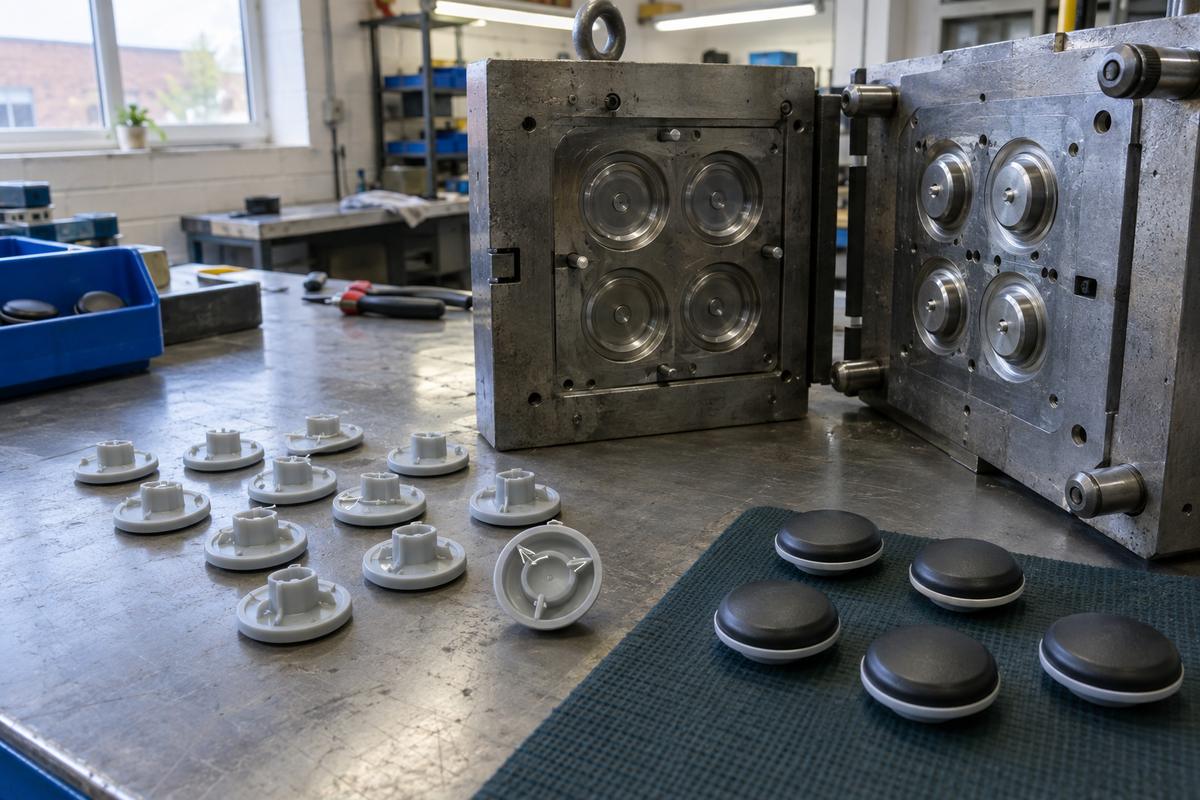
Rather than quote a specific unit price, the shape of this project's economics: overmould tooling investment recovered inside the first year of volume; per-part cost roughly comparable to the sum of the three separate parts; assembly cost saved through the two removed steps.
Total cost to the customer dropped, not by a large percentage on the moulded part, but through the eliminated assembly labour and the disappeared field failure rate. Both of those savings recur every year the product is in production.
The tool is sized for the current volume forecast with headroom. If demand grows beyond a defined threshold, we've planned a migration to a higher-cavity-count tool with the same base geometry.
“The unit price was similar. The line cost dropped because two people stopped bonding buttons all day.”
Services used
Silicone or rubber moulded directly onto a pre-made substrate — a plastic housing, a metal insert, a printed circuit assembly — so the finished part…
See the serviceDeflash, trim, print, bond, assemble, inspect and pack. Everything that has to happen between the press opening and the part being ready for your…
See the serviceSilicone products moulded, finished, packaged and labelled to your brand — ready to ship into your retail, e-commerce or wholesale channel. Your…
See the serviceMore project records
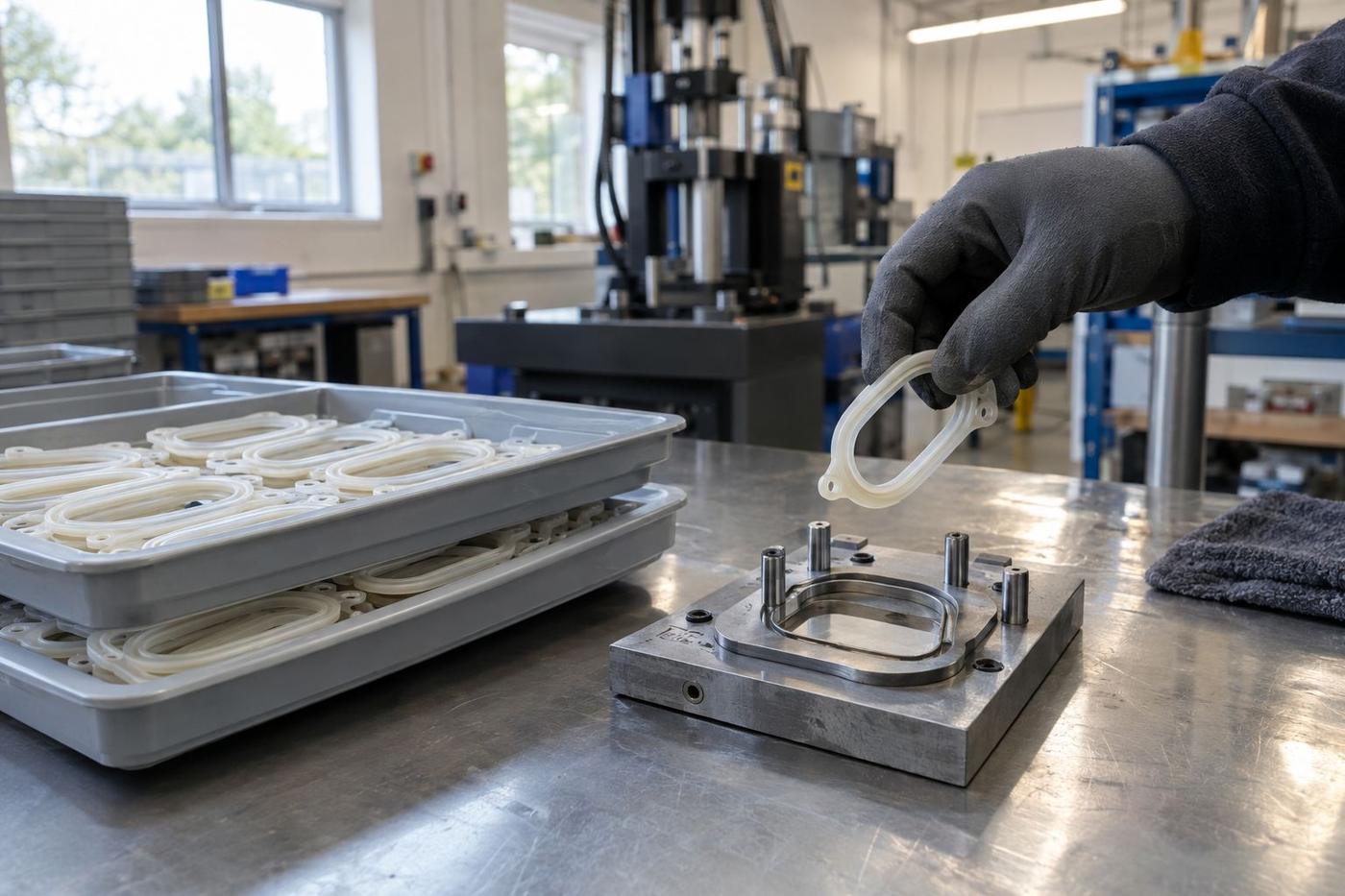
A sealing gasket for a housing on a device that gets held all day. Compression-moulded worked, but every part needed a hand-trim on the sealing face. At…
Read the record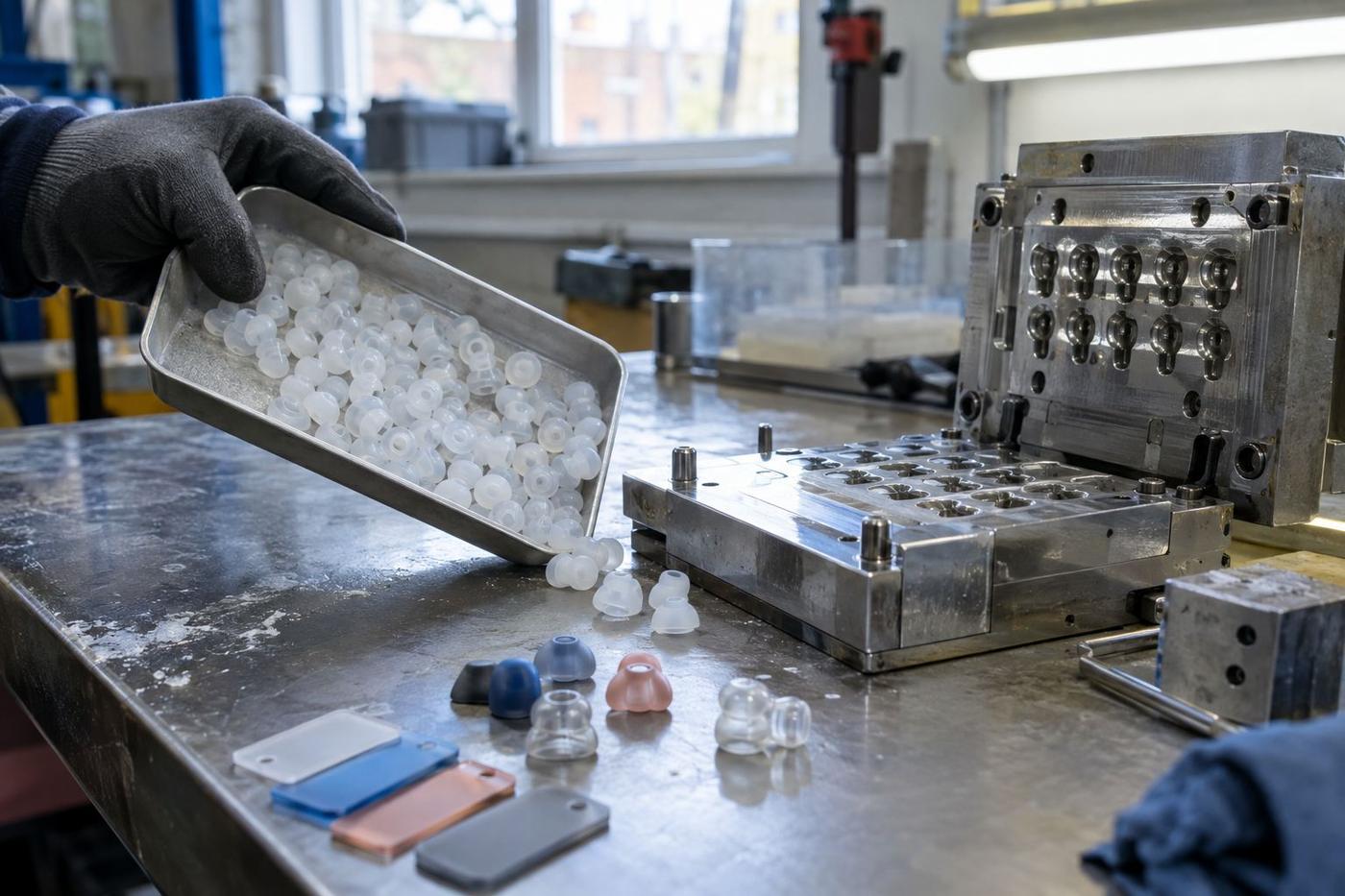
Small, soft, colour-critical parts that customers hold to their heads for hours. Hand-cast pilot samples proved the design; production tooling had to hold the…
Read the record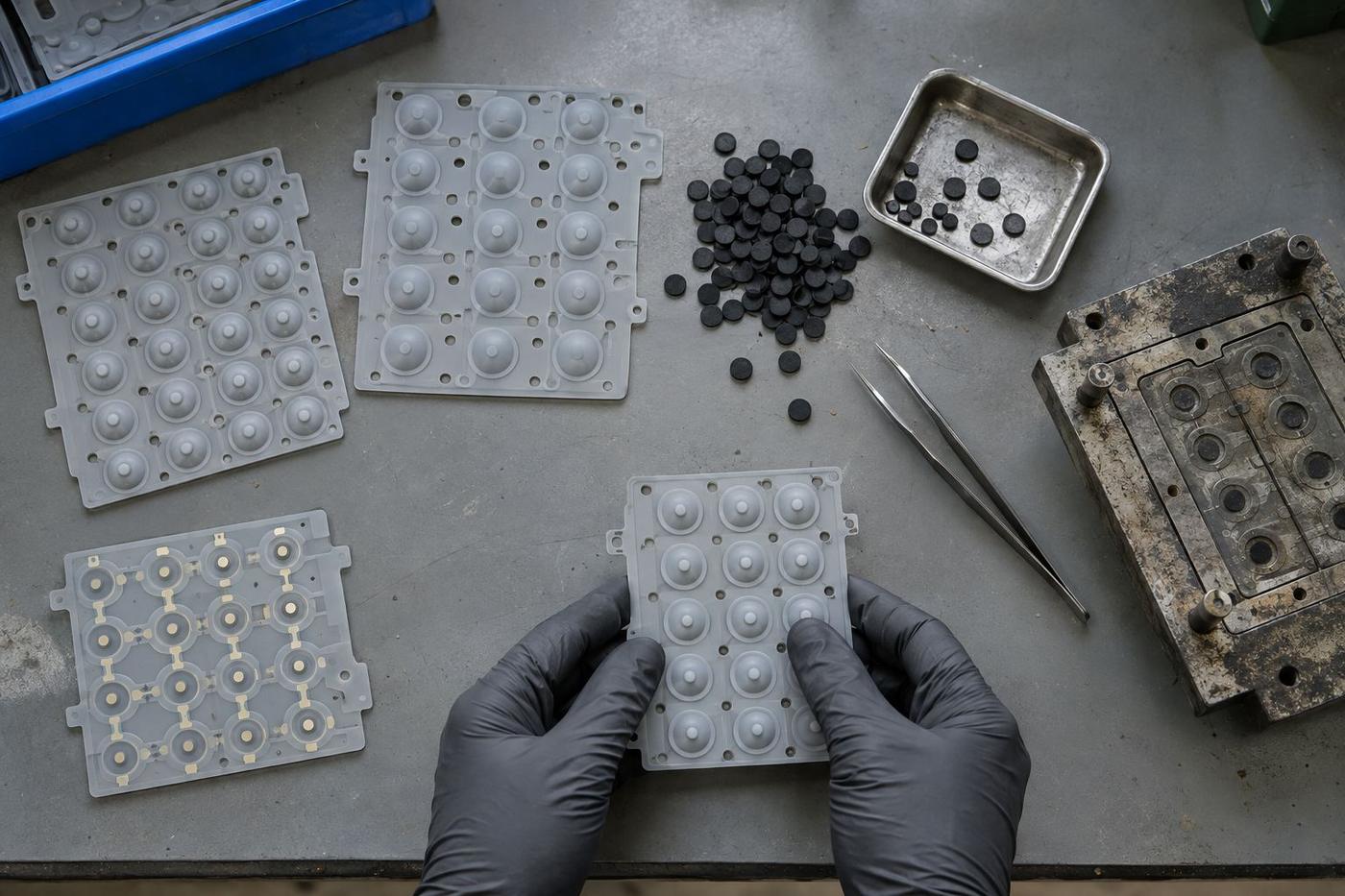
A silicone keypad mat for a hand-held industrial device. Buttons that had to feel decisive without being noisy, conductive contacts that had to make circuit…
Read the recordNext step
The commercial shapes described in our project records are examples of what's worked, not prices we're quoting today. Every programme sizes differently based on part geometry, annual volume, material family and paperwork requirements.
For a first conversation about whether we'd be the right supplier for your part, send a drawing or a sample with your rough annual volume. That's enough to know if the fit is real.
At a glance
How overmoulding works
Swipe to see the whole diagram
Get in touch
Rough annual volume, target unit price, and any deadlines. That's enough to work out whether compression, LSR injection or something else is the right tool.
Real people, a real workshop
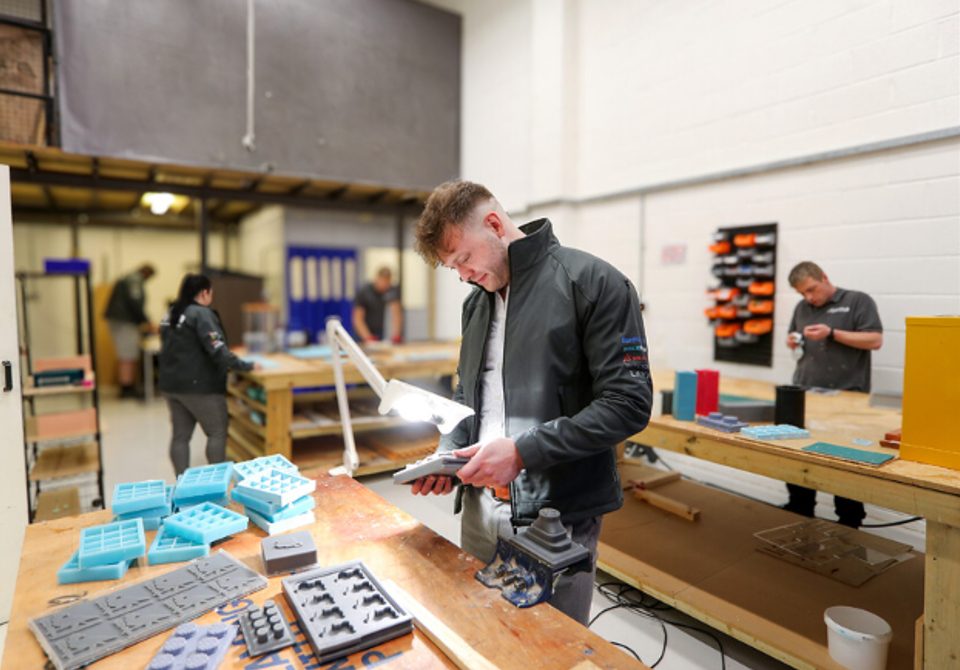
No call centre and no middlemen. When you contact TCI Products, you speak to the team who design, build and check your mould.
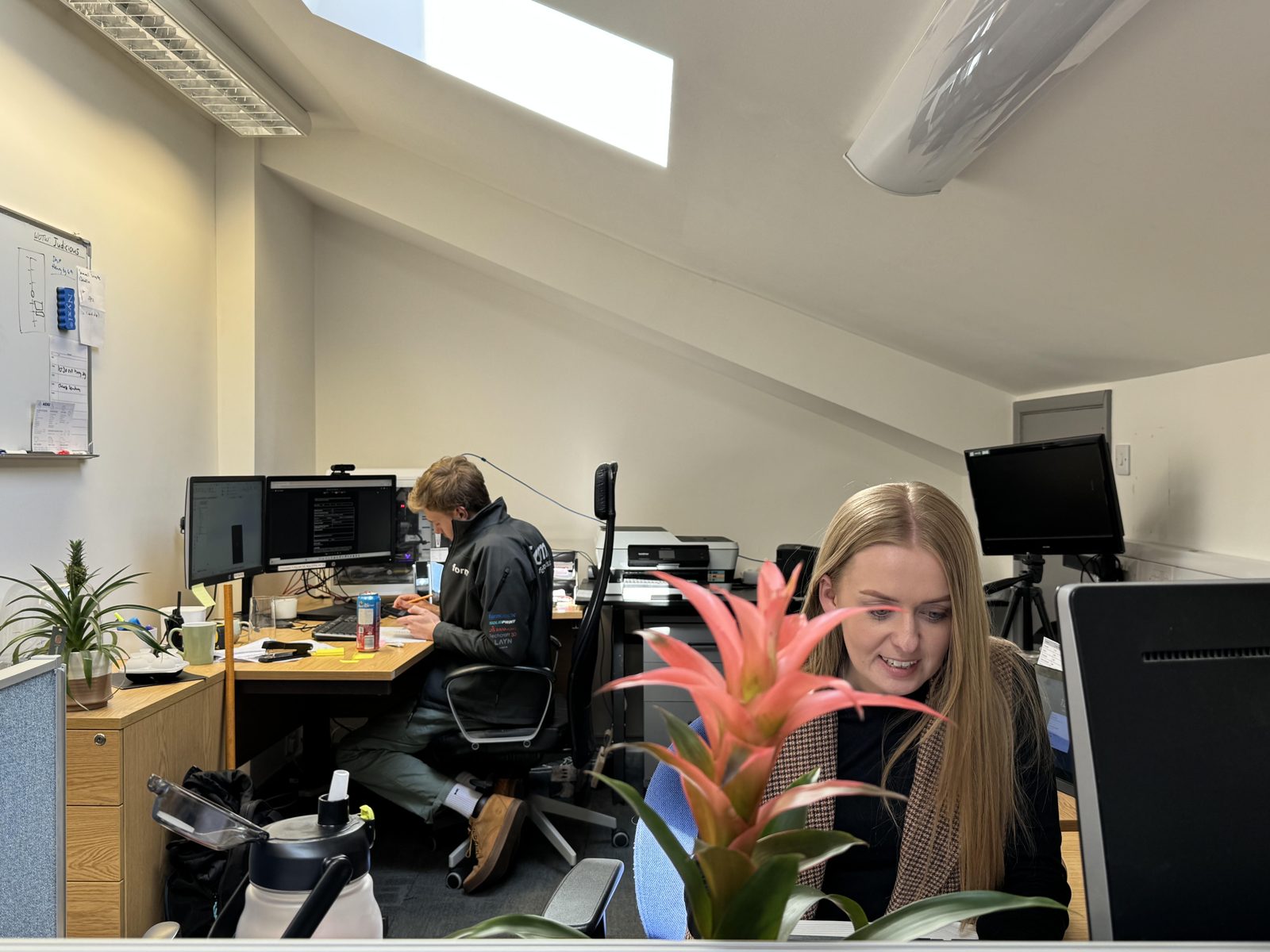
 Thomas LaneManaging Director
 George PrestonDesign & Project Manager
 Kelly BallingerHead of Partnerships
 Jim AndertonProduction Manager
 TheodoreEmployee Welfare