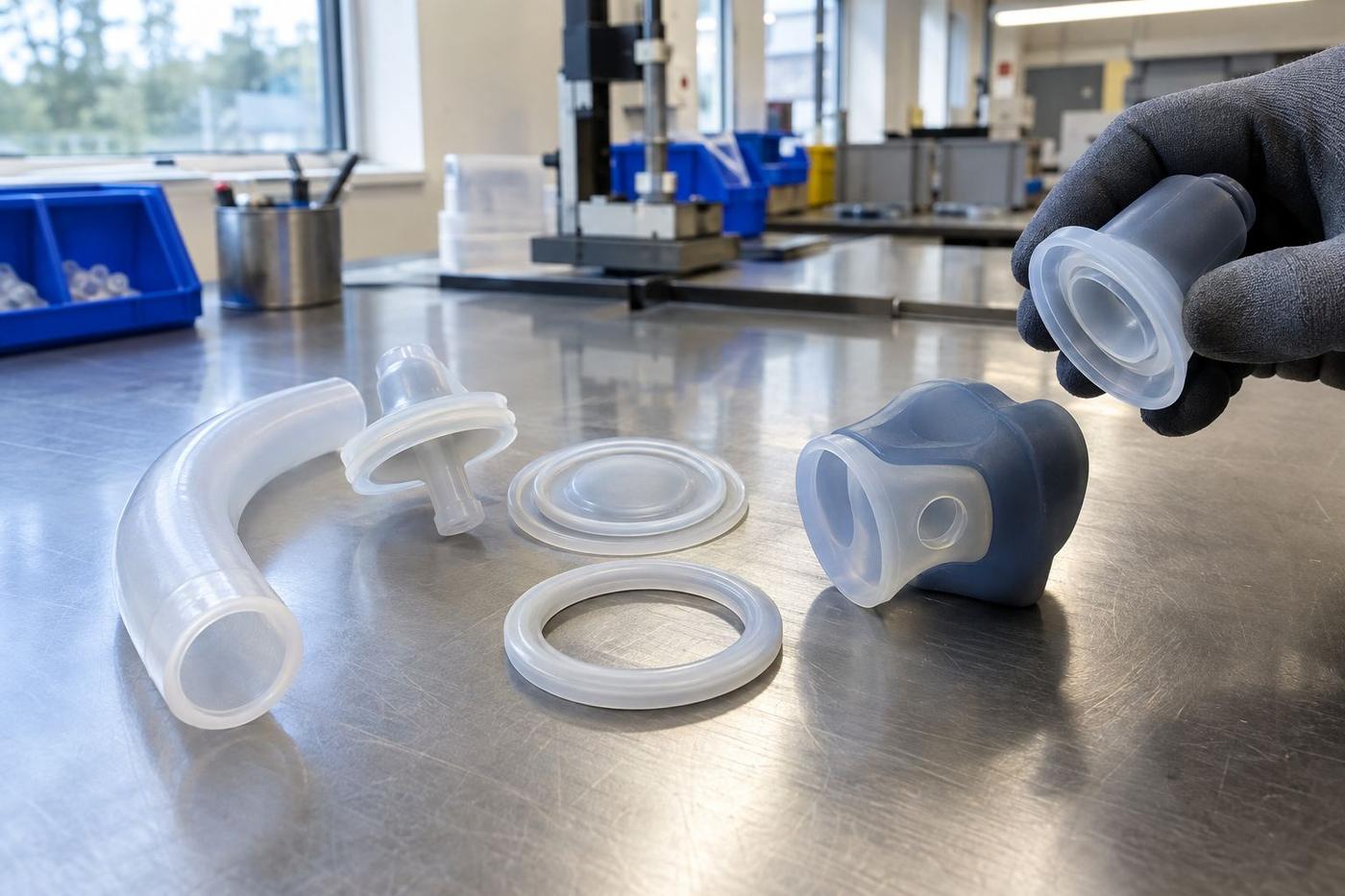
What does it contact?
Nothing, intact skin, fluids, or tissue.
Silicone manufacturing guide
Medical-grade is a phrase that gets used loosely. For device makers, what matters is the right grade for the contact, a documentation trail you can rely on, and a supplier who won't change anything without telling you.
The first questions
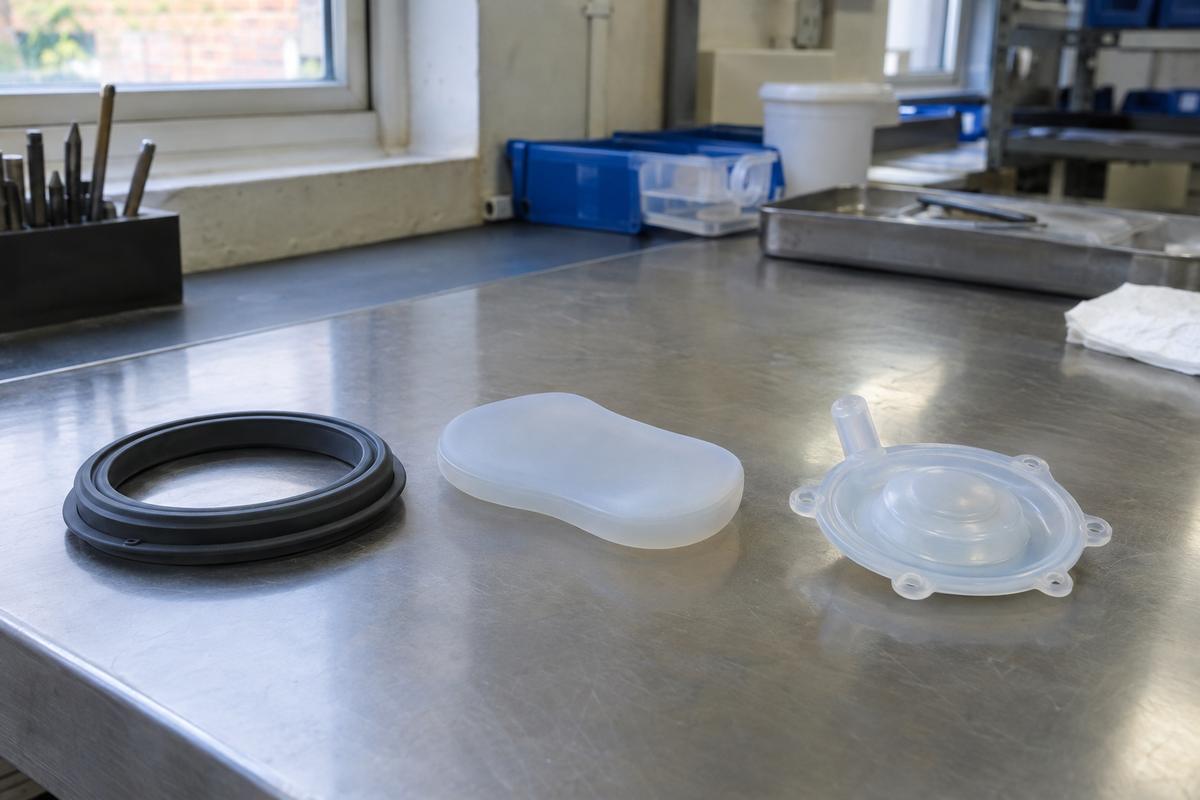
The first thing to establish is how the part contacts the body — or doesn't. A seal inside a device that never touches a patient has very different needs from a pad worn on skin for hours, or a component in a fluid path.
Silicone suppliers offer grades with different levels of testing and documentation behind them. Choosing between them is part of your device's risk assessment. We can share options and supplier data, but the decision sits with the device maker.
Once the grade is chosen, our job is to use it consistently, record every batch and never substitute. See our medical-grade manufacturing page.

Before you choose
Nothing, intact skin, fluids, or tissue.
Minutes, hours, days or longer.
Some methods suit some grades better than others.
Supplier data, batch certificates and change notifications.
Material form
Consistent, clean release and suited to high-volume small parts. The usual choice for seals, valves and micro parts.
Suits compression moulding at lower volumes and larger parts. See medical compression.
Moving from HCR to LSR is possible but is a material change that needs formal review.
Over the programme
The grade decision is made once. Keeping it is a daily discipline.
Supplier, grade, data sheets.
Material batch against production batch.
Supplier changes flagged to you immediately.
No change without your written sign-off.
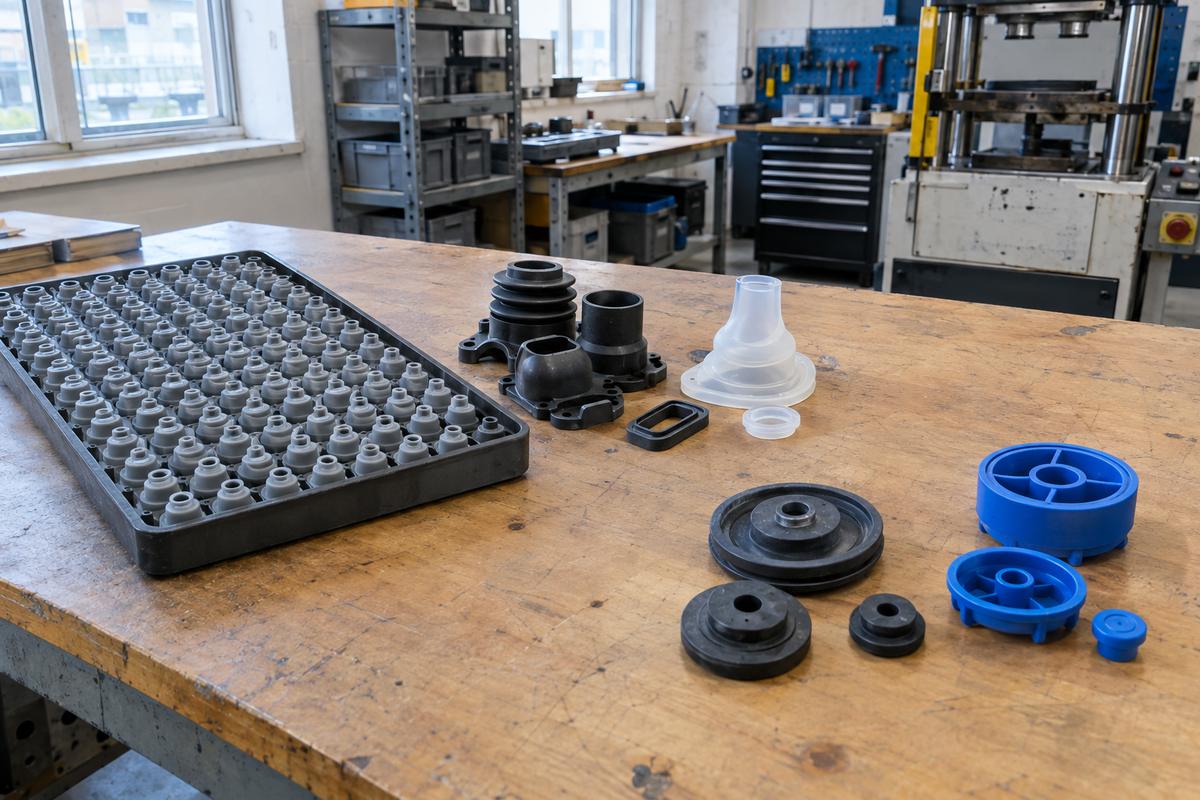
Keep reading
Your part is selling. Demand is climbing. The tool and process that worked for early batches start to strain. Here's how to scale…
Read the guideMany silicone parts start life in HCR, compression or injection moulded. As volumes grow, LSR starts to look attractive. Here's…
Read the guideThree routes, one part, one honest answer. This is the conversation we have with almost every OEM customer on the first call.…
Read the guideGet in touch
Rough annual volume, target unit price, and any deadlines. That's enough to work out whether compression, LSR injection or something else is the right tool.
Real people, a real workshop
No call centre and no middlemen. When you contact TCI Products, you speak to the team who design, build and check your mould.


 Thomas LaneManaging Director
 George PrestonDesign & Project Manager
 Kelly BallingerHead of Partnerships
 Jim AndertonProduction Manager
 TheodoreEmployee Welfare