Sealing force
Softer seals need less force to close but can take a set. Firmer seals need stiffer housings.
Silicone manufacturing guide
Shore A is the number that appears on nearly every silicone drawing and is understood by almost nobody outside the rubber trade. Here's what it tells you, and what it doesn't.
The basics
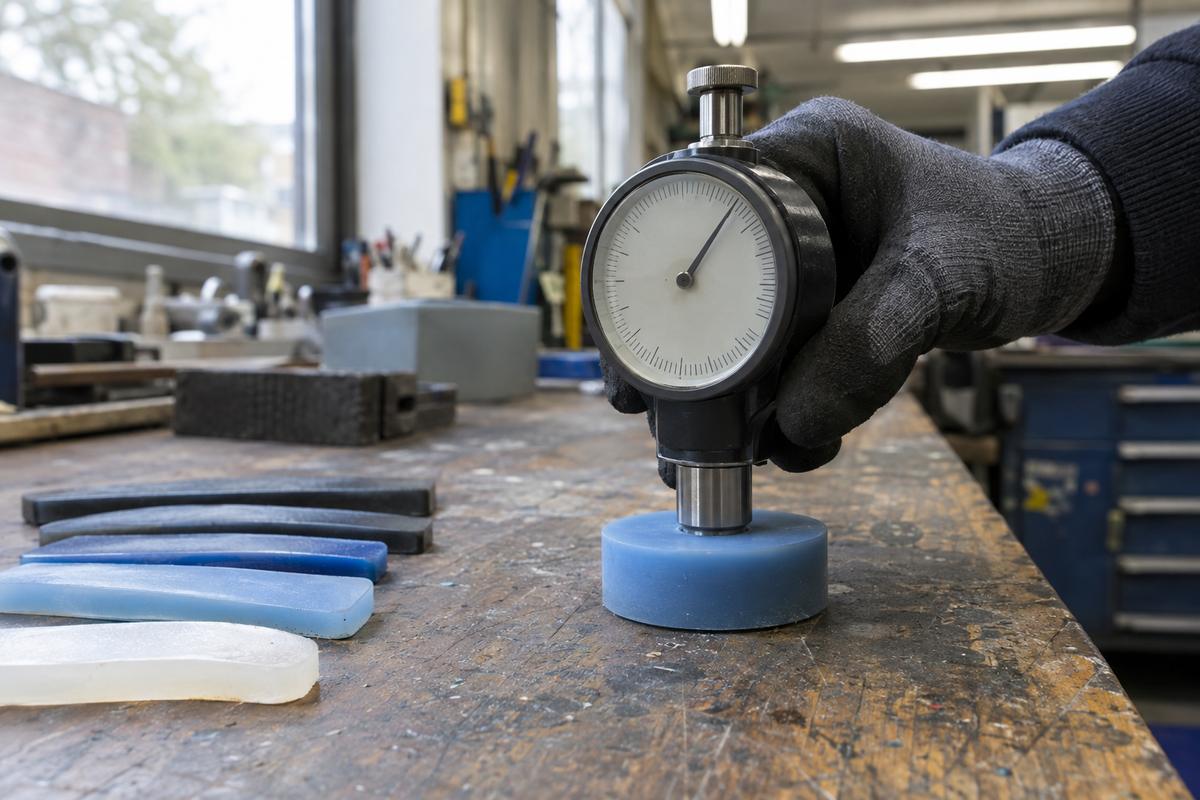
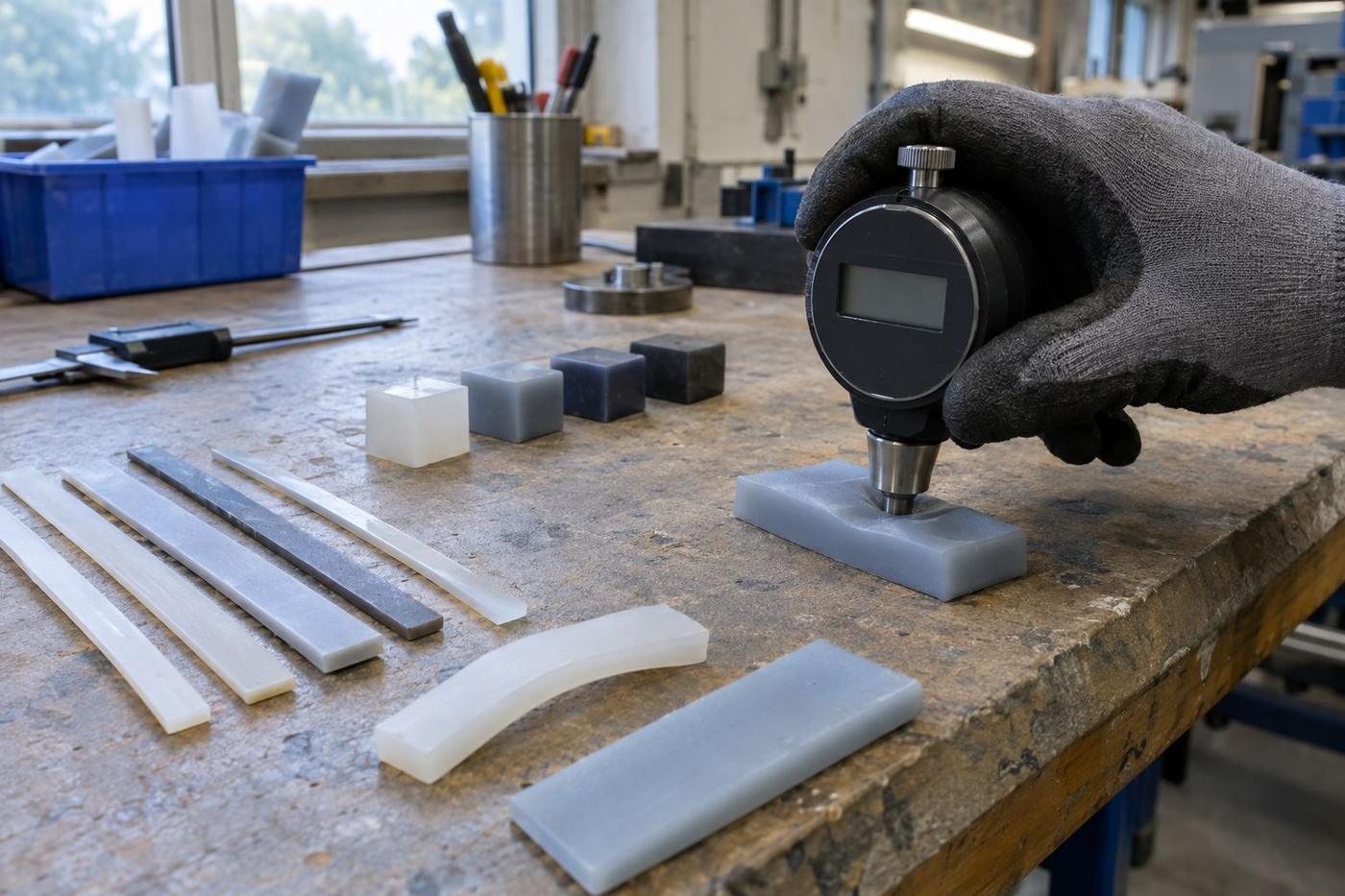
A durometer presses a spring-loaded pin into the rubber. Soft materials let it sink further and read lower; firm materials resist and read higher. That's all it measures: surface resistance to indentation.
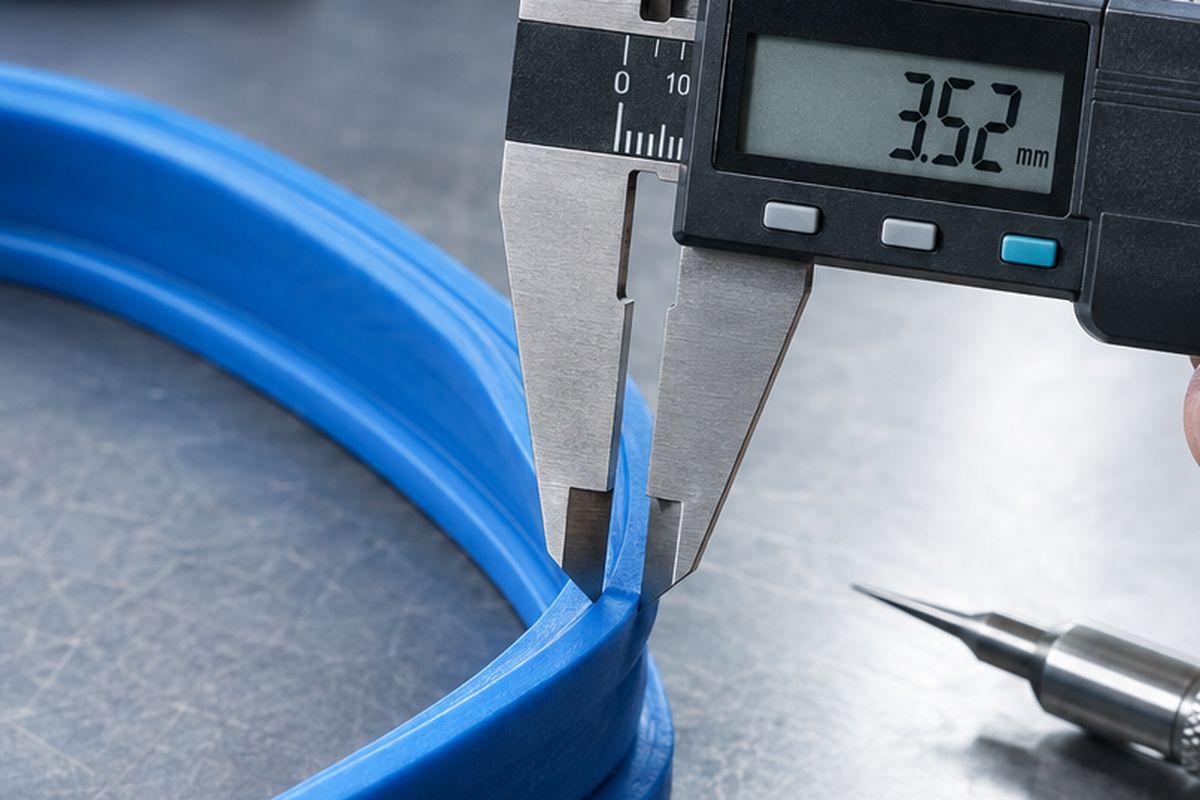
It doesn't directly tell you how stretchy a material is, how well it recovers, or how it will feel in a particular shape. A thin, soft part and a thick, firm part can feel similar in the hand.
So we treat hardness as one input among several, and we always put physical samples in your hand before locking it in.
A feel for the range
Ear tips, skin pads, low-force seals and anything that should feel gentle. Easy to deform, can tear if thin.
Most gaskets, keypads, grips and general seals. The comfortable middle where most parts land.
Buffers, feet, structural seals and parts that must hold shape under load. Harder to demould from complex tools.
Knock-on effects
Softer seals need less force to close but can take a set. Firmer seals need stiffer housings.
In keypads and buttons, hardness works together with geometry to set actuation force.
Softer parts in thin sections tear more easily during demoulding and in use.
Firm materials fill differently and demould less easily from undercuts.
The process
The fastest route is almost always samples, not specifications.
What the part does: seal, cushion, grip, click.
Parts or plaques in several hardnesses to press, squeeze and fit.
Prototype parts tried in the real housing. See prototype tooling.
An agreed hardness band written into the specification and checked per batch.
Keep reading
Rubber moves. It shrinks as it cures, flexes when you measure it and relaxes in the bag. Specifying it like machined metal leads…
Read the guideMedical-grade is a phrase that gets used loosely. For device makers, what matters is the right grade for the contact, a…
Read the guideYour part is selling. Demand is climbing. The tool and process that worked for early batches start to strain. Here's how to scale…
Read the guideGet in touch
Rough annual volume, target unit price, and any deadlines. That's enough to work out whether compression, LSR injection or something else is the right tool.
Real people, a real workshop
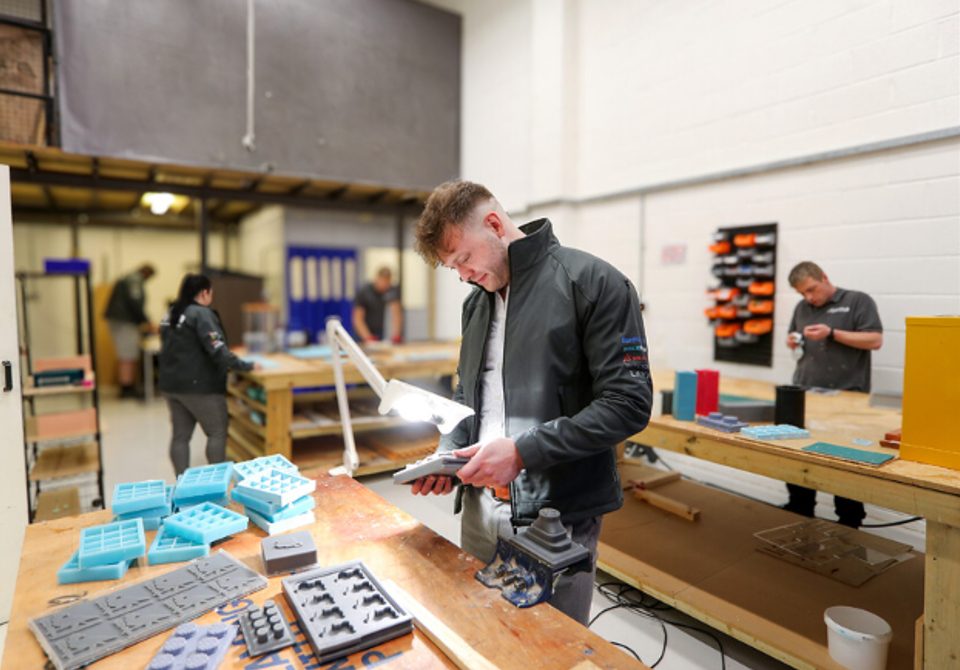
No call centre and no middlemen. When you contact TCI Products, you speak to the team who design, build and check your mould.


 Thomas LaneManaging Director
 George PrestonDesign & Project Manager
 Kelly BallingerHead of Partnerships
 Jim AndertonProduction Manager
 TheodoreEmployee Welfare