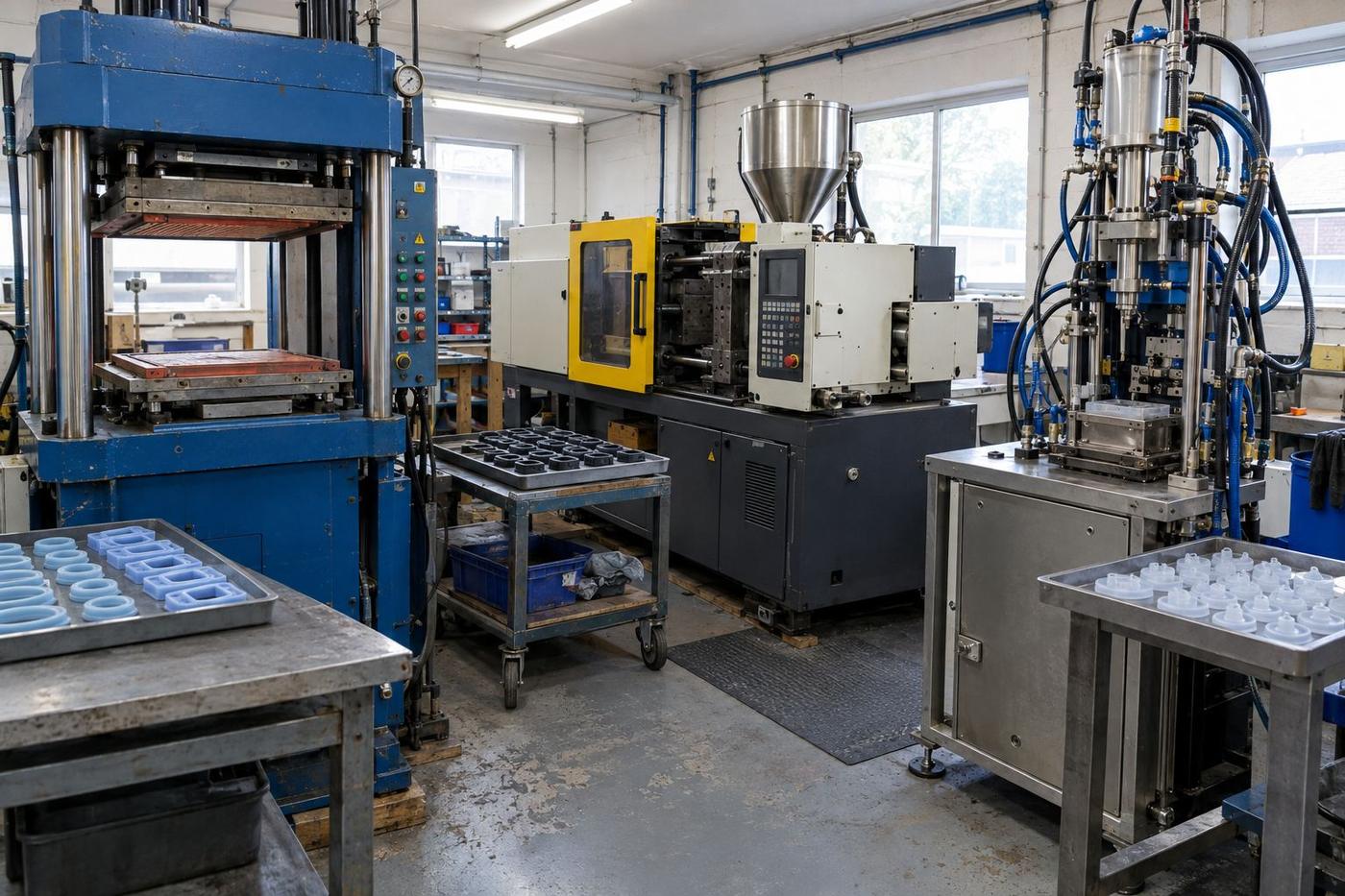
Prototype into first year of production
Start on compression. It's cheap to tool, forgiving of design change, and produces real parts. If volume grows into LSR territory, migrate.
Silicone manufacturing guide
Three routes, one part, one honest answer. This is the conversation we have with almost every OEM customer on the first call. Here it is written down, without the marketing overlay.
TL;DR
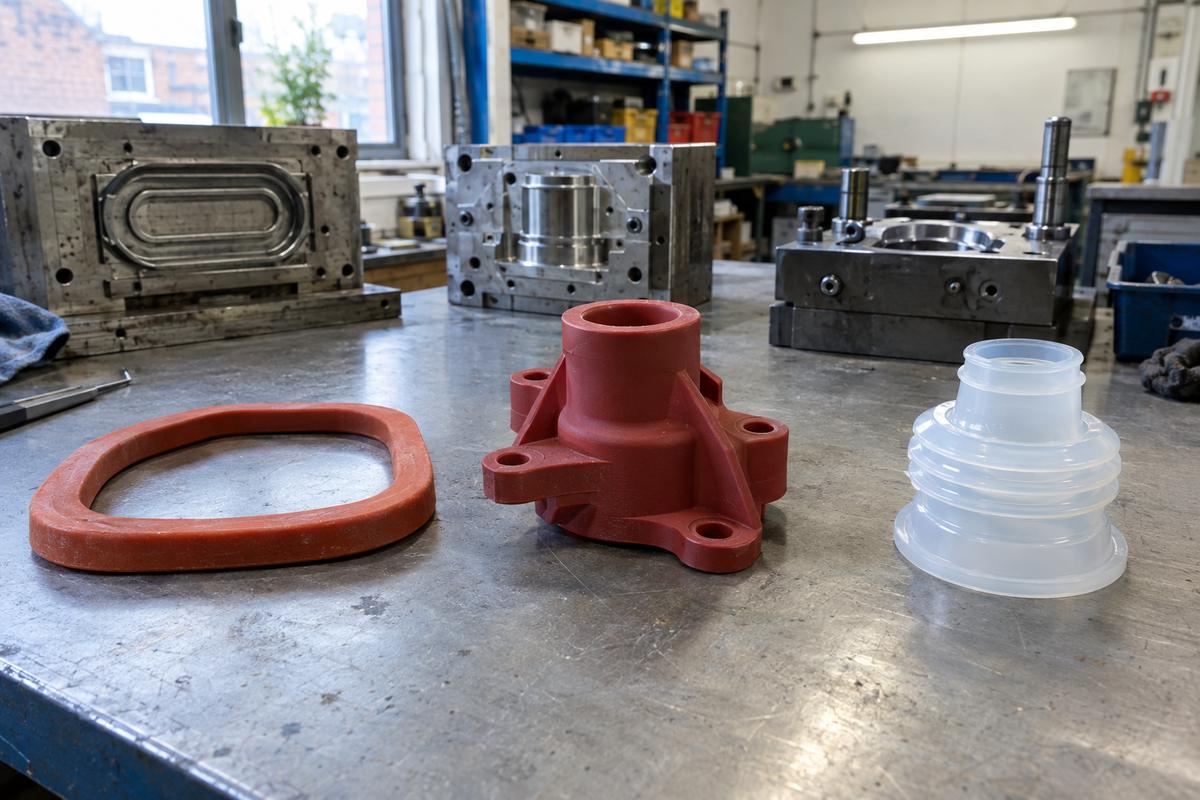
For most silicone and rubber parts below roughly twenty thousand a year, compression moulding gives the right unit cost against sensible tooling. Above that threshold, LSR starts to win on cycle time and finish quality even accounting for higher tooling cost.
Solid silicone injection (HCR) occupies a narrower band: parts where you need injection speed and consistency but the material family for the application isn't compatible with LSR. Less common than either of the other two, but the right answer where it fits.
The threshold isn't a fixed number. Part geometry, material grade, finish requirements, and how tolerant the design is of a witness line all move it. What follows is the shape of the conversation we have when working out where a specific part actually lands.
Start here
The most useful single question at enquiry stage is: how many parts a year, honestly, for how many years?
Almost always compression, often on shared tooling. LSR tooling investment doesn't recover in a lifetime at this volume.
Compression is usually right. Multi-cavity as volume grows. LSR only if the finish or cycle-time requirement demands it.
The transition zone. LSR often wins on total cost once you factor in finishing and reject rate. We model both routes for parts in this range.
LSR by default for anything the material family supports. Cycle time and clean release become dominant.
LSR with high cavity counts and possibly automation. Tooling investment is significant but per-part cost drops accordingly.
The other axis
LSR covers the softer end; HCR (high-consistency silicone) covers the firmer end. Compression handles both.
Compression only. These material families are supplied as solid gum, not as liquid two-part systems.
Compression usually, LSR occasionally. Availability of the grade in a liquid form varies by supplier.
The tie-breaker
For parts where a witness line matters — anything cosmetic, sealing-critical, or skin-contact — the route decision often comes down to where flash naturally forms.
LSR cold-runner tooling can produce parts with essentially no visible flash. Compression always leaves something, however small.
LSR keeps the sealing lip clean. Compression can work with careful tool design that keeps the parting line off the sealing face.
Compression is perfectly fine — flash lands on a face you never see. LSR is overkill and expensive.
LSR usually wins on repeatability of internal geometry. Compression is fine for external geometry.
The pattern
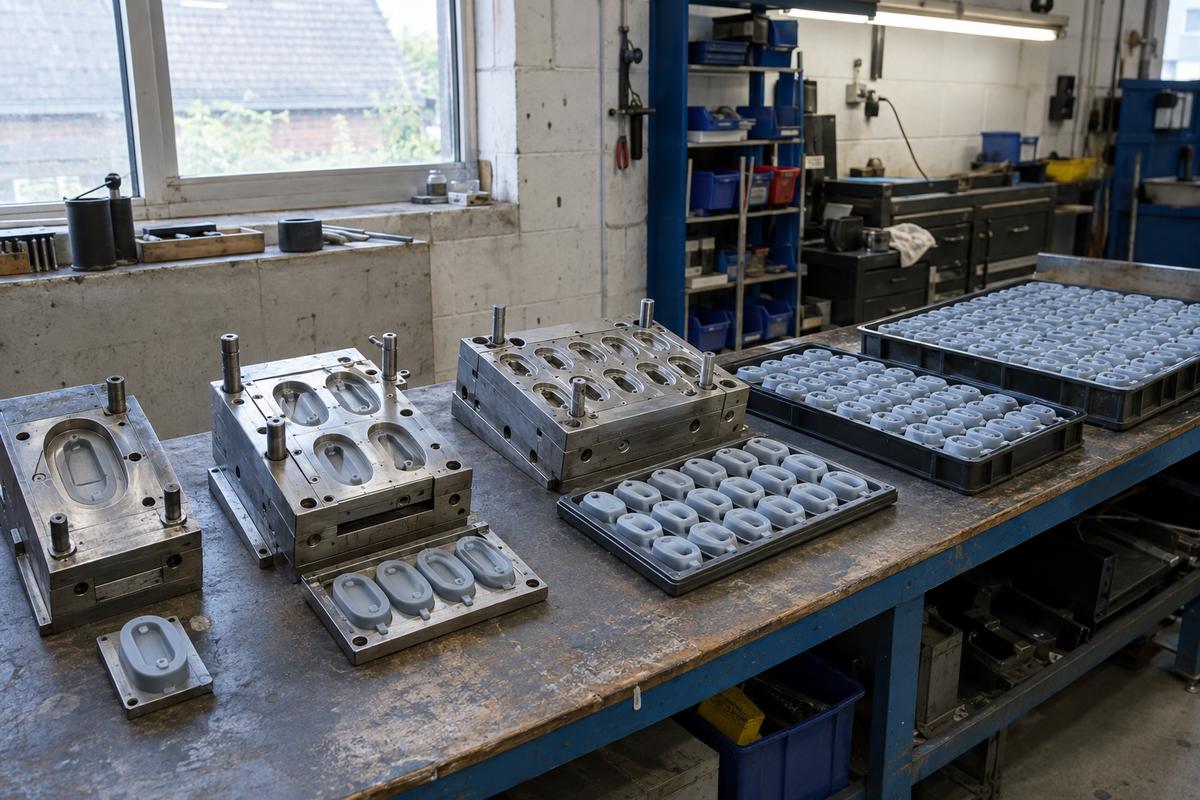
Start on compression. It's cheap to tool, forgiving of design change, and produces real parts. If volume grows into LSR territory, migrate.
LSR from the start, provided the material family fits. The investment recovers across the life of the part.
LSR almost always. Clean sealing face, batch traceability, electronics-compatible grades.
Compression, in a compound suited to the application. LSR doesn't cover most industrial rubber grades.
Keep reading
Overmoulding, two-shot, and bonded assembly are all ways to end up with a silicone part attached to a rigid substrate. Each has a…
Read the guideThree material families that look and feel similar to a non-specialist, but behave very differently in production and in service.…
Read the guideMost silicone parts are designed by someone who's designed one before. If this is your first, or if the last one taught you…
Read the guideAt a glance
Which route suits your quantity
Swipe to see the whole diagram
Get in touch
Rough annual volume, target unit price, and any deadlines. That's enough to work out whether compression, LSR injection or something else is the right tool.
Real people, a real workshop
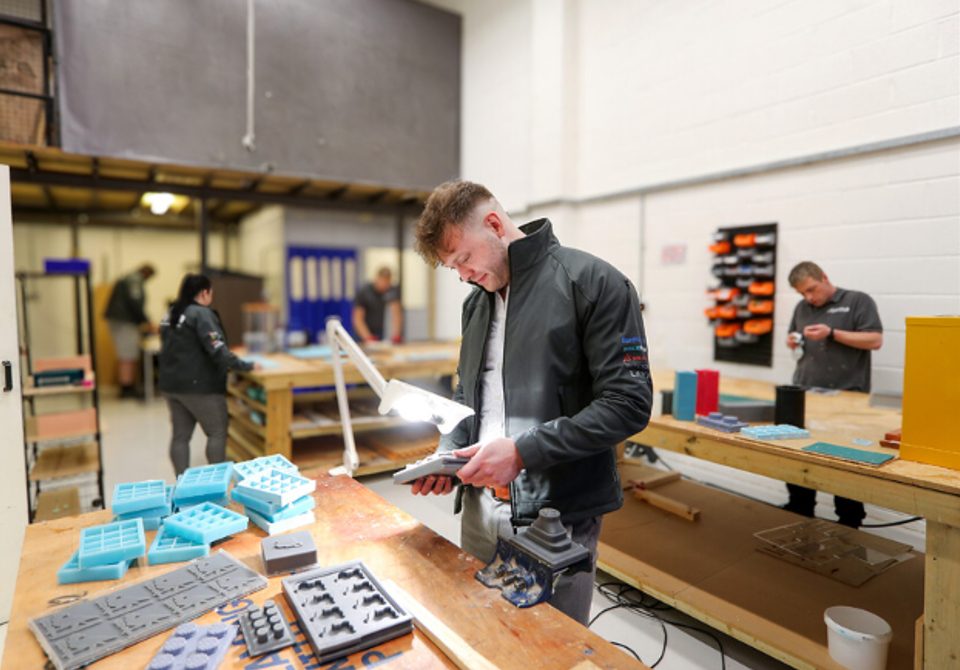
No call centre and no middlemen. When you contact TCI Products, you speak to the team who design, build and check your mould.


 Thomas LaneManaging Director
 George PrestonDesign & Project Manager
 Kelly BallingerHead of Partnerships
 Jim AndertonProduction Manager
 TheodoreEmployee Welfare