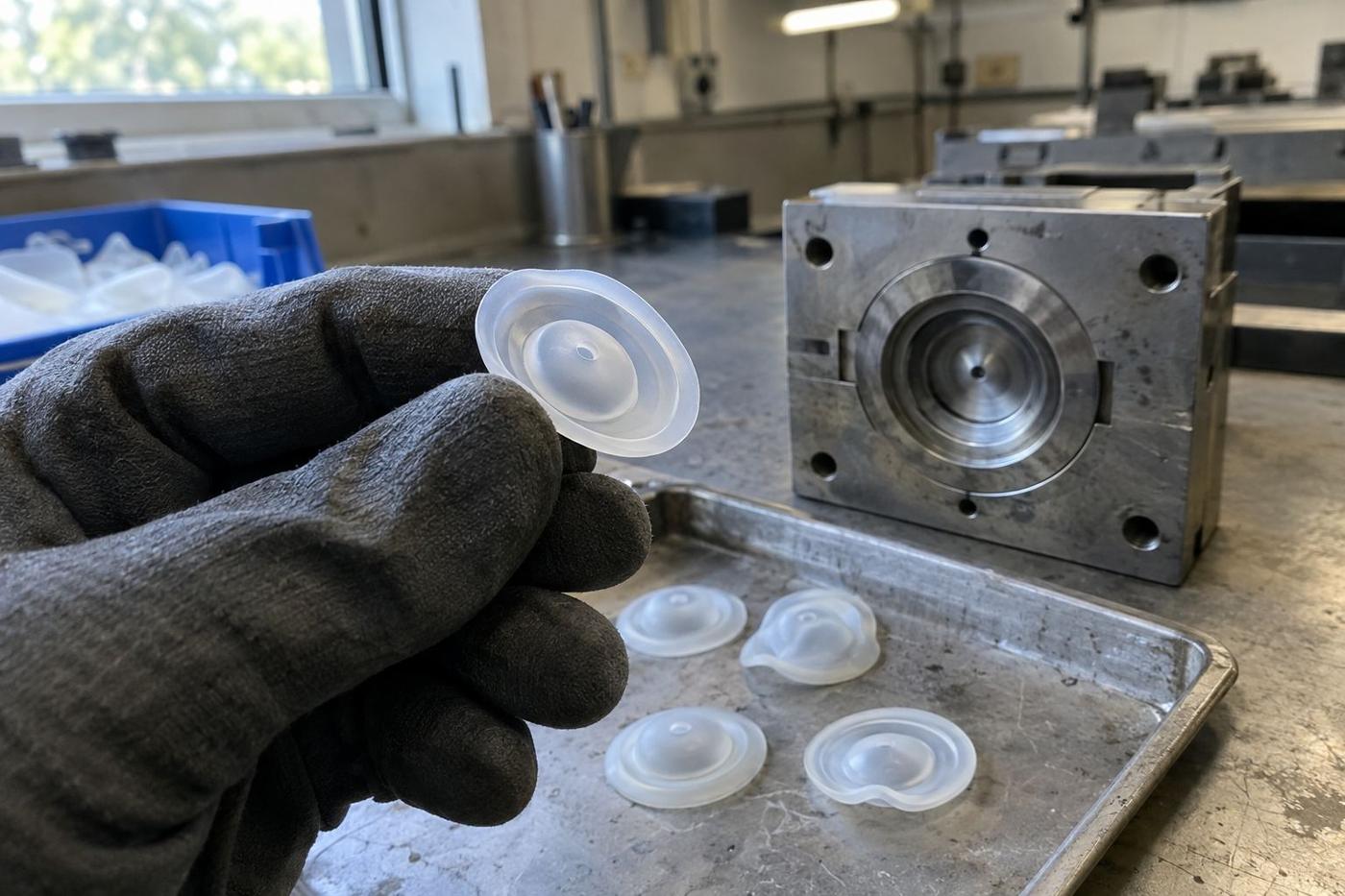
LSR injection moulding
Two-part liquid silicone metered, mixed, injected cold and cured hot. The cleanest route we have for medical, wearable and electronics parts at…
See the serviceProject record · Haptics · LSR
A precision-shaped silicone diaphragm that generates haptic feedback in a small consumer device. Prototype casting proved the design; production LSR held it stable across millions.
The brief
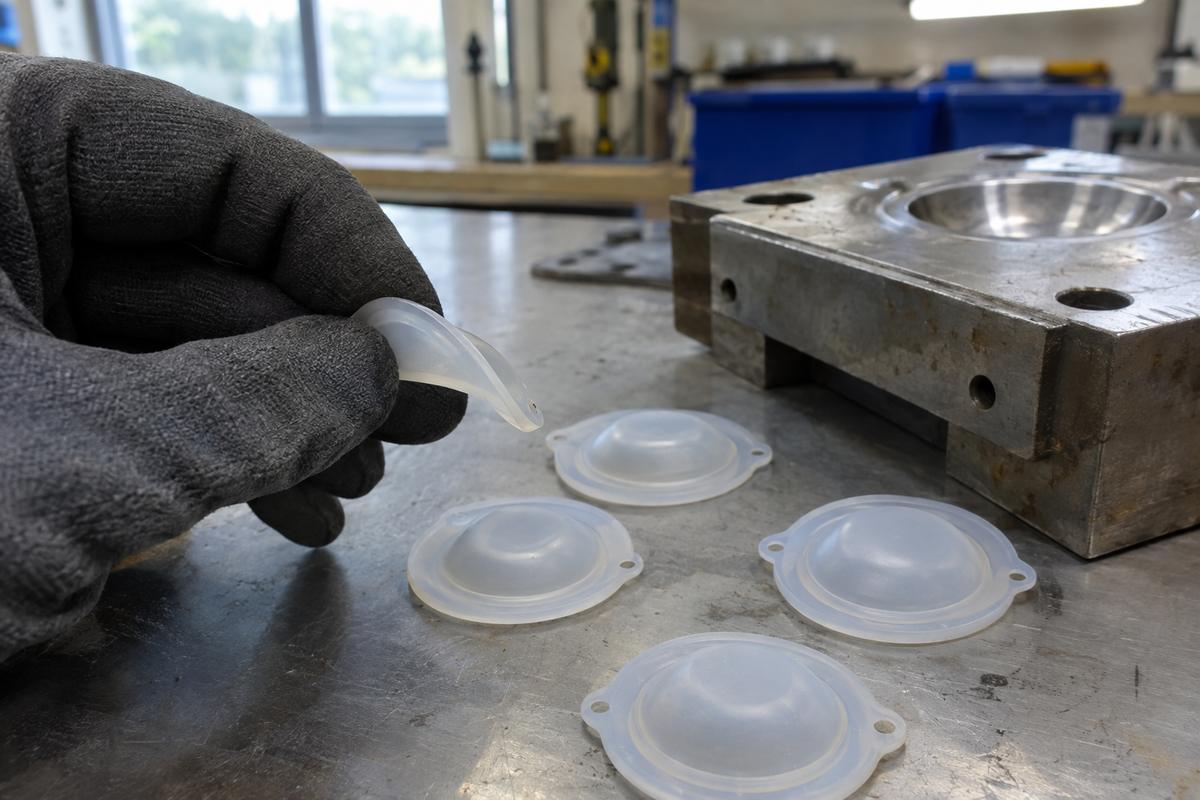
A haptics-focused consumer brand had prototyped a small silicone diaphragm — the acoustic-adjacent element that produces tactile feedback in a hand-held device. Prototype casting had validated the concept; user testing had confirmed the haptic profile.
For production, the challenge was consistency. Haptic feedback is generated by the diaphragm deflecting under a fast air pulse. If the diaphragm stiffness varies part to part, the feedback varies. Users describe the device as inconsistent. Reviews reflect it.
They needed a production route that would hold diaphragm stiffness within a tight window across every part in every batch — for the life of the product.
The problem
Cast prototypes were made one at a time, weighed for material, hand-poured, and cured on the bench. Every part was slightly different. That was fine for prototype: overall haptic character was consistent even if individual parts varied.
At production volume, individual variation stops being averaged out — every user experiences their own device, not the fleet average. Wall thickness variation of even a small percentage translates directly into perceived stiffness variation.
The route had to be LSR with tight cavity dimensional control, a grade whose cure kinetics were well-characterised, and a cure cycle held to specification. All three interlocked; getting one wrong would show in the finished part.

What we changed
The design was correct. The route change did the rest.
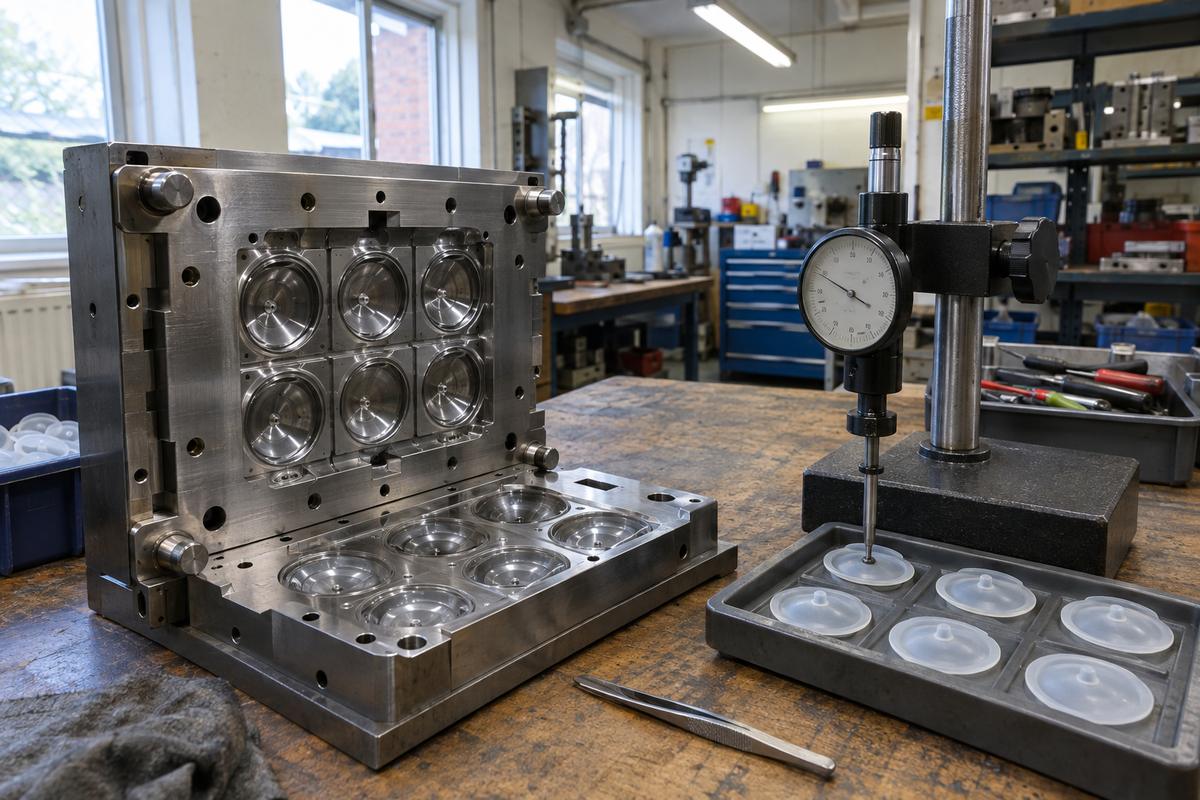
The cavity was machined and polished to hold diaphragm wall thickness to a defined tolerance. Cavity wear tracked to protect the tolerance across tool life.
LSR grade chosen for well-characterised cure — repeatable material behaviour across batches, minimal cure-condition sensitivity.
First production samples deflection-tested individually. Distribution measured; grade and cure adjusted where needed to centre and tighten the distribution.
Cure time, temperature and pressure documented. Any deviation requires quality sign-off before the batch continues.
First production batch established the golden sample and a stiffness distribution. Both retained as programme references.
Each batch first-off checked for both dimensional and haptic performance. Any drift caught before the batch ships.
The commercial shape
LSR multi-cavity tooling investment recovered inside twelve months on the initial volume forecast. Actual volumes ran ahead of forecast; payback was faster.
Per-part cost dropped substantially versus what cast prototype production had cost per unit. More importantly, the product's user rating stabilised — the 'inconsistent feedback' complaints in early reviews disappeared once production LSR parts replaced the pilot cast parts.
The tool has since produced several million parts. Diaphragm stiffness distribution remains within the initial reference. No refurb required so far; scheduled inspection continues at defined cycle intervals.
“The reviews stopped saying it was inconsistent about six weeks after the LSR parts started shipping.”
Services used
Two-part liquid silicone metered, mixed, injected cold and cured hot. The cleanest route we have for medical, wearable and electronics parts at…
See the serviceSilicone parts for products people wear, hold, or wipe every day — ear tips, straps, grips, sleeves, applicators. Made to a colour and feel you sign…
See the serviceFor parts that will be in production for years — components inside a device family, sealing parts on long-lived equipment, consumer parts on a…
See the serviceMore project records
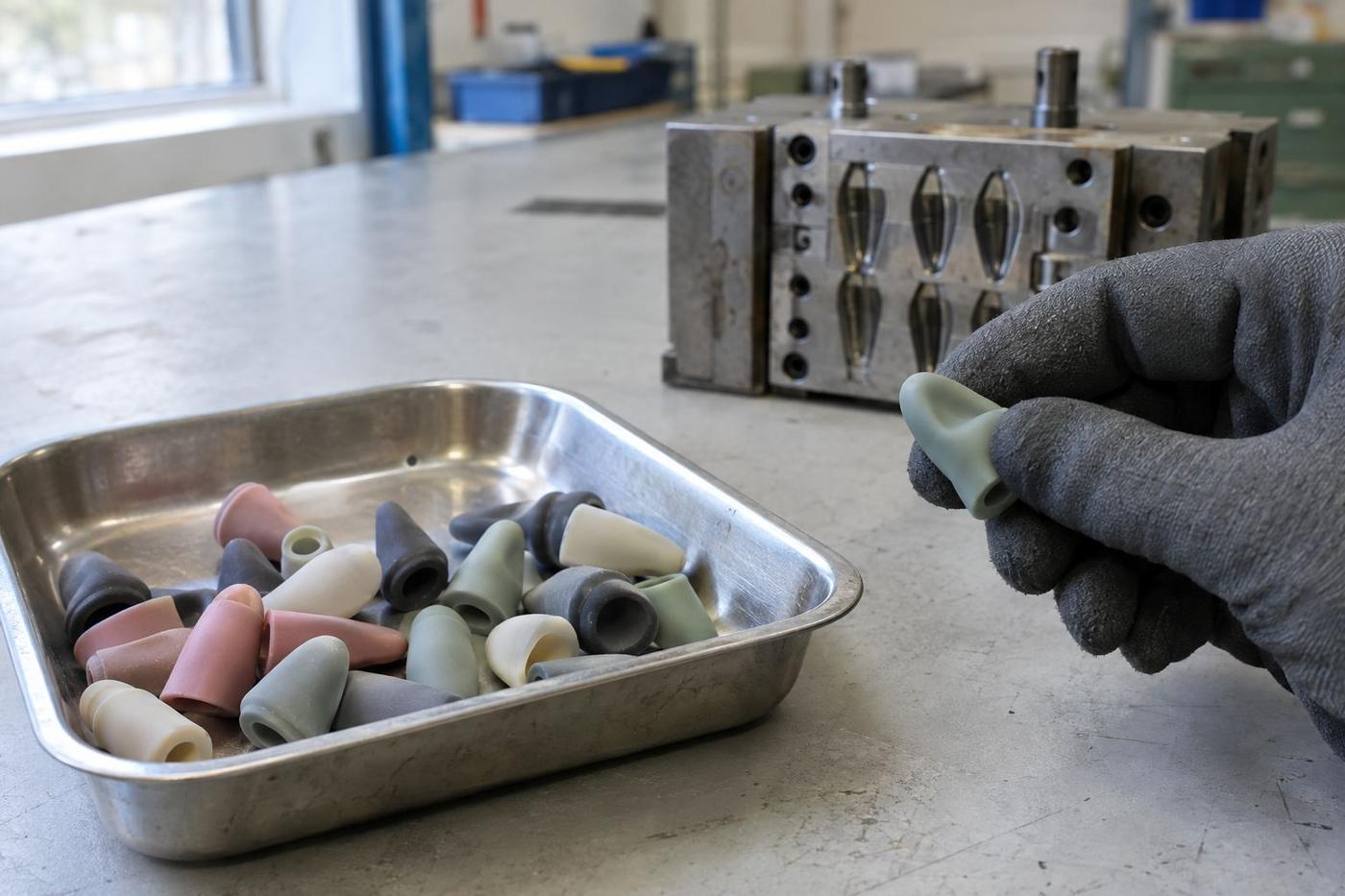
A soft silicone tip that fits on the end of a personal care device. Skin-contact, cleanable, colour-matched to the brand. Batch supply against a fluctuating…
Read the record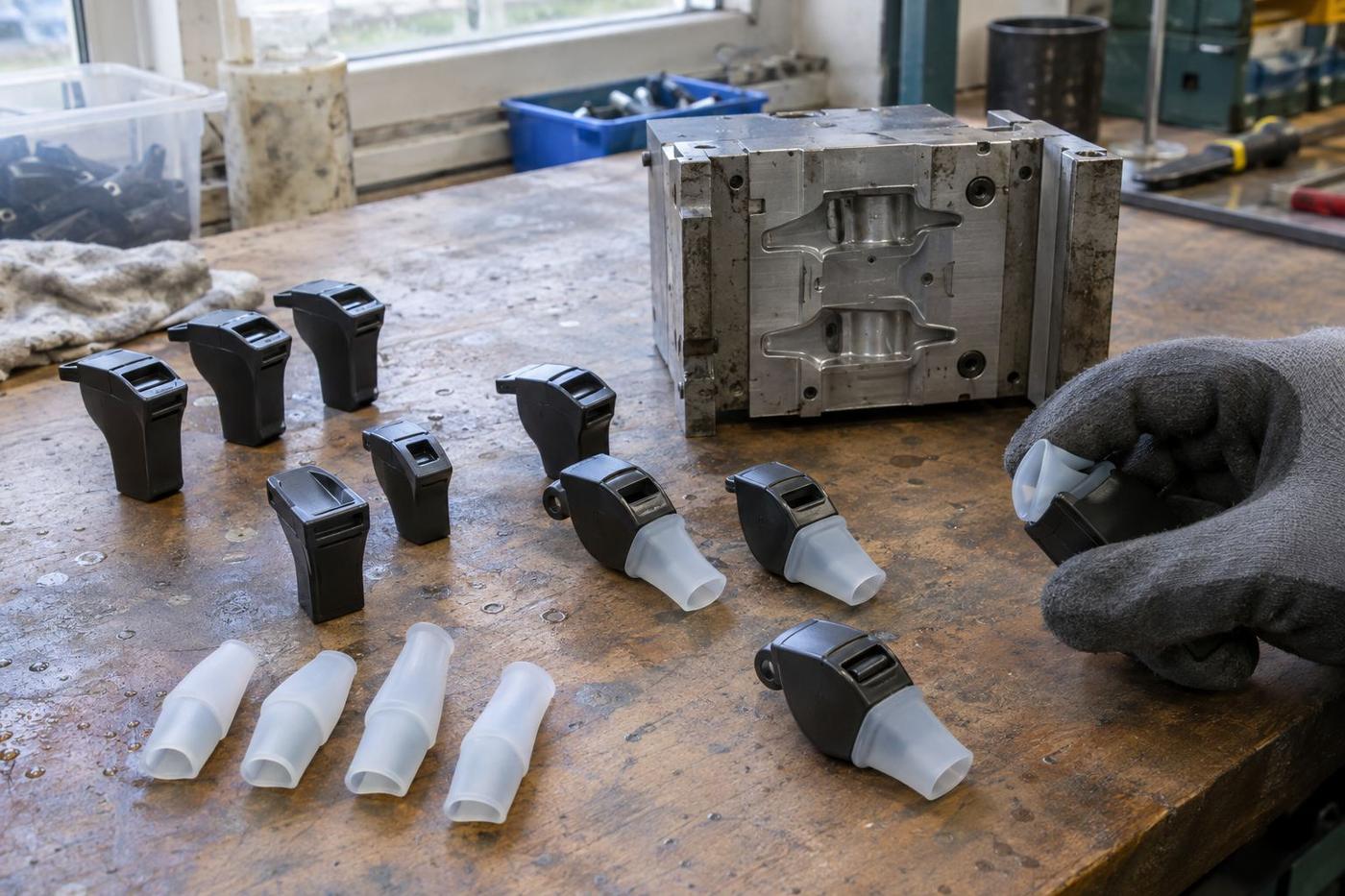
A referee whistle with a soft silicone mouthpiece bonded to a rigid plastic body. Not glamorous; used in cold weather, wet weather, and everything else. It had…
Read the record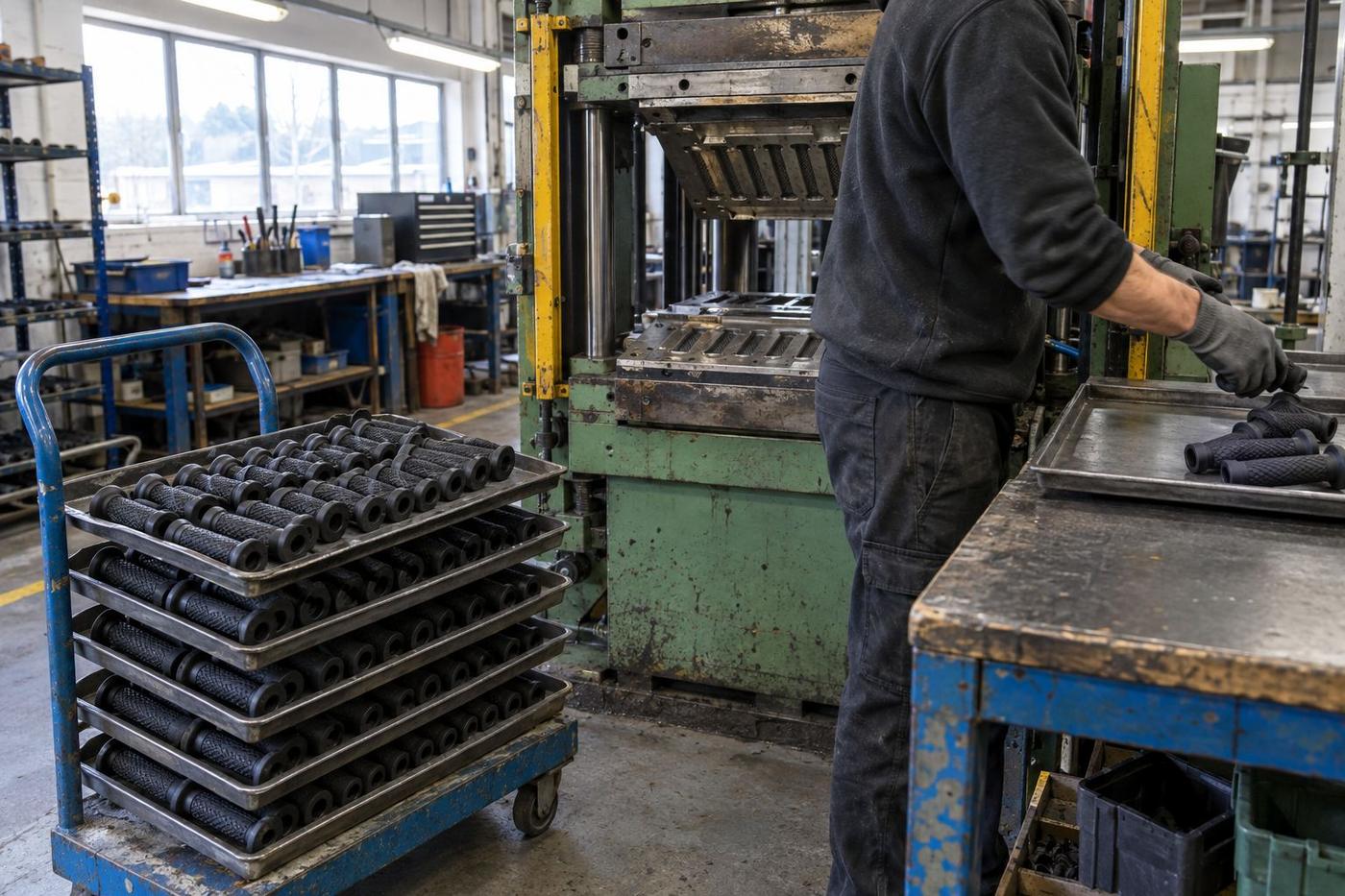
A textured rubber grip fitted to outdoor equipment. UV-stable, weather-resistant, comfortable in cold and wet conditions. Batch supply across a family of tools…
Read the recordNext step
The commercial shapes described in our project records are examples of what's worked, not prices we're quoting today. Every programme sizes differently based on part geometry, annual volume, material family and paperwork requirements.
For a first conversation about whether we'd be the right supplier for your part, send a drawing or a sample with your rough annual volume. That's enough to know if the fit is real.
Get in touch
Rough annual volume, target unit price, and any deadlines. That's enough to work out whether compression, LSR injection or something else is the right tool.
Real people, a real workshop
No call centre and no middlemen. When you contact TCI Products, you speak to the team who design, build and check your mould.
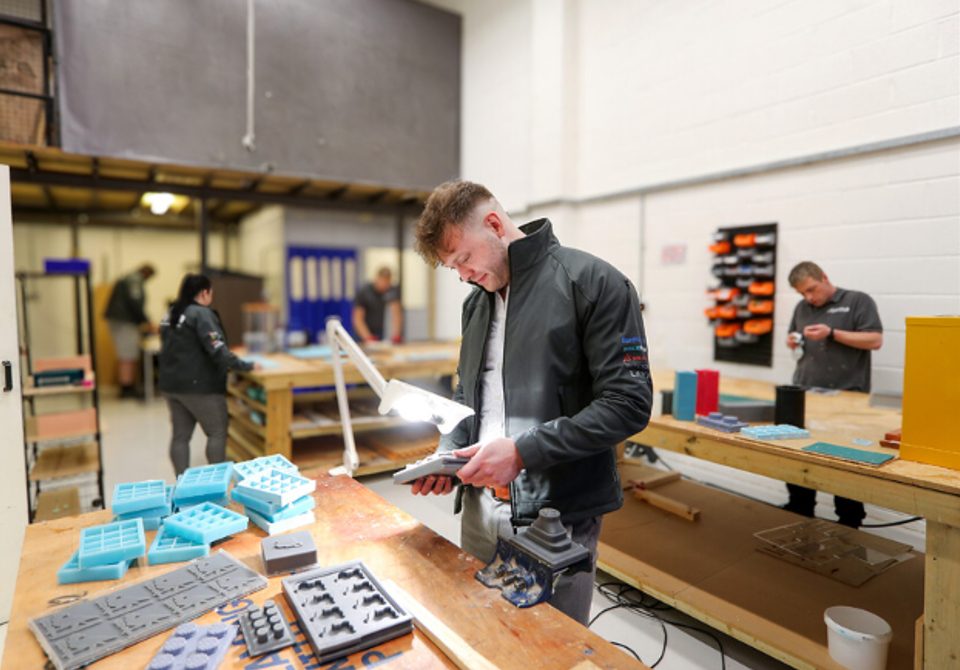

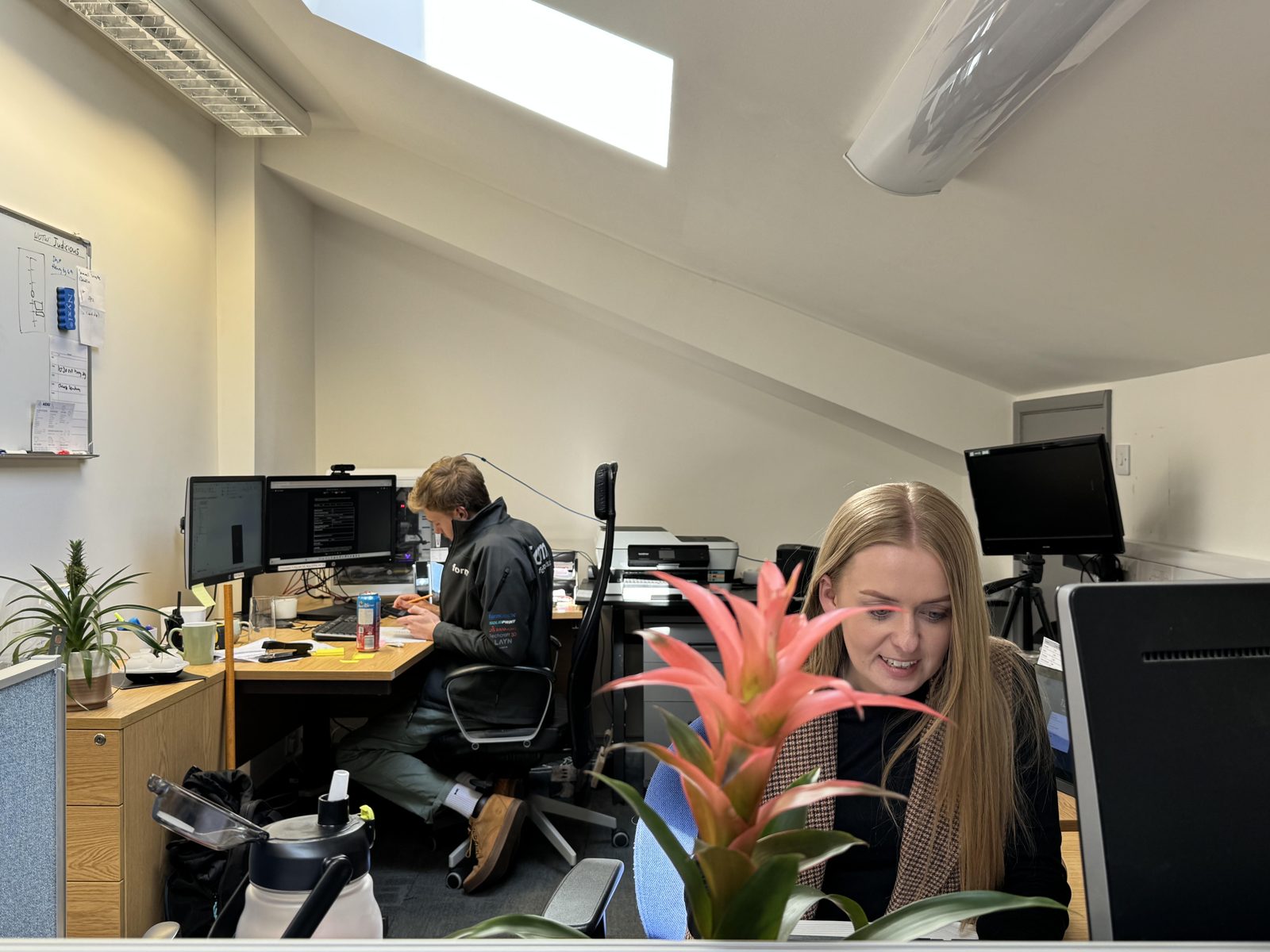
 Thomas LaneManaging Director
 George PrestonDesign & Project Manager
 Kelly BallingerHead of Partnerships
 Jim AndertonProduction Manager
 TheodoreEmployee Welfare