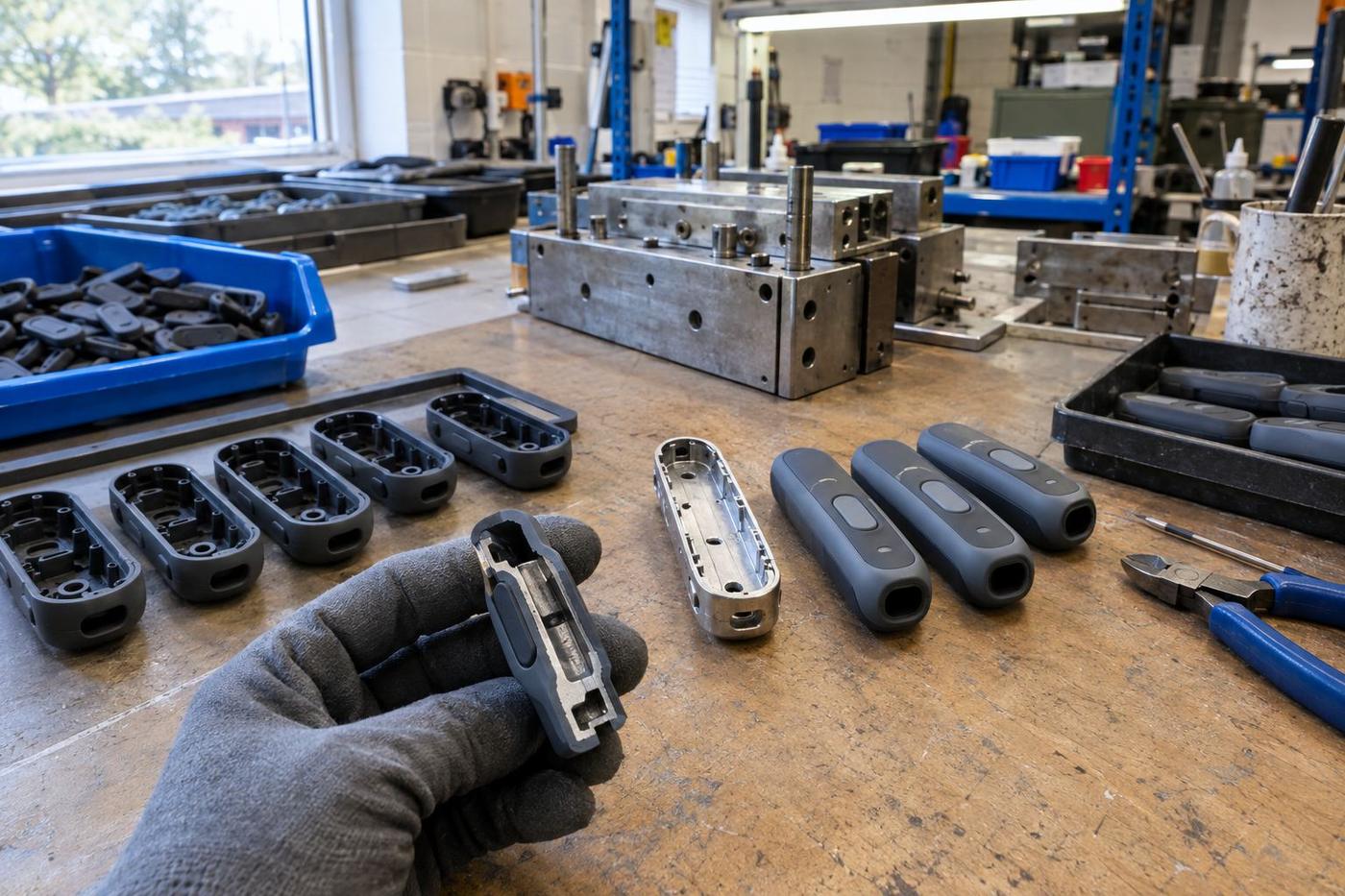
Substrate overmould
Your rigid part arrives, goes into our tool, and leaves with silicone permanently attached. No glue line, no assembly step, no seal to fall…
Open this variantCombined route · substrate plus silicone
Silicone or rubber moulded directly onto a pre-made substrate — a plastic housing, a metal insert, a printed circuit assembly — so the finished part comes off the press already bonded. One step, no glue line, no second operation.
Why overmould
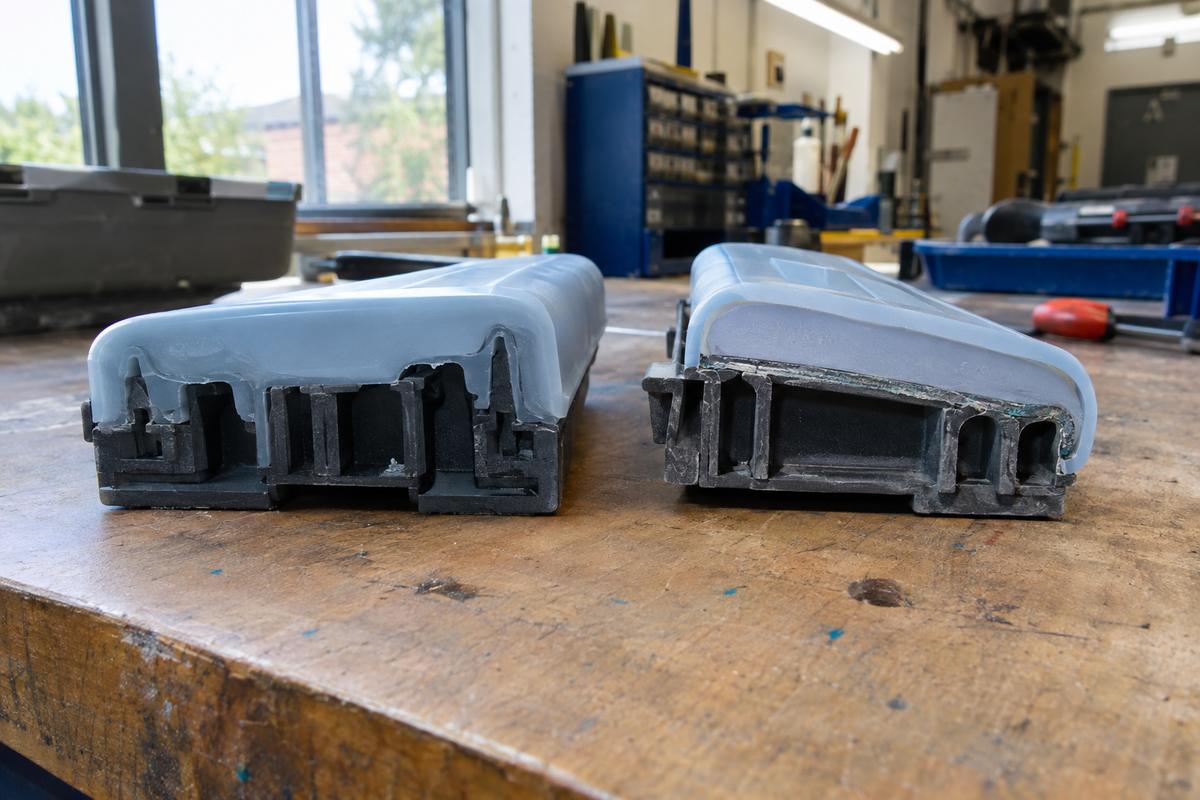
The alternative is: mould the plastic part, mould the silicone part, then bond them together in a second operation with an adhesive. That works, but the interface is only as good as the glue line — and every extra step is another place a batch can go wrong.
Overmoulding replaces the glue with a bond formed during cure. Either the substrate is coated with a chemical primer that bonds to the silicone during cure, or the substrate is designed with mechanical features that lock the silicone in place, or both.
The finished part leaves the press already bonded. That saves you a process step, removes a paperwork line, and — for wearable, medical and electronics parts — usually gives a much cleaner interface than an adhesive would.
It's used across our sectors: consumer product grips, medical device housings with sealed silicone gaskets, electronics enclosures with integrated seals, and any part where the silicone element and the substrate element travel together through the rest of assembly.
Drill down
Each variant has its own page with the specifics: where it fits, how we run it and what to send us.
Your rigid part arrives, goes into our tool, and leaves with silicone permanently attached. No glue line, no assembly step, no seal to fall…
Open this variantThe point where a cable enters a connector or device is where most cables fail. An overmoulded silicone body seals that point, spreads the…
Open this variantWearables have to be tough, sealed and comfortable against skin all day. Overmoulding silicone onto a rigid frame gives you all three in…
Open this variantHow the bond happens
The substrate is coated with a thin primer that reacts with the silicone during cure. The bond forms across the whole contact face. Best for smooth substrates.
The substrate is designed with undercuts, holes or ribs. The silicone flows into them during moulding and locks in place. Best where the substrate can't take a primer.
For anything load-bearing or sealing-critical, we specify both — primer plus mechanical features. Belt and braces, and cheaper than the alternative of a failed part in the field.
How it runs
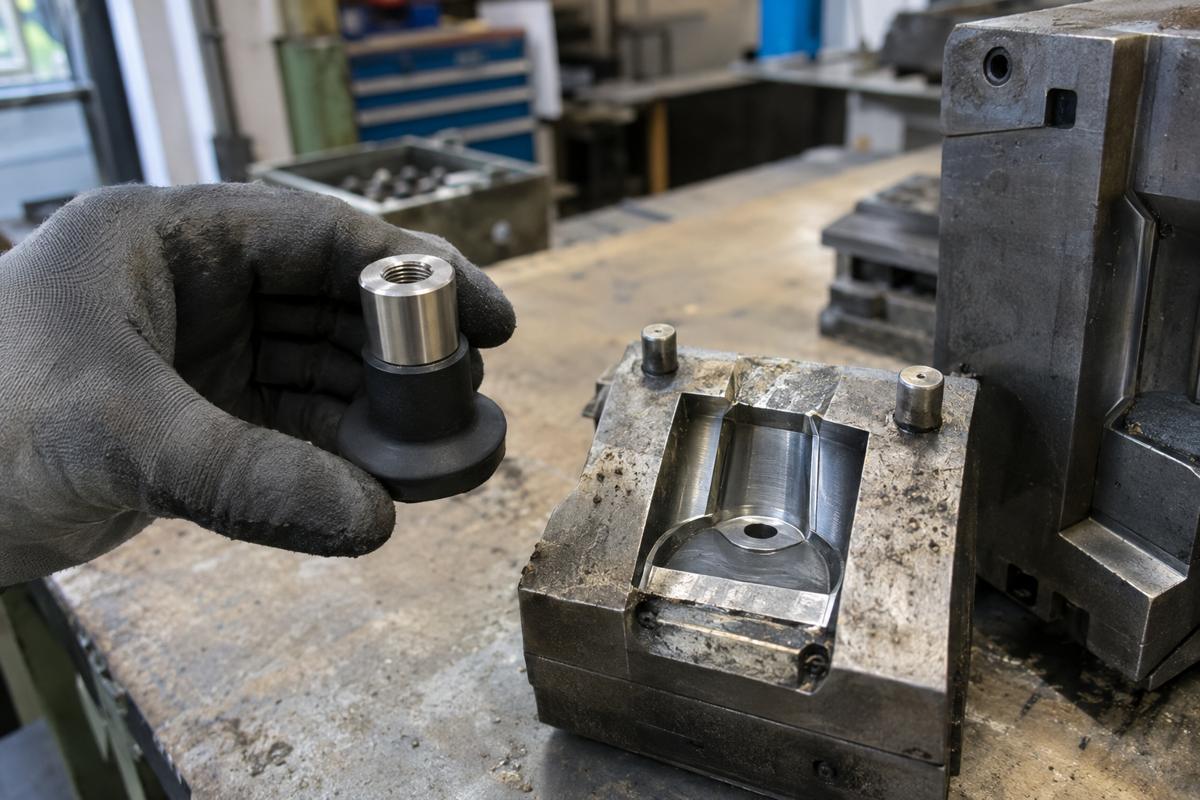
The tool cavity is designed around the substrate as much as around the silicone. Locating the substrate accurately in the cavity is half the job.
The substrate is checked, cleaned if needed, and — if the bond is chemical — primed. Priming happens in a separate cell, with the primer batch recorded against the run.
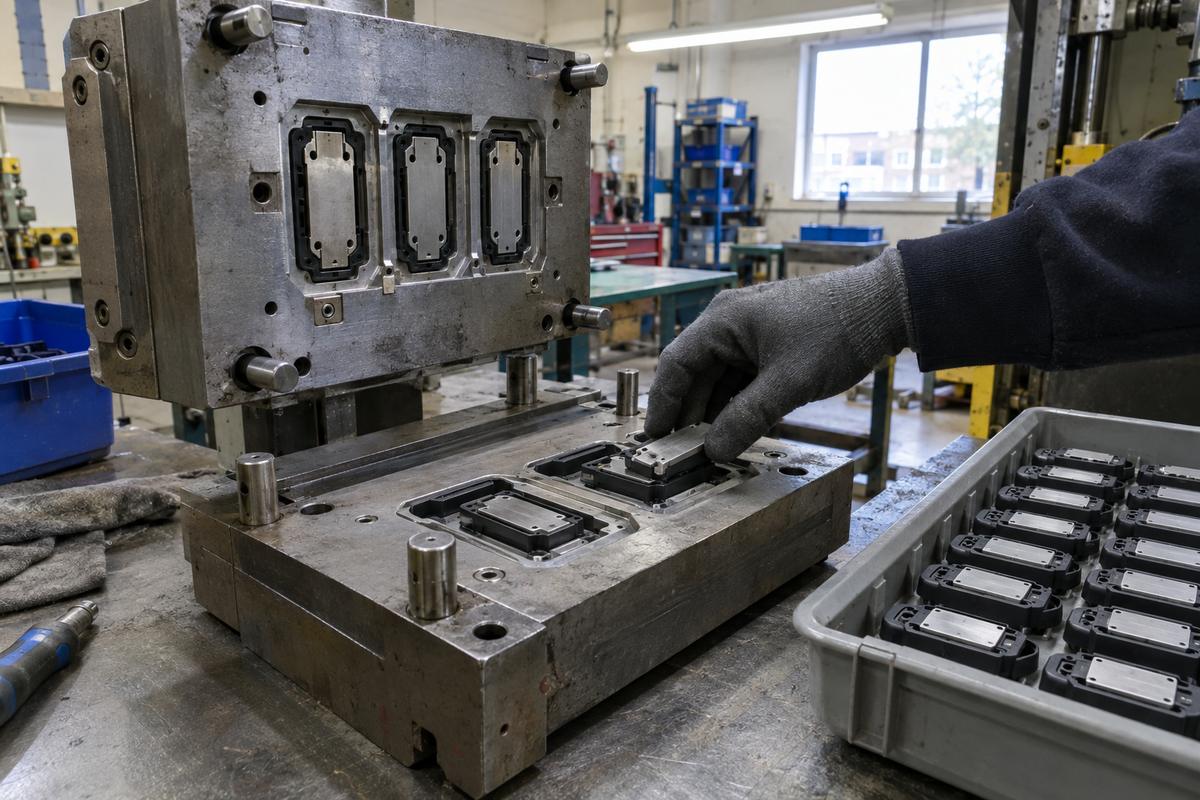
The operator or a robot places the substrate onto locating features in the cavity. On automated cells, a vision system checks the orientation before the tool closes.
The silicone is injected (LSR) or pressed (compression) around the substrate. Cure completes; the bond forms.
First-off parts are pulled and bond-tested. On a chemical bond, we check for delamination; on a mechanical bond, we check that the silicone has filled the interlock features fully.
Substrate batch, primer batch, silicone batch, tool ID and run date all travel with the shipment. On medical- and electronics-grade work, this is how traceability is maintained.
To quote it
Material, dimensions, tolerances. We'll flag any substrate features that won't survive the mould heat or won't hold the silicone reliably.
Is it structural, sealing, cosmetic or protective? That determines grade, durometer, and whether the bond needs to be chemical, mechanical, or both.
You can send us substrates you already produce, or we can source them from your named supplier. Either works; costing shifts accordingly.
Overmould tooling is more complex than single-material tooling. It pays back over volume; we'll model both a short-run compression and a full LSR route.
Related routes
Two materials moulded in a single cycle on a press configured for both — usually a rigid plastic first, then silicone bonded onto it, without ever…
Read moreA pre-made insert — a threaded stud, a metal contact, a printed circuit, a stiffening plate — placed into the tool cavity, then silicone or rubber…
Read moreTwo-part liquid silicone metered, mixed, injected cold and cured hot. The cleanest route we have for medical, wearable and electronics parts at…
Read moreAt a glance
How overmoulding works
Swipe to see the whole diagram
Get in touch
Rough annual volume, target unit price, and any deadlines. That's enough to work out whether compression, LSR injection or something else is the right tool.
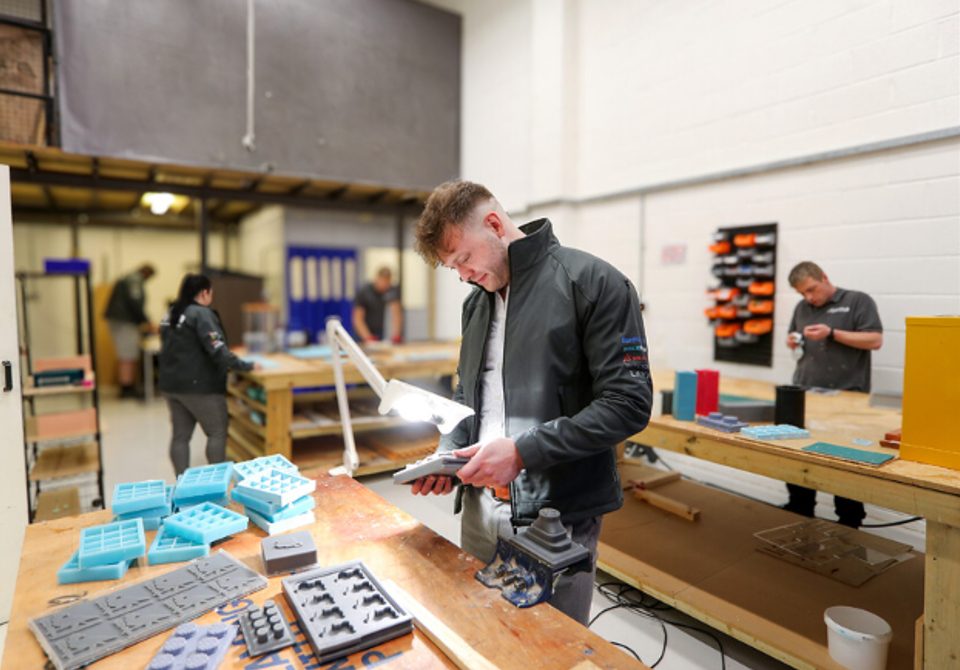
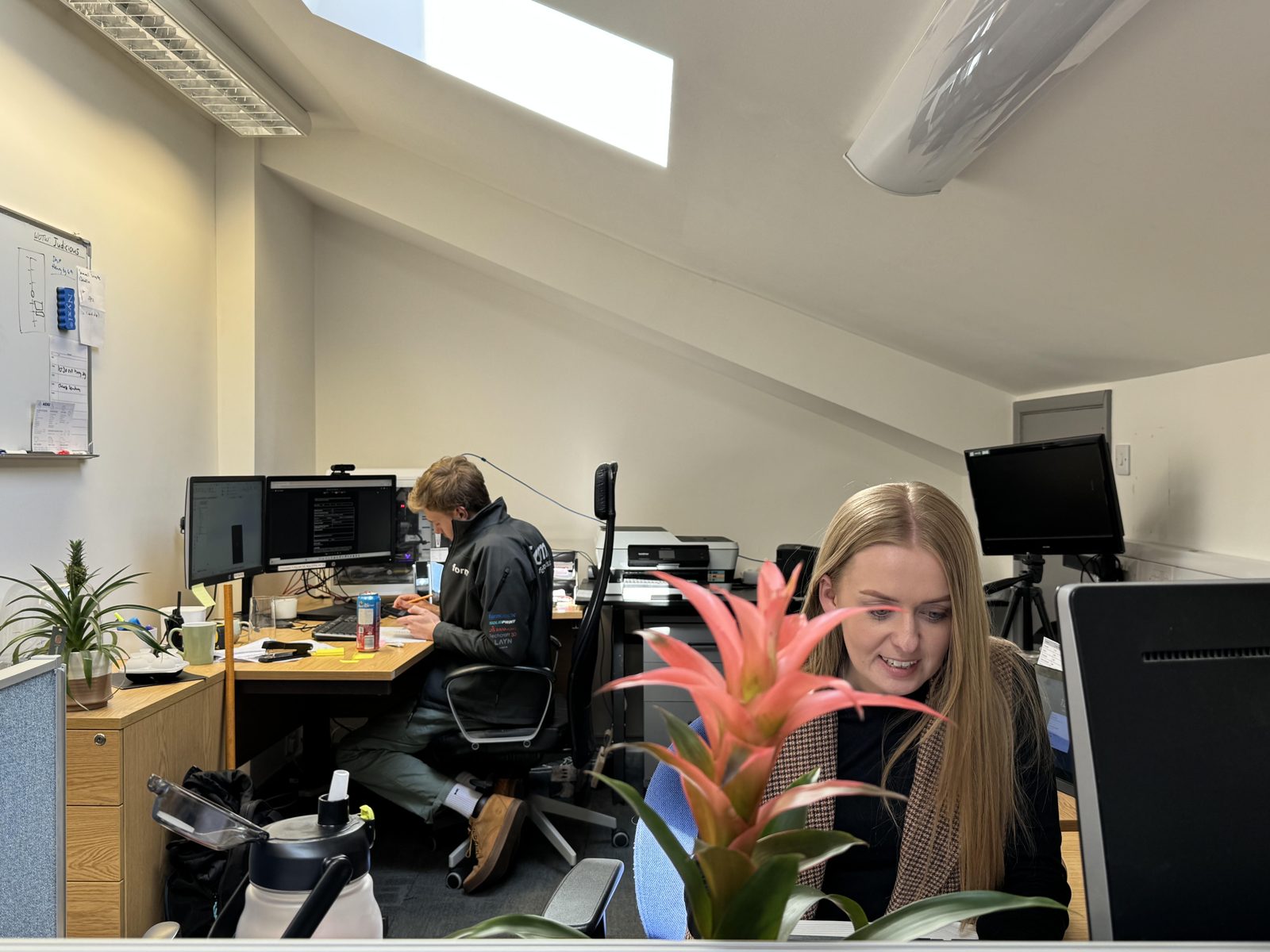
Real people, a real workshop
No call centre and no middlemen. When you contact TCI Products, you speak to the team who design, build and check your mould.

 Thomas LaneManaging Director
 George PrestonDesign & Project Manager
 Kelly BallingerHead of Partnerships
 Jim AndertonProduction Manager
 TheodoreEmployee Welfare