Skin-contact wearable
Silicone, almost always. Regulatory clarity plus feel.
Materials guide for OEM buyers
Three material families that look and feel similar to a non-specialist, but behave very differently in production and in service. Written to save an OEM buyer an afternoon of confusion.
Start here
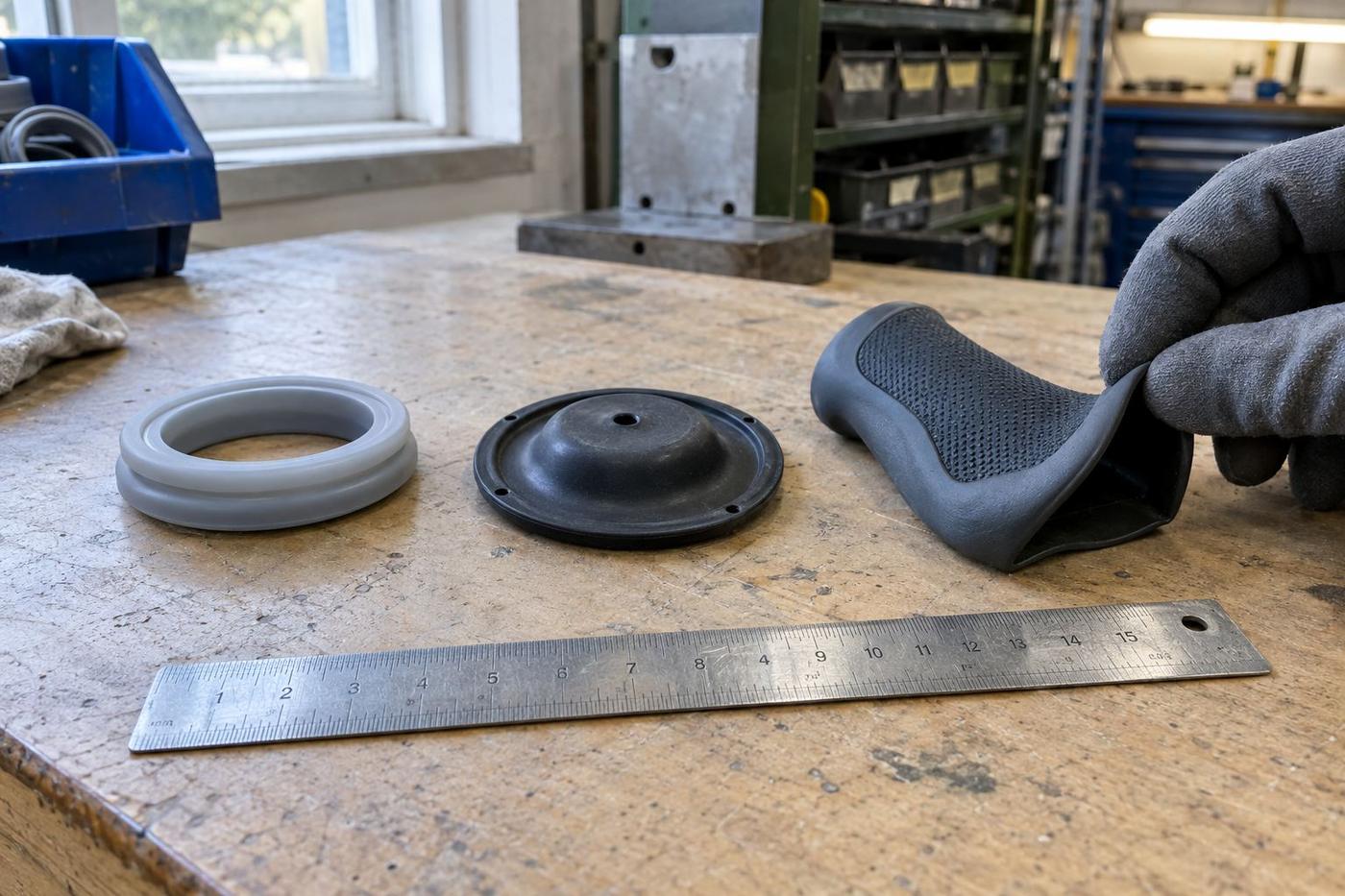
That's it, roughly. Silicone (a family of synthetic elastomers based on siloxane chemistry) handles temperature and skin contact well and is expensive. Natural and synthetic rubbers (EPDM, nitrile, natural rubber, and cousins) are cheaper and handle industrial loading well but don't like high temperatures or UV. TPEs (thermoplastic elastomers) look and feel like rubber but process like plastic — injection-mouldable and recyclable, at the cost of some elastic performance.
For most OEM decisions, the family choice is obvious once you know the environment the part is going to live in. It's the grade selection within the family where most of the wrong decisions get made. That's covered in the sections below.
None of this is a datasheet substitute. It's the shape of the conversation we have with a buyer who hasn't specified silicone or rubber before. If you already know what family you want, skip to the materials page for grade-level detail.
Silicone family
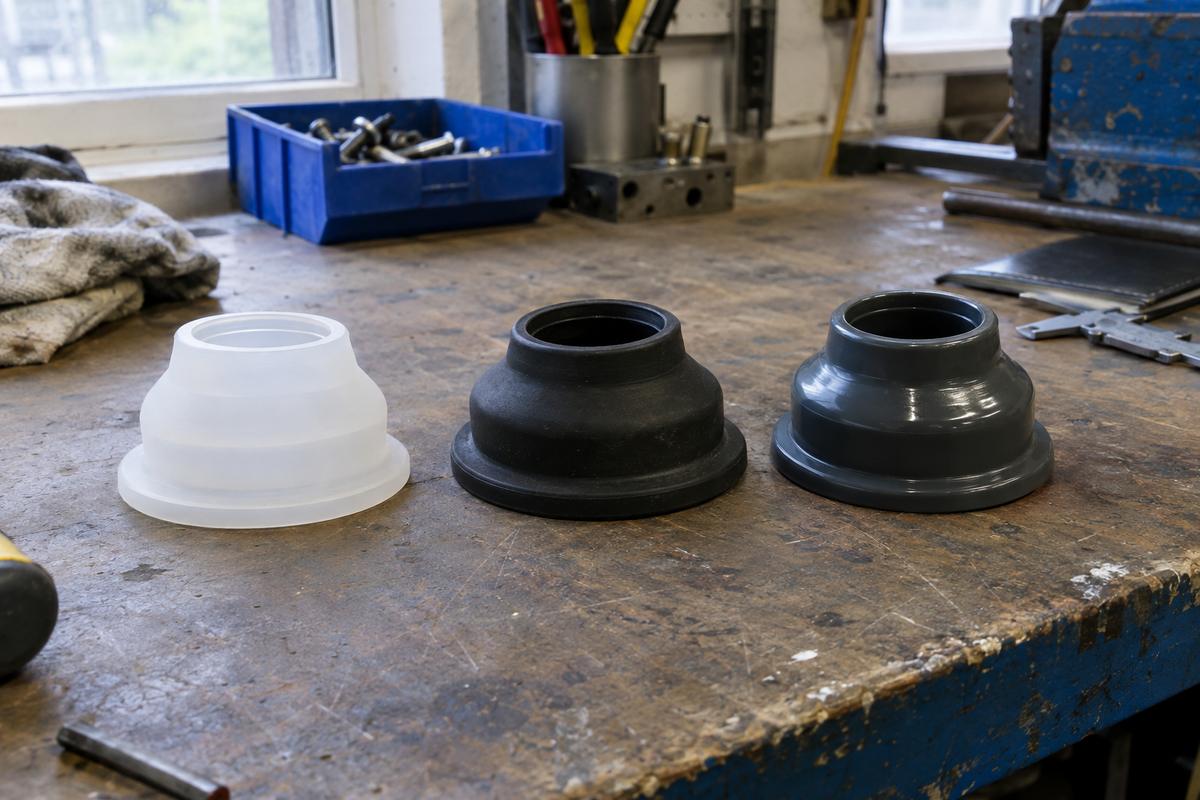
Silicone earns its higher cost across a specific set of environments. If you don't need any of them, one of the other families is probably cheaper.
Standard silicones run comfortably from around -50°C to +200°C. Specialist grades push further both directions. Nothing else in the elastomer family covers this range.
Documented food and medical grades are common. Cure chemistry is clean; leachables are low; regulatory documentation is well-established.
Broad chemical compatibility, especially with polar solvents and oxidising agents. Not universal — flag your specific chemicals at enquiry.
Silicones don't degrade in UV or ozone the way natural rubber does. For outdoor or long-life applications, that's often the deciding factor.
Rubber family
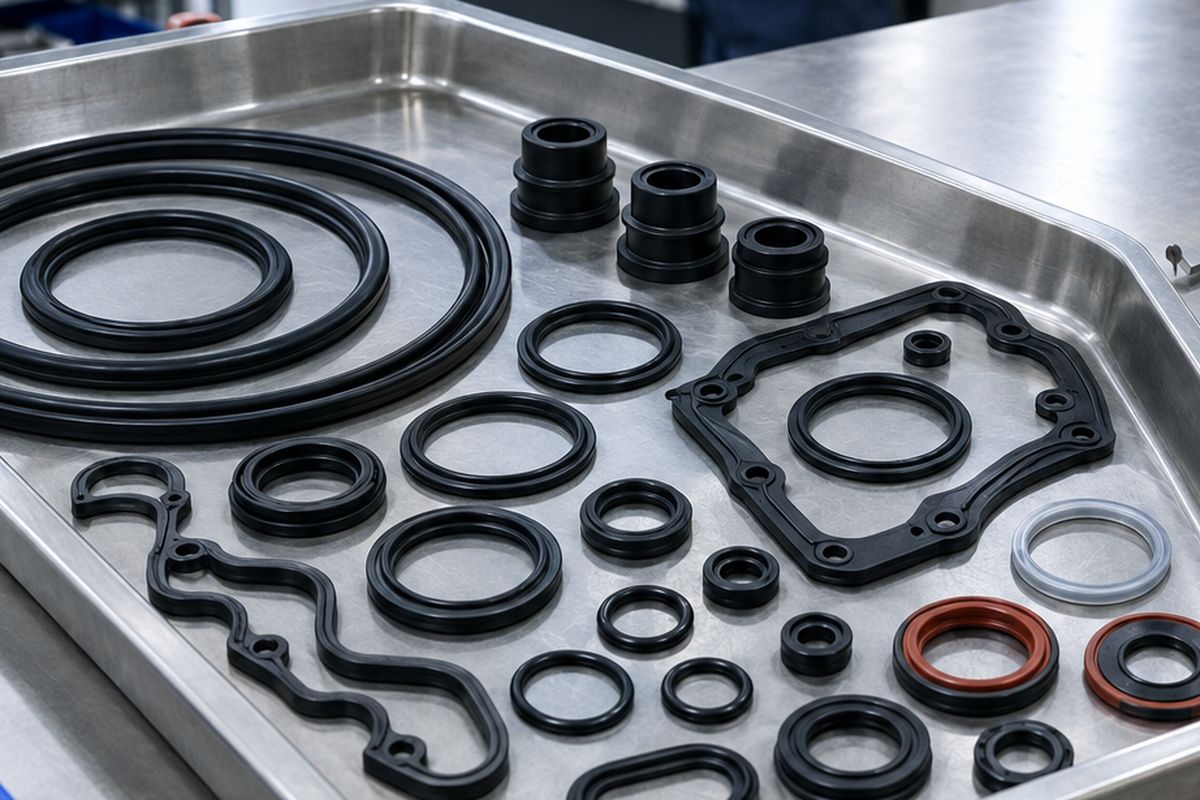
For a large majority of industrial rubber parts, rubber (not silicone) is the right answer. Silicone is over-specified out of habit in a lot of places it doesn't belong.
Outdoor sealing, weather stripping, water systems, roofing. Excellent water and UV resistance, moderate temperature range, low cost.
Fuel systems, oil seals, hydraulic components. Excellent hydrocarbon resistance. Poor UV and ozone resistance — keep it out of sunlight.
Vibration isolation, high-elasticity applications, some tyre and industrial components. Great mechanical properties, poor chemical and UV resistance.
Higher-durometer silicone supplied as a solid gum, moulded like other rubbers. Bridges the gap where the environment needs silicone but the geometry suits compression.
TPE family
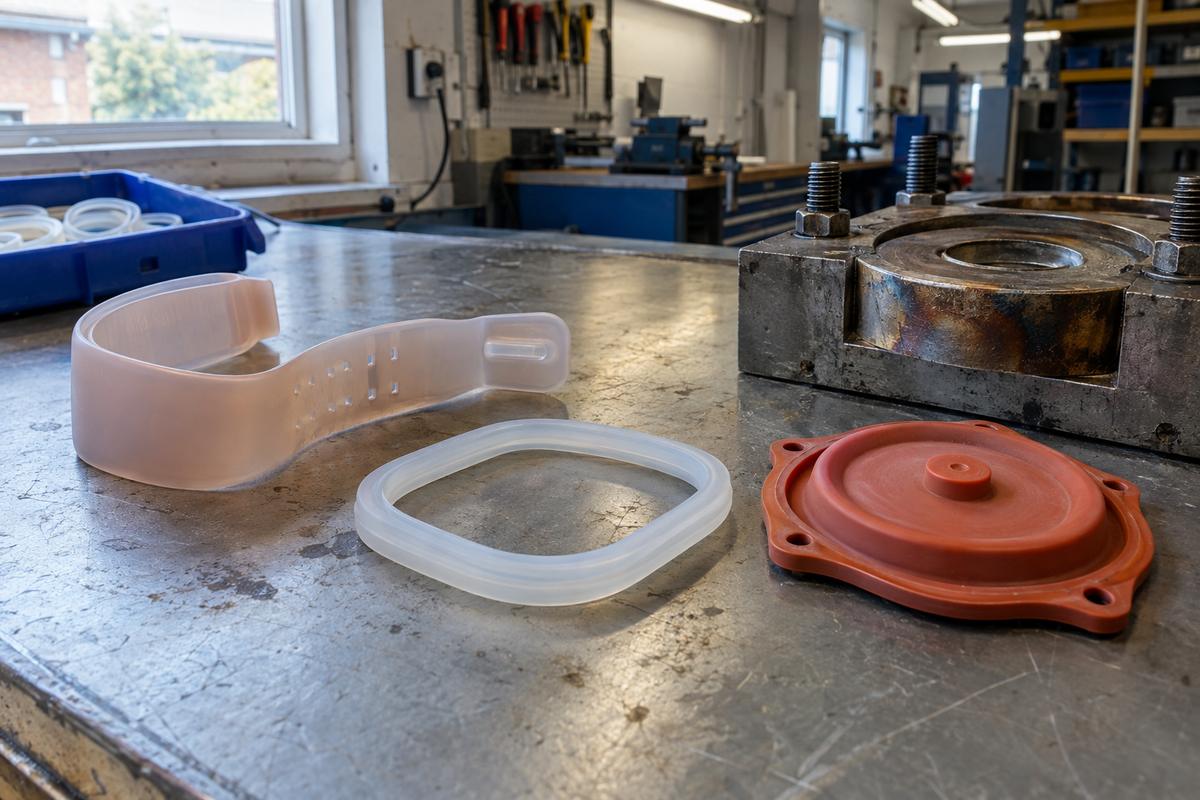
Runs on thermoplastic injection presses. Faster cycle times, lower tooling cost per cavity, easier colour changes than any thermoset.
Unlike silicone and thermoset rubbers, TPE can be re-melted and re-moulded. Increasingly important for consumer product sustainability posture.
Good for soft-touch handles, grips, and seals on plastic housings. Not usually right for high-temperature or long-life applications.
In practice
Silicone, almost always. Regulatory clarity plus feel.
EPDM (rubber family) usually. Silicone only if the temperature range demands it.
Nitrile (rubber family). Silicone is generally the wrong answer here — it swells in hydrocarbons.
TPE if the product runs on plastic injection presses anyway; silicone if the sensitivity of the application demands it (e.g. medical adjacent).
Keep reading
Most silicone parts are designed by someone who's designed one before. If this is your first, or if the last one taught you…
Read the guideA moulded part isn't always a finished part. Understanding what happens between the press and the shipment helps you specify the…
Read the guideFor anything a customer will see, colour is one of the two things they judge (feel is the other). Getting the colour right is…
Read the guideGet in touch
Rough annual volume, target unit price, and any deadlines. That's enough to work out whether compression, LSR injection or something else is the right tool.
Real people, a real workshop
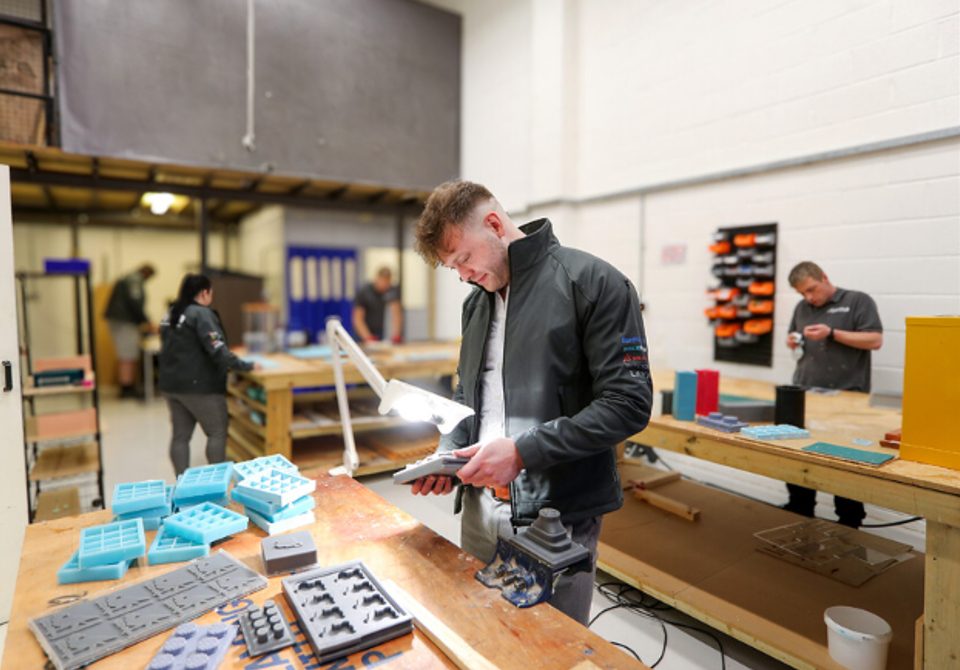
No call centre and no middlemen. When you contact TCI Products, you speak to the team who design, build and check your mould.


 Thomas LaneManaging Director
 George PrestonDesign & Project Manager
 Kelly BallingerHead of Partnerships
 Jim AndertonProduction Manager
 TheodoreEmployee Welfare