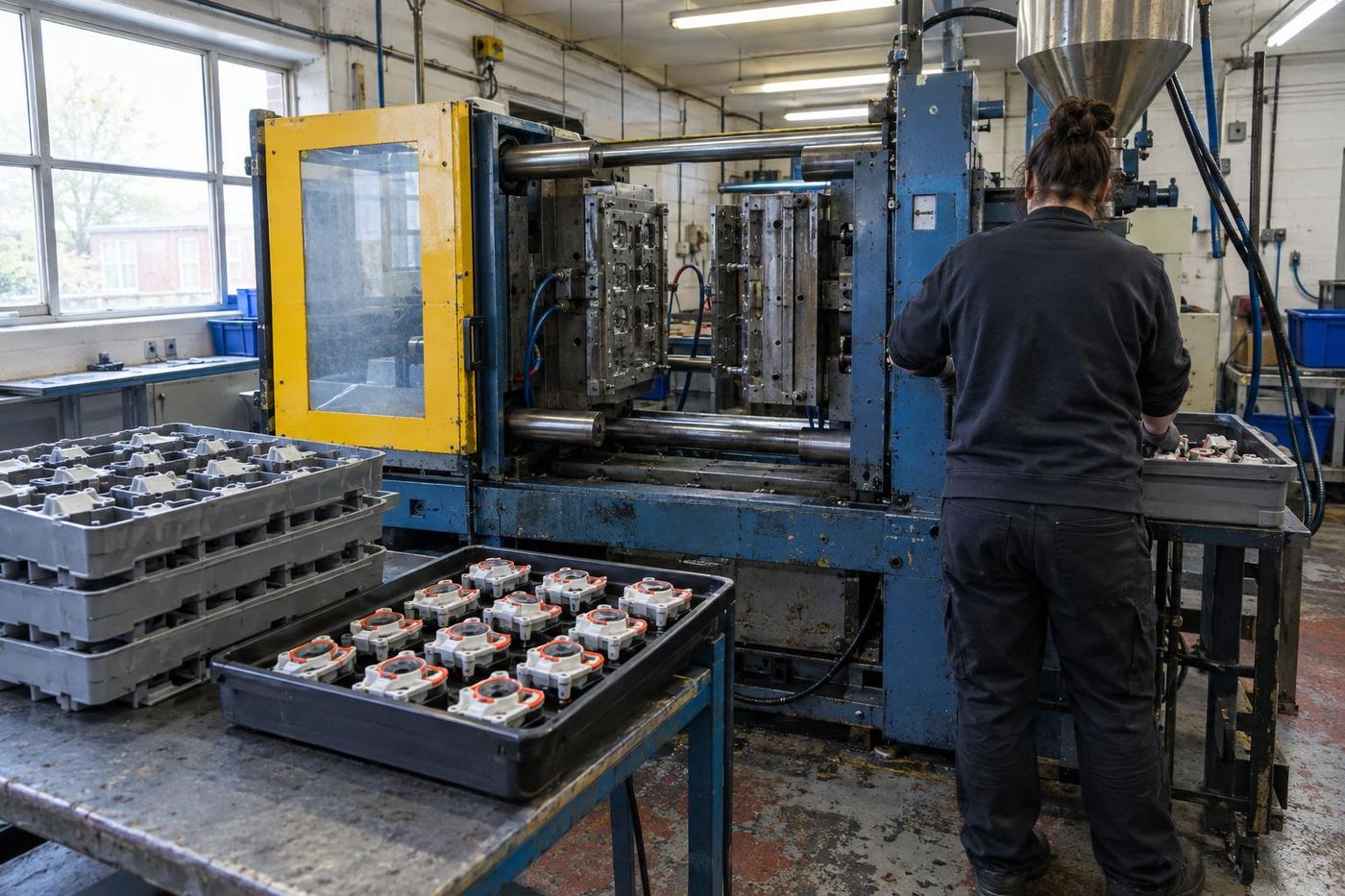
Rigid-soft two-shot
The rigid part and the silicone are moulded in one tool, one after the other, without ever leaving the machine. It's the most integrated…
Open this variantCombined route · two materials, one cycle
Two materials moulded in a single cycle on a press configured for both — usually a rigid plastic first, then silicone bonded onto it, without ever leaving the tool. The finished part is complete when the press opens.
Where two-shot fits
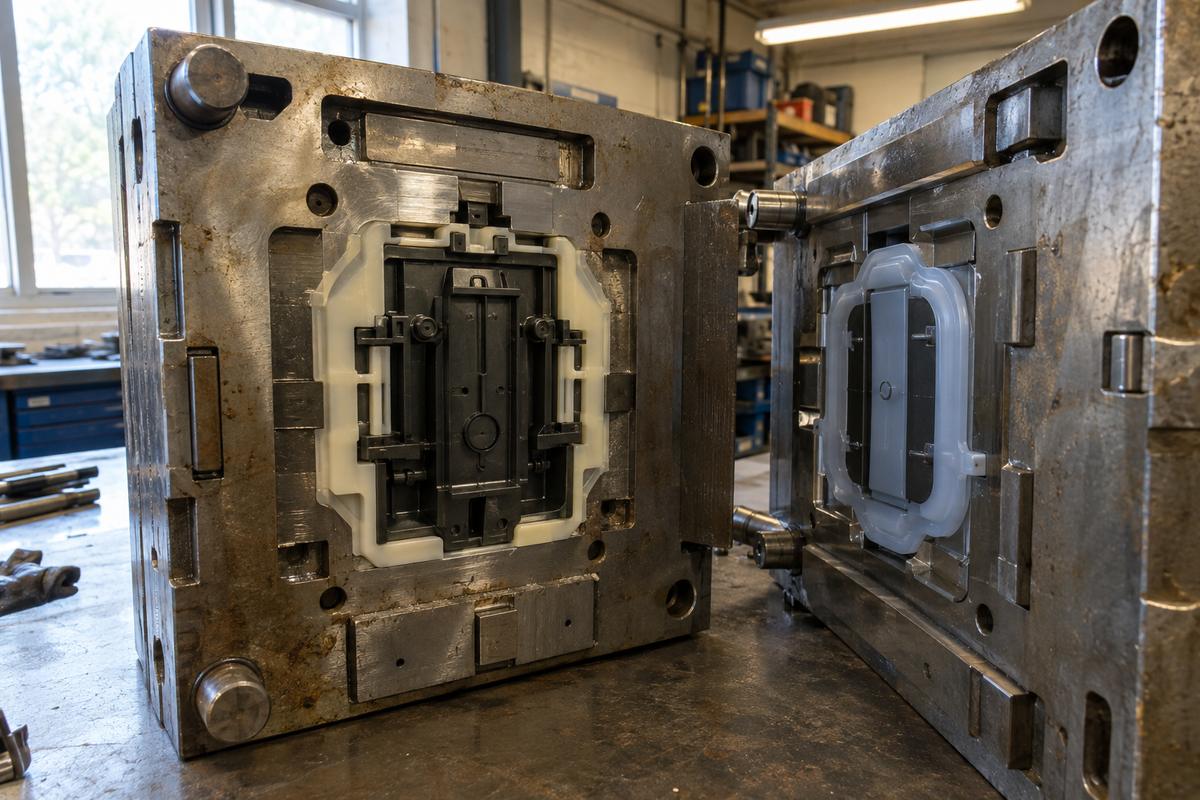
Two-shot (or 2K) moulding puts both materials into the same tool on the same press in the same cycle. The rigid substrate is moulded first, the tool rotates or the core retracts, and the silicone is injected onto the substrate while it's still in place.
The result is a bond made under ideal conditions: substrate still hot, still perfectly located, silicone injected onto a clean surface that hasn't been out of the tool. On the right geometry, the bond is stronger than anything you could achieve by overmoulding as a second operation.
The catch is tooling investment. A 2K tool is roughly double the cost of a comparable single-material tool, and the press has to be equipped for both materials. Below annual volumes in the tens of thousands, plain overmoulding is usually the better answer.
Where 2K earns its keep is on parts where the substrate and the silicone will always travel together — a consumer product with a soft-touch grip, a medical device with an integrated seal, an electronics enclosure where the gasket has to be perfectly located.
Drill down
Each variant has its own page with the specifics: where it fits, how we run it and what to send us.
The rigid part and the silicone are moulded in one tool, one after the other, without ever leaving the machine. It's the most integrated…
Open this variantOne silicone part, two colours or two hardnesses, with a clean line between them. Useful for keypads, straps, grips and seals with a soft…
Open this variantWhat 2K is good for
A rigid handle with a silicone grip moulded onto it. In one cycle, no adhesive, no locating jig. The grip is exactly where the design put it, every time.
A housing with a sealing lip moulded onto it. The lip is on the housing, not glued on afterwards. Assembly picks up one part, not two.
Two colours or two hardnesses on one part, bonded cleanly. Design gets an effect that would take multiple assembly steps by any other route.
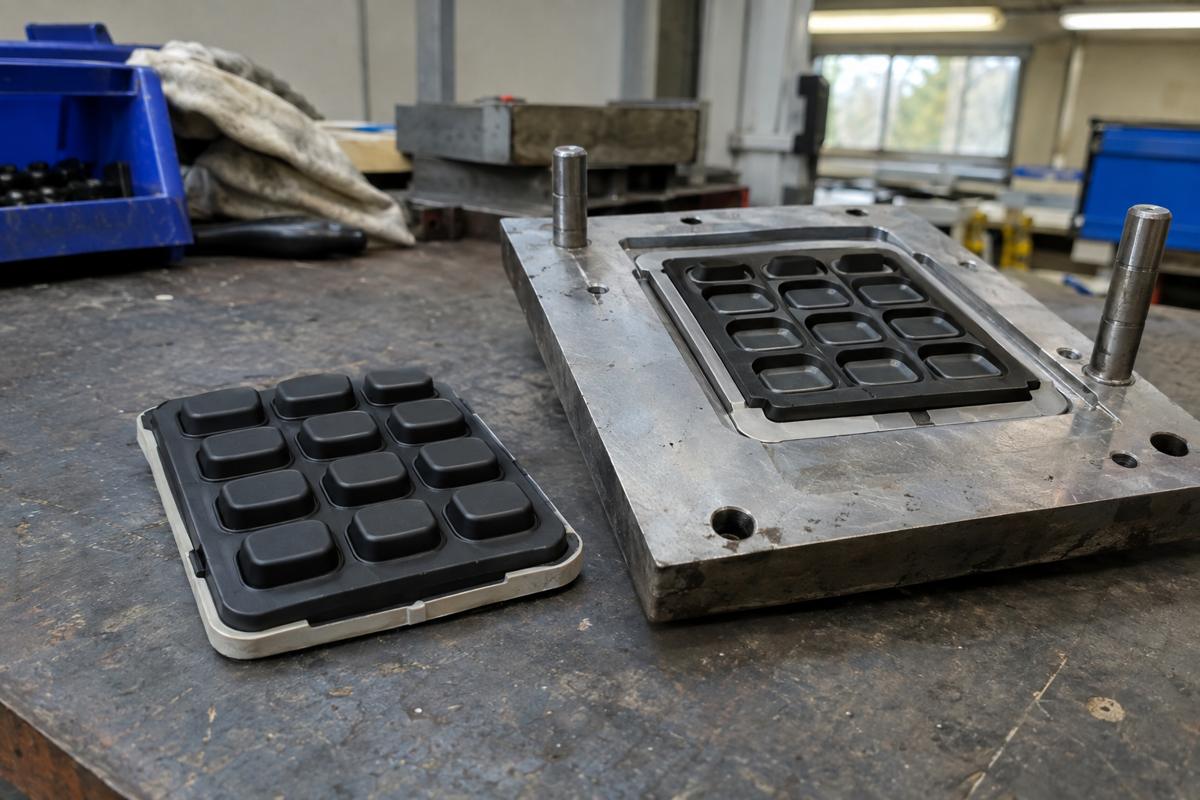
How the cycle runs
The tool is the whole story. A 2K tool has two cavity sets and a rotating core or an indexing platen that moves the first-shot part into the second-shot cavity without human intervention.
The rigid plastic or thermoplastic is injected into the first cavity. Cure or cool completes.
The substrate, still in the tool, is rotated or repositioned into the second cavity by an indexing mechanism. It never leaves the steel.
Silicone is injected into the second cavity, flowing around and onto the substrate. Cure completes.
The finished, bonded part is ejected. The next first-shot cycle has already started in the first cavity, running in parallel.
First-off parts checked against the approved sample. Bond integrity is checked visually and, on a defined interval, with a pull test.
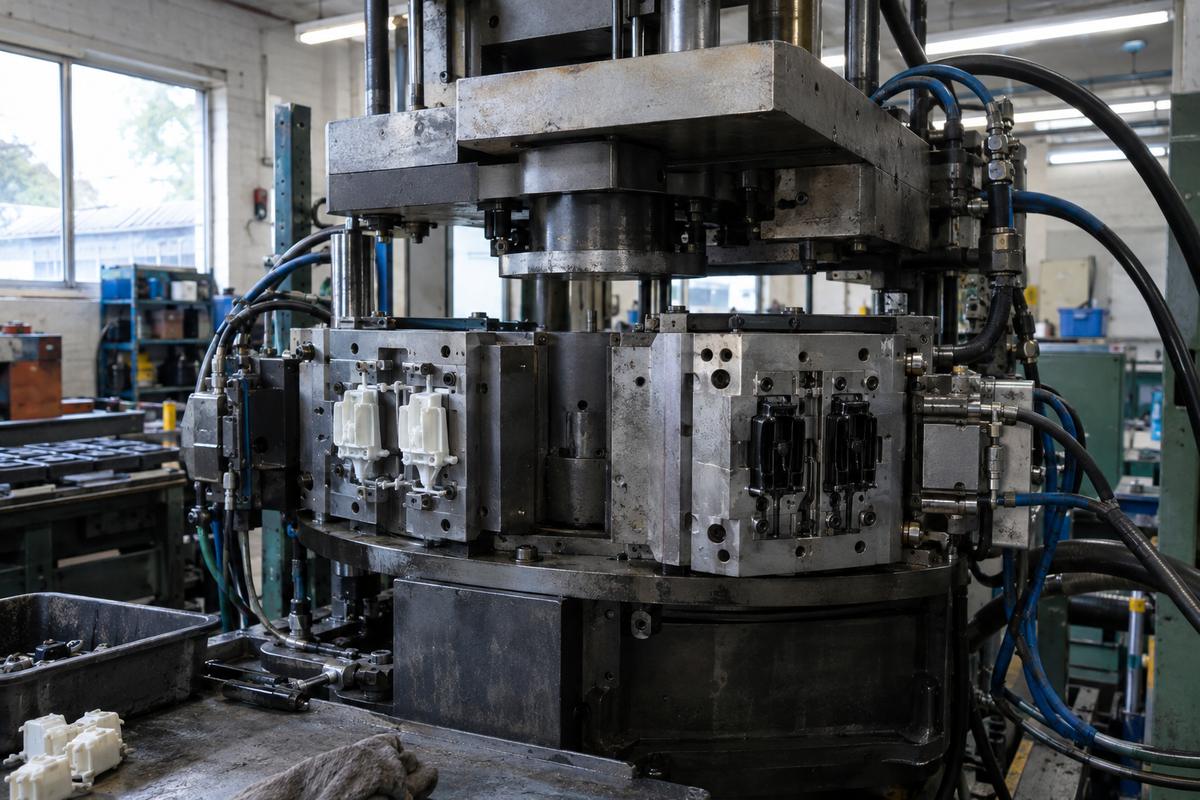
To quote it
Rigid substrate grade, silicone grade, and any chemical or mechanical bond requirements. Compatibility is checked before the tool is drawn.
2K tooling only makes sense above a threshold. Below it, plain overmoulding wins on total cost even accounting for the extra assembly step.
2K cycles are longer than single-material cycles. We'll model realistic cycle time and per-part cost before you commit.
2K tooling amortises over years. If the part is a seasonal product with a two-year life, 2K is probably the wrong answer.
Related routes
Silicone or rubber moulded directly onto a pre-made substrate — a plastic housing, a metal insert, a printed circuit assembly — so the finished part…
Read moreA pre-made insert — a threaded stud, a metal contact, a printed circuit, a stiffening plate — placed into the tool cavity, then silicone or rubber…
Read moreFor parts that will be in production for years — components inside a device family, sealing parts on long-lived equipment, consumer parts on a…
Read moreAt a glance
How overmoulding works
Swipe to see the whole diagram
Get in touch
Rough annual volume, target unit price, and any deadlines. That's enough to work out whether compression, LSR injection or something else is the right tool.
Real people, a real workshop
No call centre and no middlemen. When you contact TCI Products, you speak to the team who design, build and check your mould.

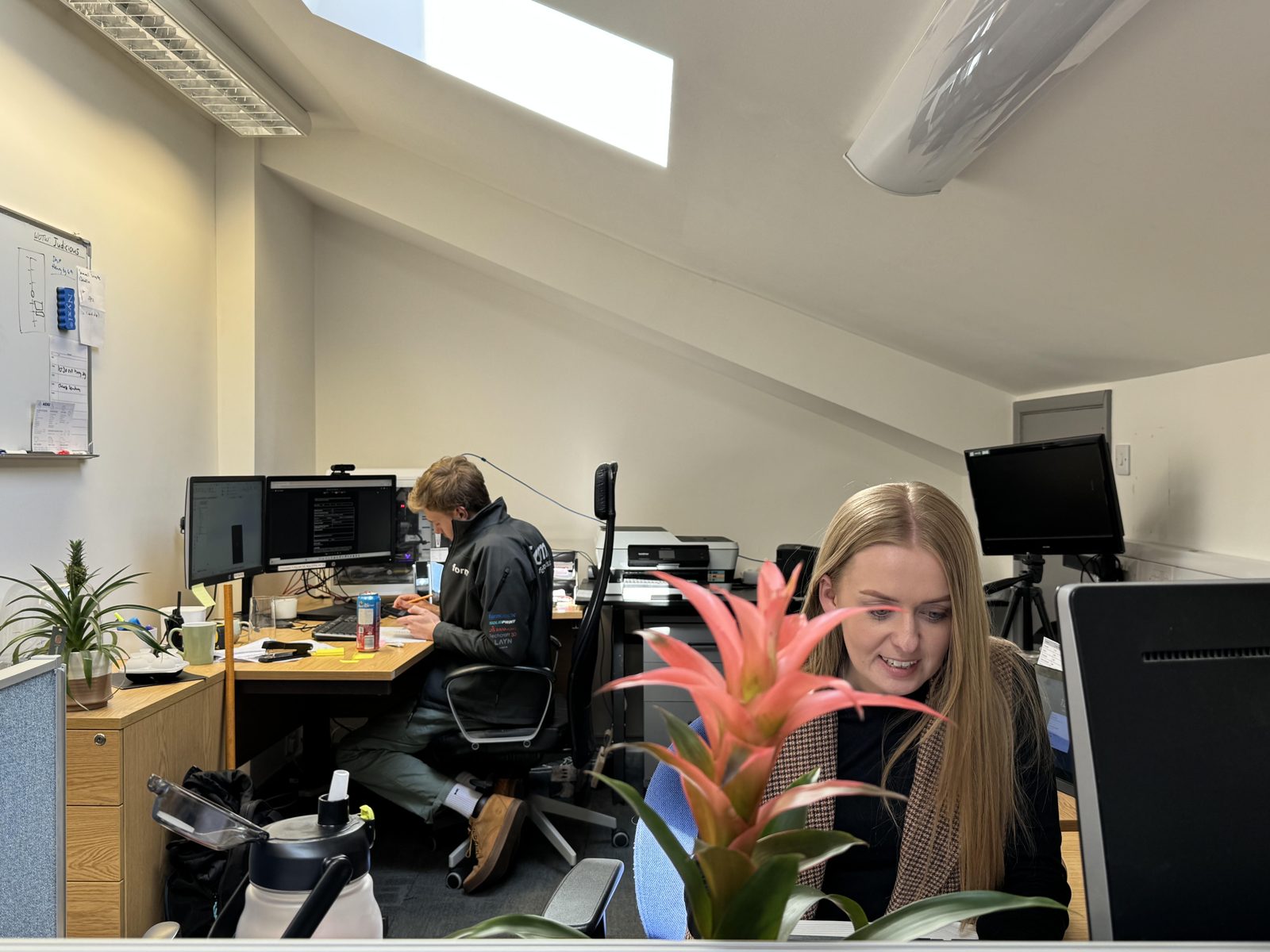
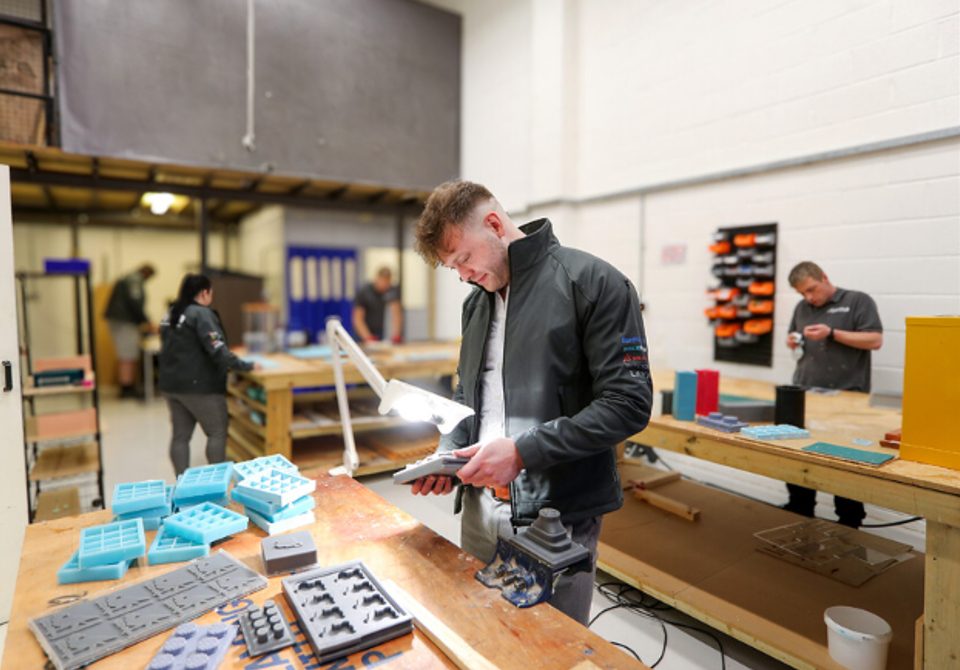
 Thomas LaneManaging Director
 George PrestonDesign & Project Manager
 Kelly BallingerHead of Partnerships
 Jim AndertonProduction Manager
 TheodoreEmployee Welfare