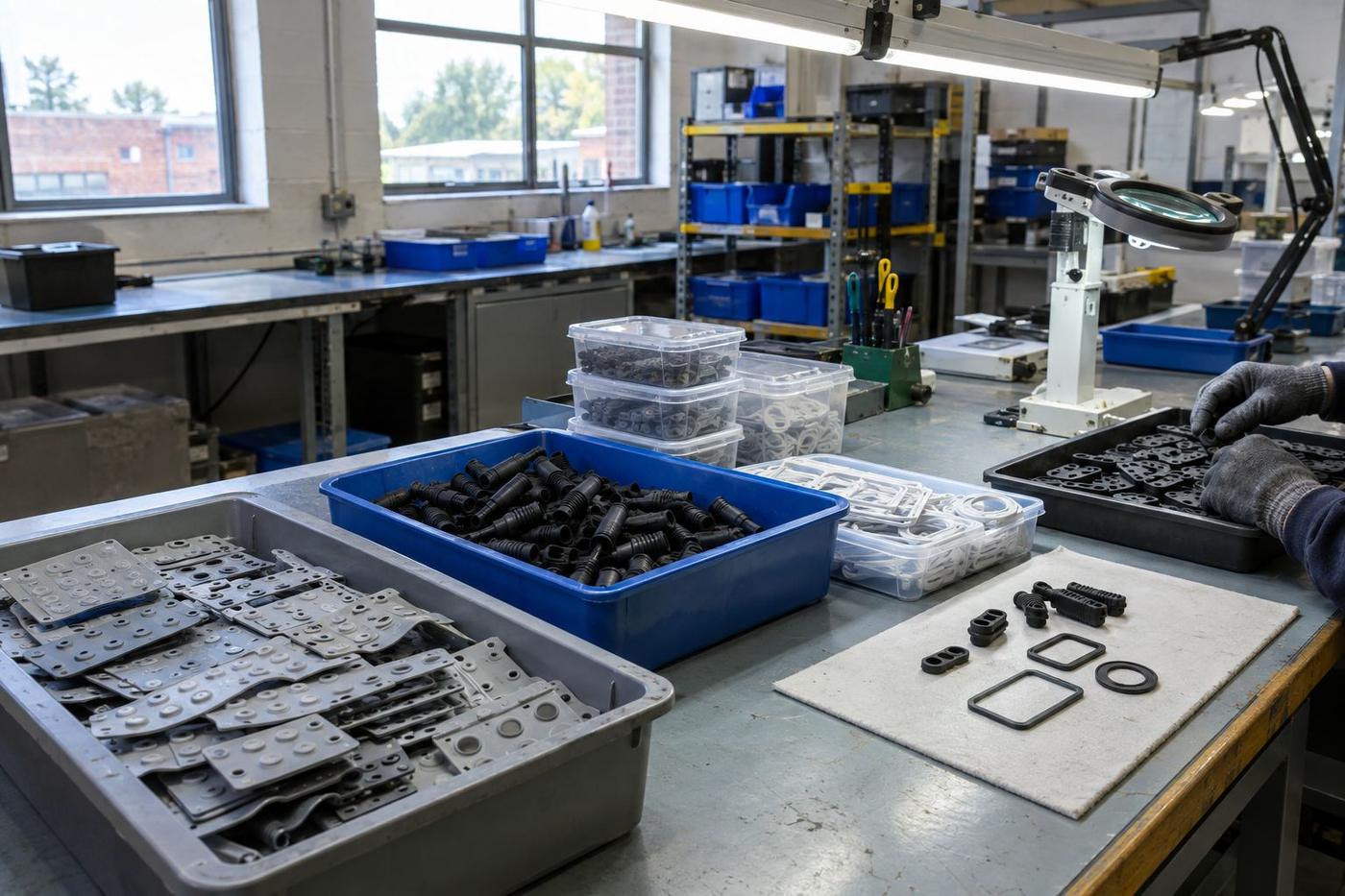
Enclosure seals
The seal around an electronics enclosure is often the last part designed and the first to cause problems. Getting it right early saves…
Open this variantOEM route · electronics components
Silicone moulding for electronics OEMs — insulating gaskets, sealing membranes, keypad mats, connector boots, enclosure seals. Electronics-grade silicone, batch traceability, and handling appropriate to parts that end up next to sensitive circuits.
What electronics grade means
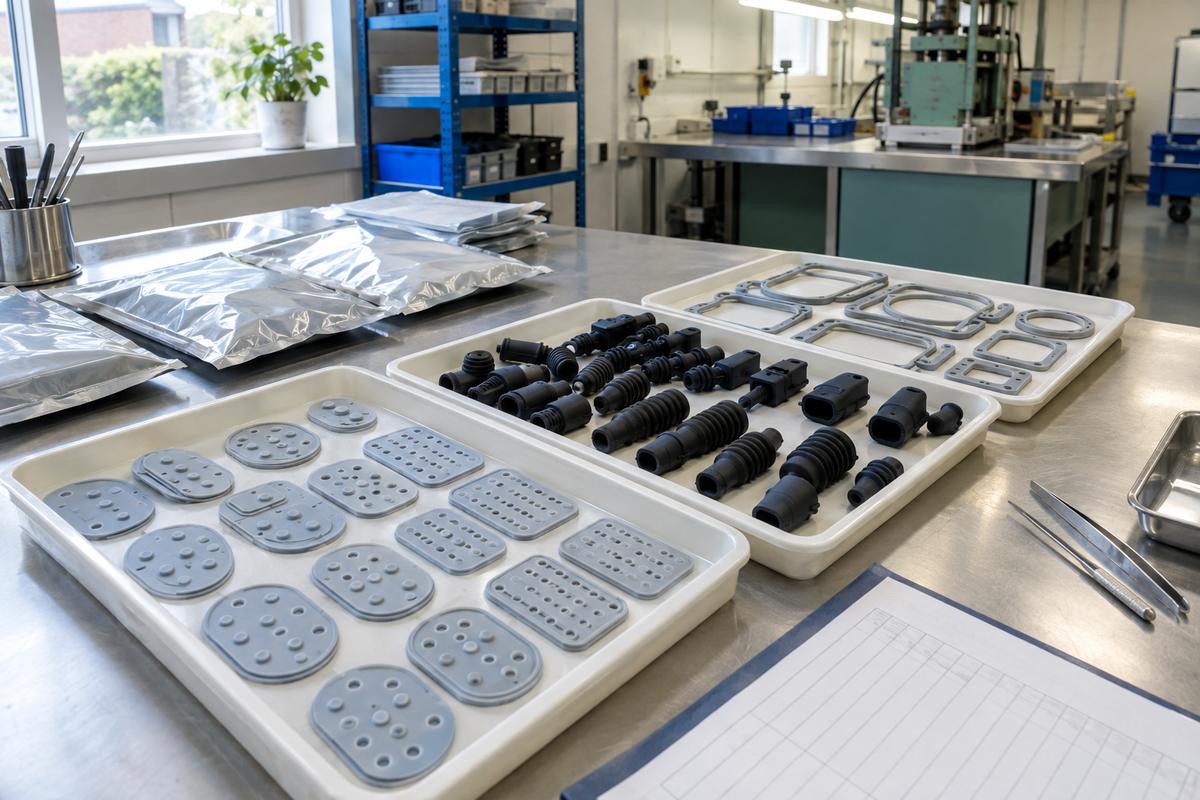
Electronics-grade silicone matters because of what it doesn't do: it doesn't outgas contaminants that damage sensitive circuits over time, it doesn't corrode adjacent metals, and it doesn't carry residues that interfere with signal integrity or optical clarity.
The grades we use for electronics work are chosen for their cure system (usually platinum-cure, which leaves no acidic by-products) and their documented composition. We record the material batch against every run so a repeat next year uses the same specification.
Handling matters as much as material. Electronics-grade work runs in a segregated cell with cleaning protocols that keep it separate from general rubber work. Gloves, tool cleaning, purge routines between colours or grades — all documented before the run.
If your electronics enclosure has a specific outgassing spec, an IPC-relevant requirement, or a UL classification you need the silicone to be compatible with, tell us at enquiry stage. We'll spec appropriately or refer you honestly if we're not the right supplier.
Drill down
Each variant has its own page with the specifics: where it fits, how we run it and what to send us.
The seal around an electronics enclosure is often the last part designed and the first to cause problems. Getting it right early saves…
Open this variantSilicone is a good electrical insulator and, in filled grades, a useful thermal conductor. Pads, sleeves and washers made from it solve…
Open this variantOutdoor sensors, washdown controls and portable devices all need to keep water and dust out. The seal usually decides whether they do.
Open this variantParts we mould for electronics customers
Silicone gaskets that seal an electronics enclosure against dust and water without contaminating the interior. Usually LSR-injected for a clean sealing lip.
Moulded keypads with tactile feedback, integrated conductive pills, and printed graphics. Made as a single moulded part rather than assembled from separate components.
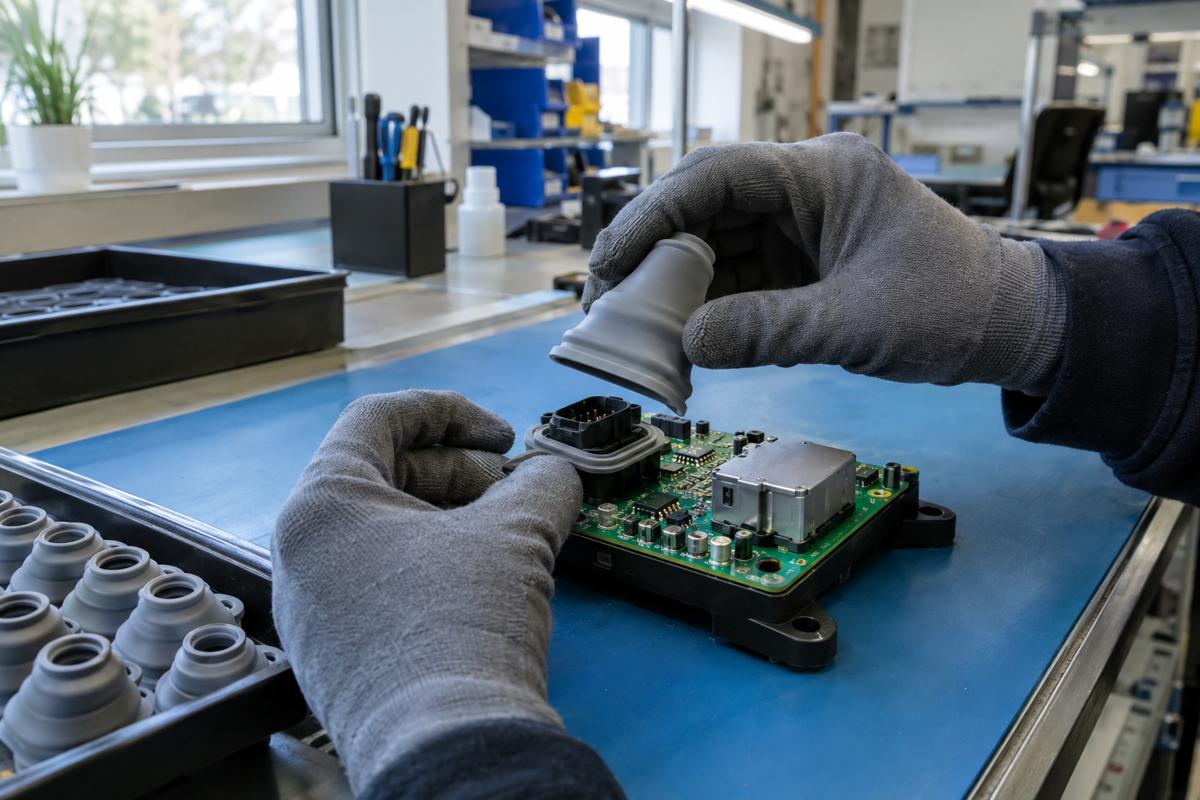
Overmoulded strain relief on cables, connector boots that seal the plug against the socket, and moulded cable exits. Compression or LSR depending on volume.
How electronics parts flow
Same presses, same engineers, stricter handling. The differences show up in the run record, not in the finished part.
We propose an electronics-grade silicone with the supplier's TDS. You sign off on grade and shade before we quote.
Tools designed for minimal flash, minimal residue, and easy cleaning. On keypad and membrane work, the tool finish is specified for the tactile feel of the finished part.
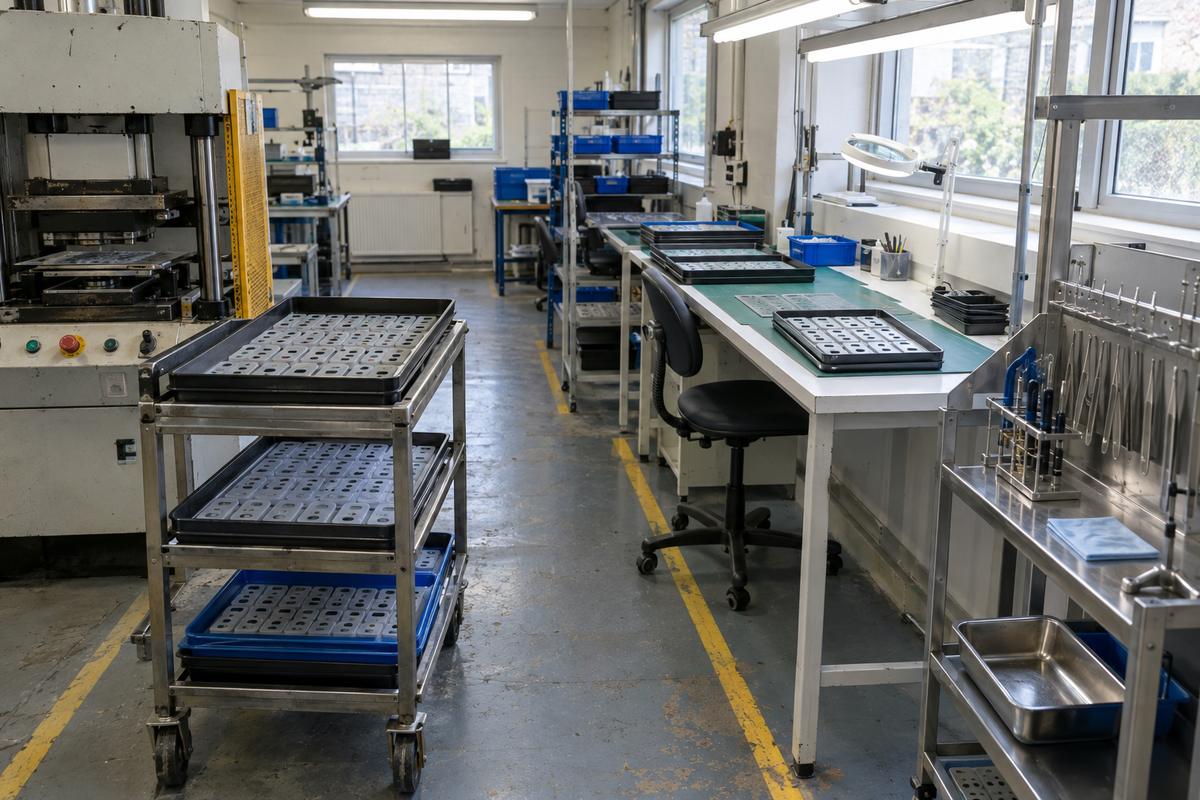
Runs happen in the electronics cell. Tools, purge routines, and cleaning cloths are dedicated to that cell. No cross-contamination from general silicone or rubber work.
Standard cycle, extra inspection. On visible parts, cosmetic inspection is added — a witness line that would be fine on an industrial part isn't acceptable on a customer-facing electronics housing.
Batch record, tool ID, run date attached to the shipment. Ready for your incoming inspection and traceable back if a field issue ever appears.
To quote it
What the part sits next to and what environment it lives in. That drives grade selection more than the part geometry does.
If your enclosure has a UL, IPC or customer-specific compatibility requirement, tell us. We'll match a grade or refer you honestly.
For visible parts, tell us the cosmetic standard you inspect to at your end. We'll set our first-off criteria to match.
Enclosure seals are usually LSR at any real volume. Keypads and connector parts sit across compression, LSR and overmoulded routes.
Related routes
Silicone and rubber gaskets moulded to your drawing, in the grade and hardness your sealing job actually needs. Enclosure gaskets, static fluid…
Read moreSilicone keypad mats and moulded buttons with a defined tactile feel, integrated conductive contacts, and graphics either printed on top or moulded…
Read moreTwo-part liquid silicone metered, mixed, injected cold and cured hot. The cleanest route we have for medical, wearable and electronics parts at…
Read moreAt a glance
From drawing to delivered parts
Swipe to see the whole diagram
Get in touch
Rough annual volume, target unit price, and any deadlines. That's enough to work out whether compression, LSR injection or something else is the right tool.
Real people, a real workshop
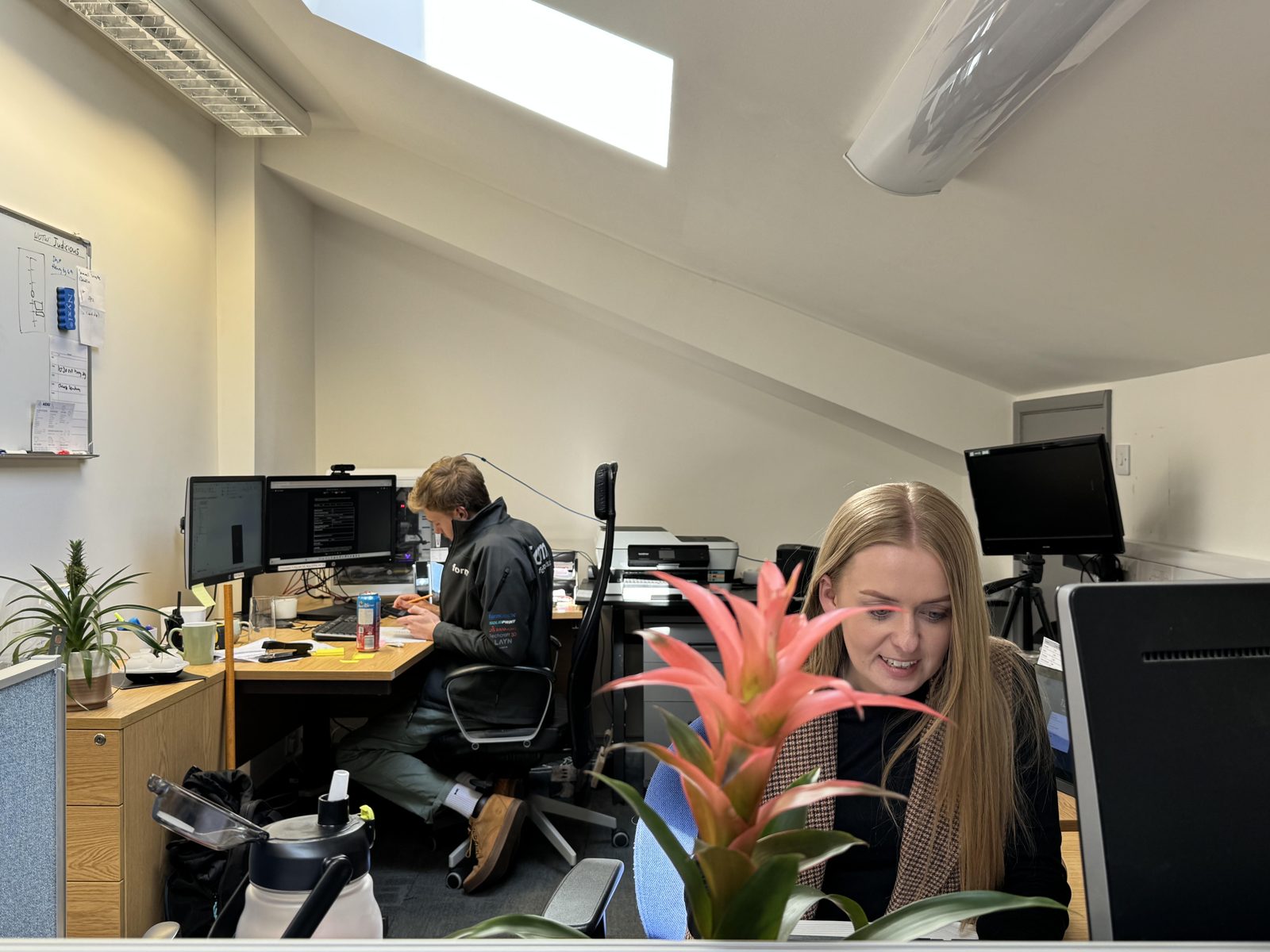
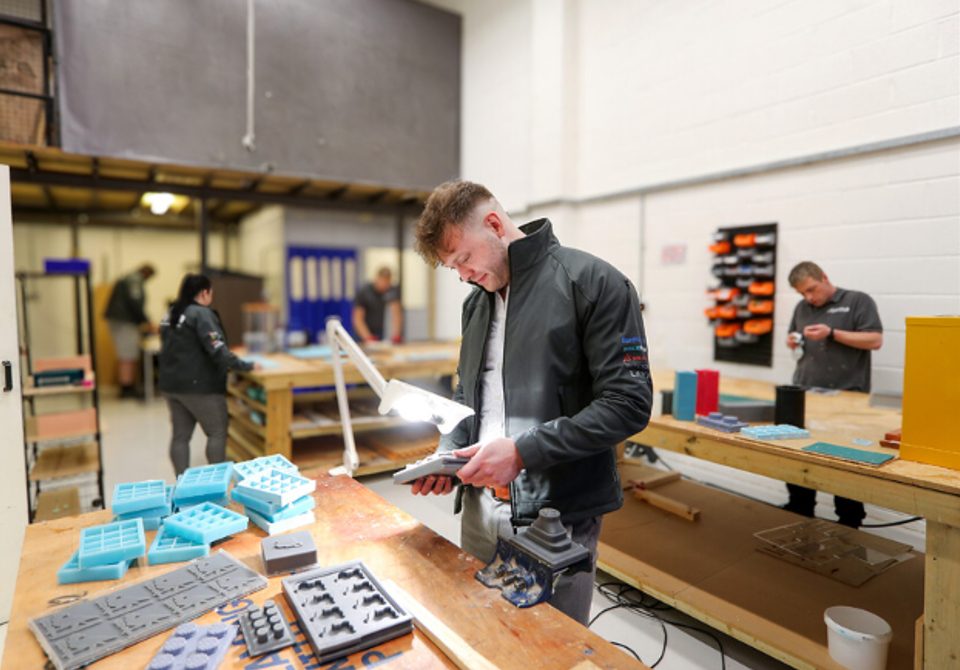
No call centre and no middlemen. When you contact TCI Products, you speak to the team who design, build and check your mould.

 Thomas LaneManaging Director
 George PrestonDesign & Project Manager
 Kelly BallingerHead of Partnerships
 Jim AndertonProduction Manager
 TheodoreEmployee Welfare