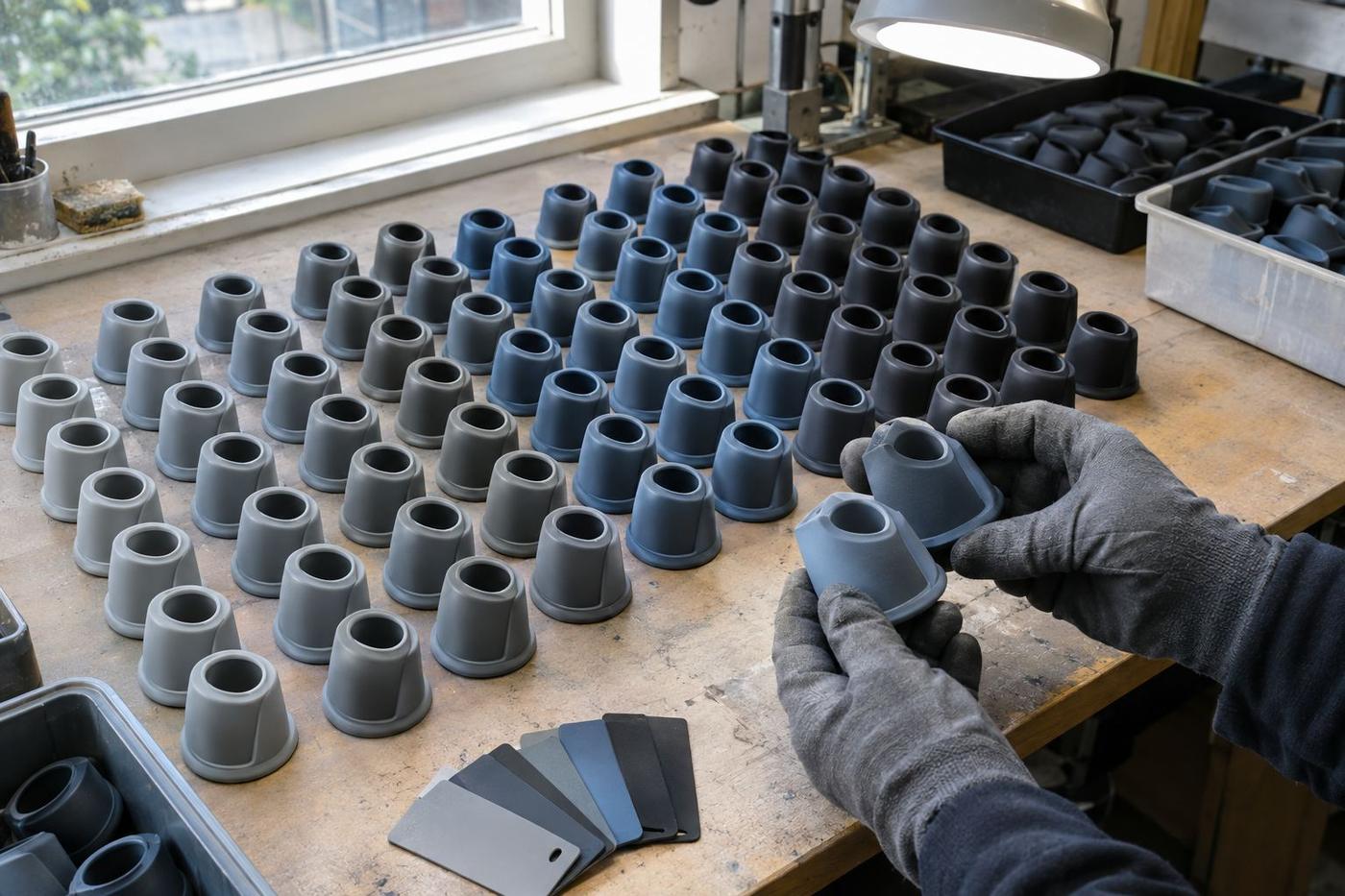
A physical reference chip
Signed and dated. Not just a Pantone number.
OEM buyer guide
For anything a customer will see, colour is one of the two things they judge (feel is the other). Getting the colour right is straightforward. Keeping it right across every batch for years takes discipline that most suppliers don't advertise.
The problem
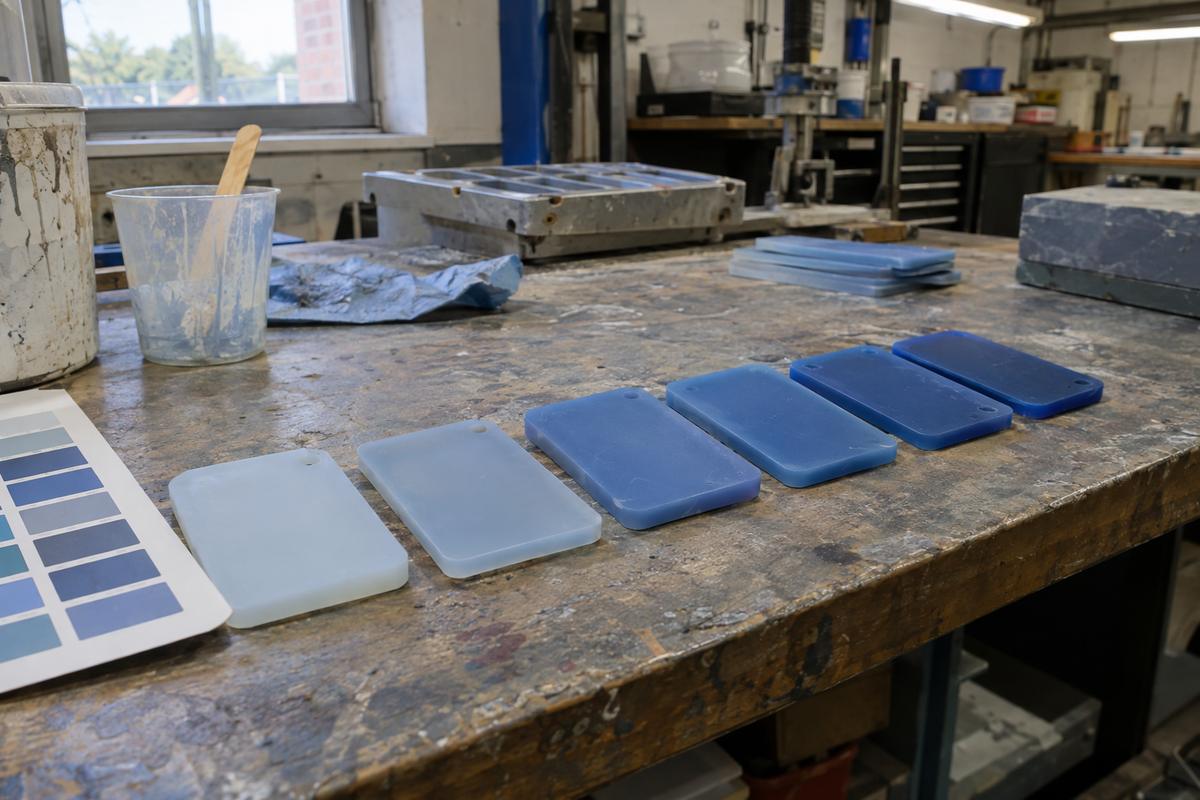
In plastic, colour matching to a Pantone number is largely a solved problem — the industry uses standardised pigment concentrates, and match tolerance is tight. In silicone, colour behaves differently. Cure chemistry affects final shade; part thickness affects perceived depth; base grade affects translucency.
That means a Pantone number on a drawing is a starting point, not an answer. Two silicone suppliers matching to the same Pantone reference will produce visibly different parts. Your customer, who compares your first batch to your fifth, will notice.
The way we handle this is to match against a physical chip you sign off — a moulded piece of silicone in the actual grade at the actual thickness. That chip becomes the reference. Every subsequent batch is compared against it, not against a screen colour or a Pantone book.
Process
Six steps that get followed in order. Skipping any of them causes trouble later.
A Pantone reference, a competitor swatch, or a physical brand sample. Any of these is a starting point.
We mould three to five sample chips in the actual grade and thickness of your final part. Colour variants around your reference.
You pick the winner from the physical samples. That chip is retained as the reference. Signed and dated.
The pigment concentrate and loading percentage that produced the chosen chip is recorded against your part number.
First real batch compared to the signed chip under standard lighting. Any drift corrected before batch ships.
The physical reference chip is stored with the tool records. Every subsequent batch is compared to it, not to memory.
Across years
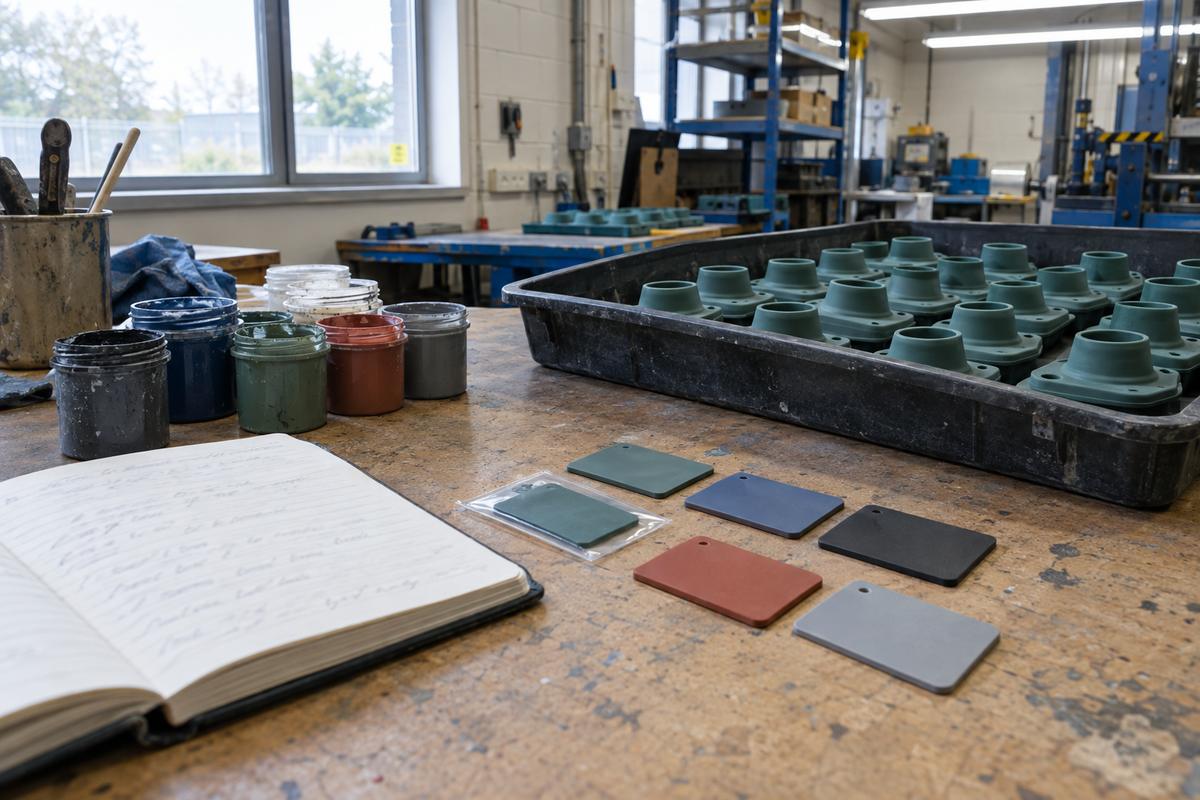
Pigment concentrate source is fixed at first sign-off. Any supplier change communicated to you before it hits a batch.
Silicone base grade also affects final shade. Grade change requires new colour verification.
Cure conditions affect final colour. Cycle parameters recorded and held. Any process change flagged for colour re-check.
Watch-outs
These are the failure modes we see most often when a new customer arrives from a previous supplier.
The screen shows a colour that can't be achieved in silicone at that grade. Physical matching prevents the disappointment.
A pigment loading that looks right in a 2mm sample looks weak in a 5mm part. Match at the actual thickness.
Silicone is often slightly translucent. Colour behind it changes what you see. Match the part in its final configuration, not in isolation.
A silicone supplier switching pigment source without telling anyone. If your supplier can't tell you where their pigment comes from, that's a warning sign.
In practice
Signed and dated. Not just a Pantone number.
How close to the reference the batch has to be. Realistic values, agreed with your incoming inspection.
D65 or equivalent. Colour matching under different lighting gives different answers.
What happens if a batch drifts beyond tolerance. Named action, not just 'reject'.
Keep reading
Your product is real. You've made prototypes, maybe pilot runs. The design is stable and the volume forecast is starting to be…
Read the guideShore A is the number that appears on nearly every silicone drawing and is understood by almost nobody outside the rubber trade.…
Read the guideRubber moves. It shrinks as it cures, flexes when you measure it and relaxes in the bag. Specifying it like machined metal leads…
Read the guideGet in touch
Rough annual volume, target unit price, and any deadlines. That's enough to work out whether compression, LSR injection or something else is the right tool.
Real people, a real workshop
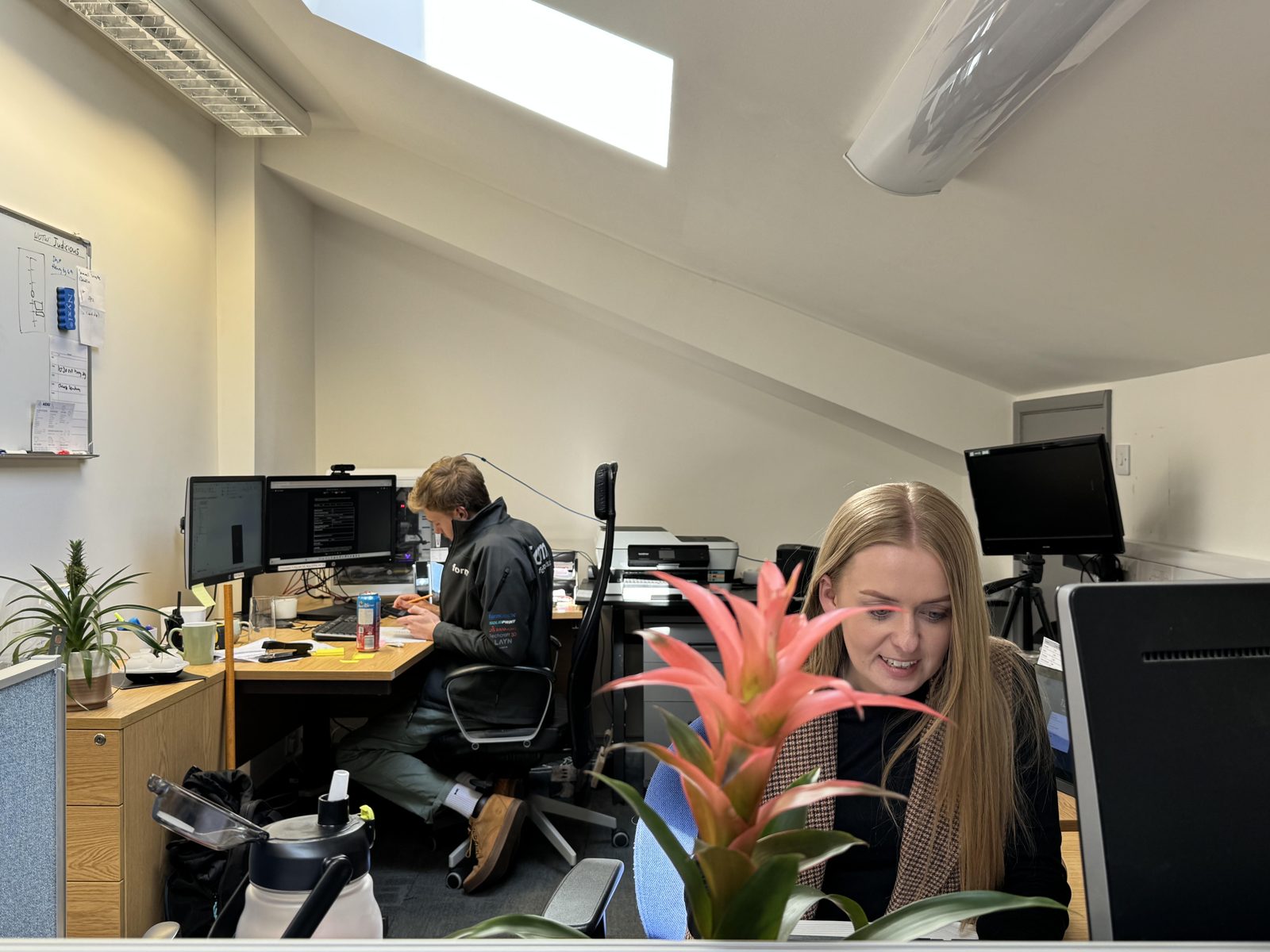
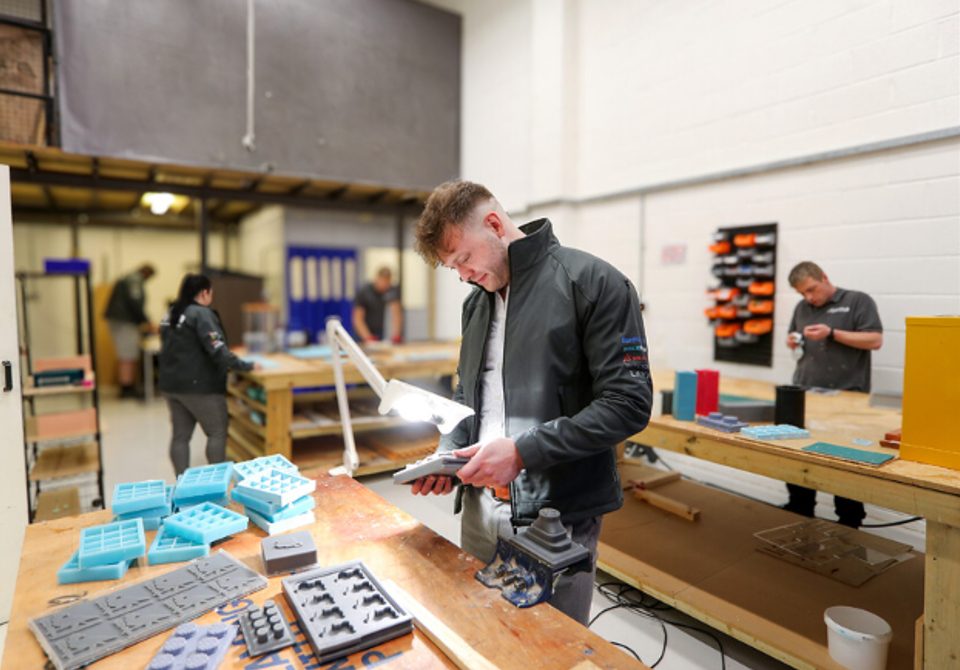
No call centre and no middlemen. When you contact TCI Products, you speak to the team who design, build and check your mould.

 Thomas LaneManaging Director
 George PrestonDesign & Project Manager
 Kelly BallingerHead of Partnerships
 Jim AndertonProduction Manager
 TheodoreEmployee Welfare