The profile or the gap it fills
A drawing of the section, or the housing it has to seal, with the closing direction.
Continuous sections · profiles and tube
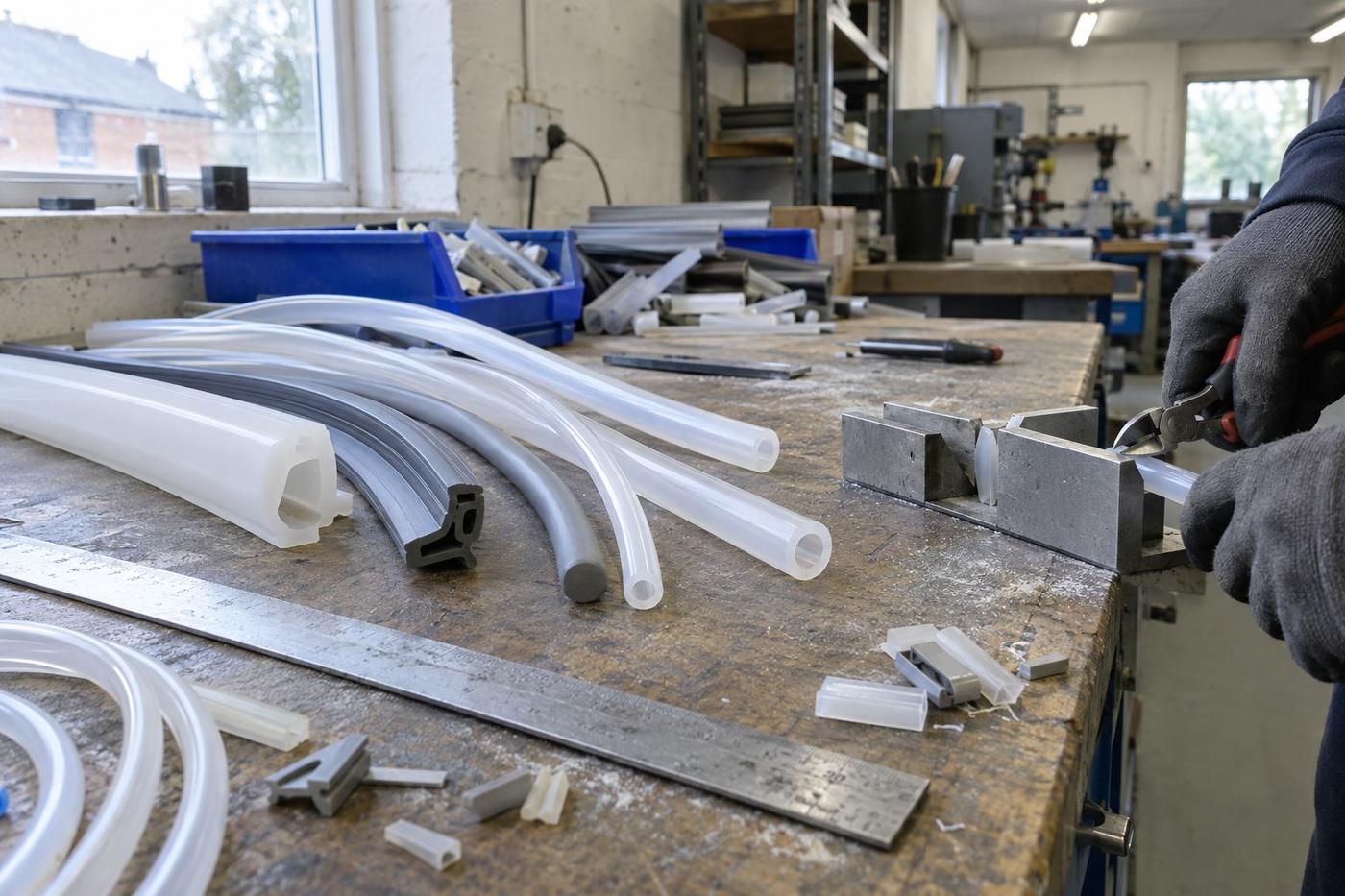
Some parts aren't moulded at all. Door seals, cord, tube and edge trims are pushed through a die and cured continuously. We supply extruded sections, cut them, join them and pair them with your moulded parts.
How we handle extrusion
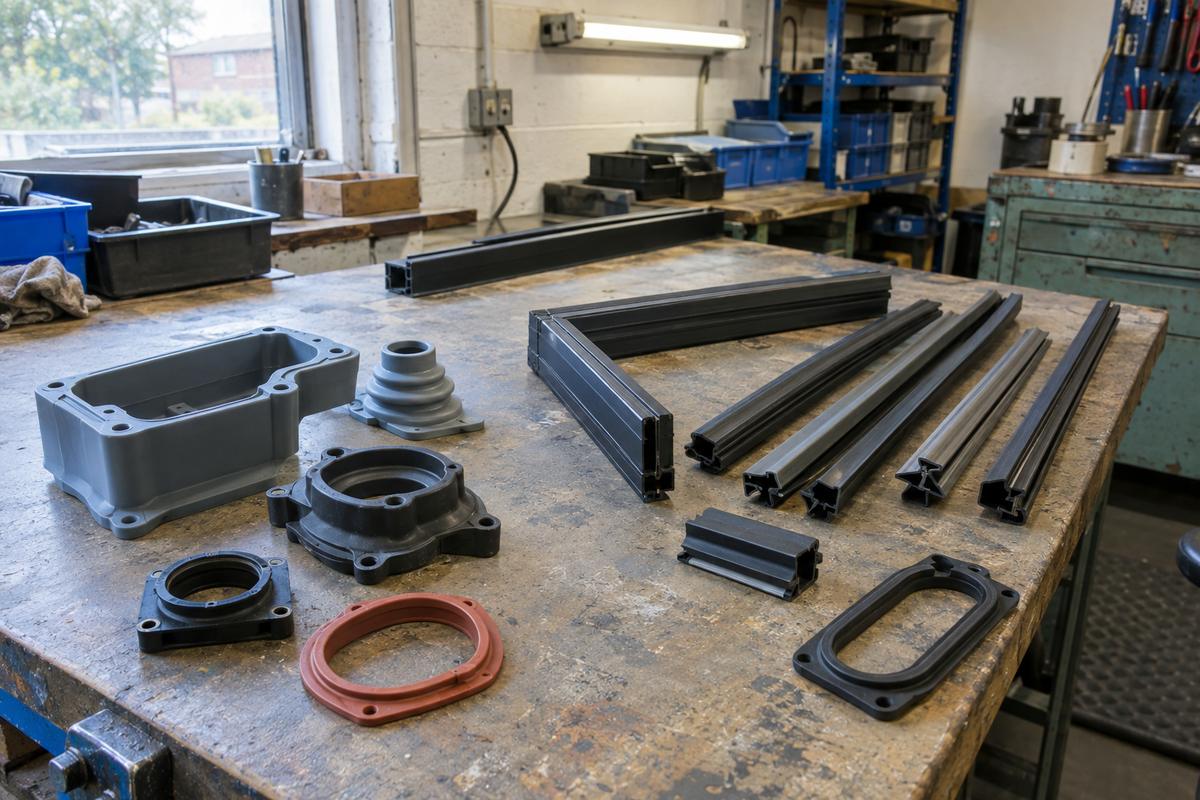
Extrusion is a different kind of line from moulding. It runs continuously, needs a die for every profile, and makes sense at the scale of kilometres rather than pieces. We don't pretend to run that line in Bidford-on-Avon.
What we do is manage extruded sections as part of your programme. We specify the profile with you, place the extrusion with a trusted partner, then cut, join, bond and inspect the sections here alongside the moulded parts that sit next to them.
That matters when a product needs both — a moulded gasket with an extruded perimeter seal, say, or a housing with a moulded corner and extruded straight runs. One paper trail, one set of colour references, one point of contact.
We're open about which operations happen where. The extrusion line is a partner's; the finishing, joining, inspection and packing are ours.
What we supply
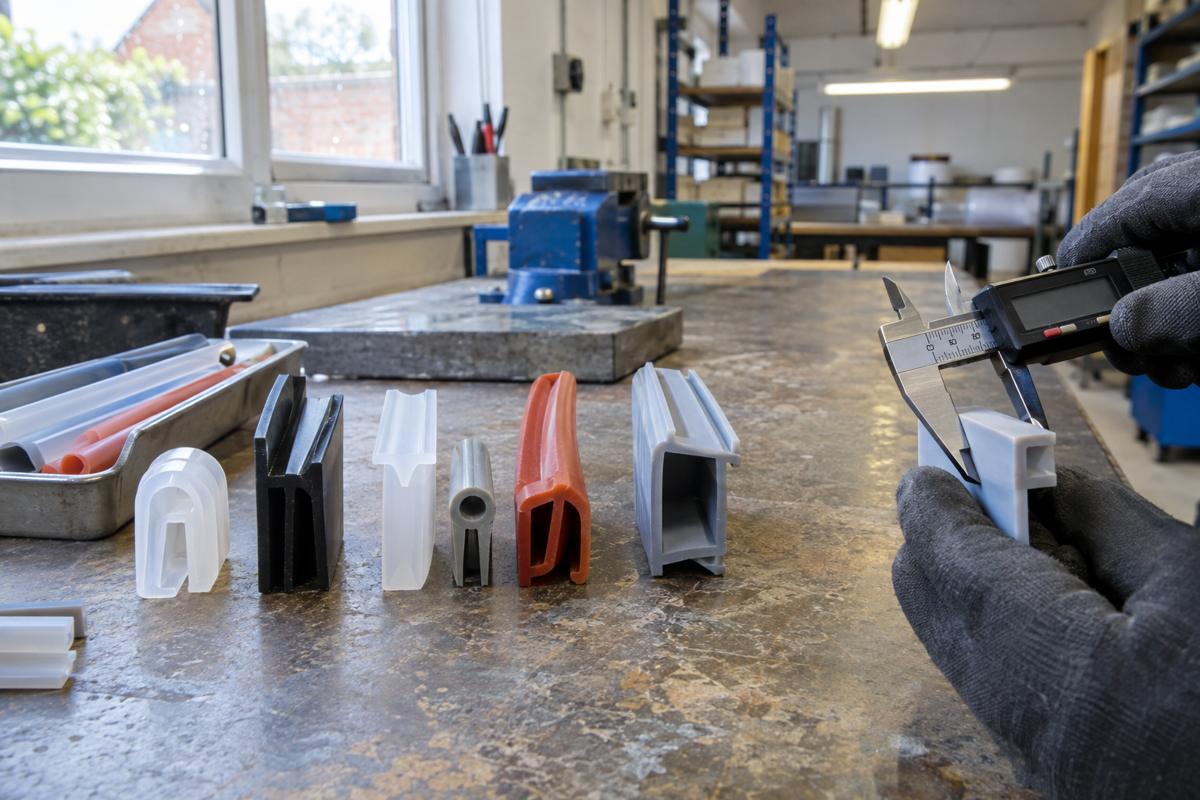
D-sections, P-sections, bulb seals and custom shapes for doors, lids and enclosures. Solid for durability, sponge for low closing force.
Round cord for spliced O-rings, tube for fluid handling and sleeving, flat strip for cushioning and gasketing.
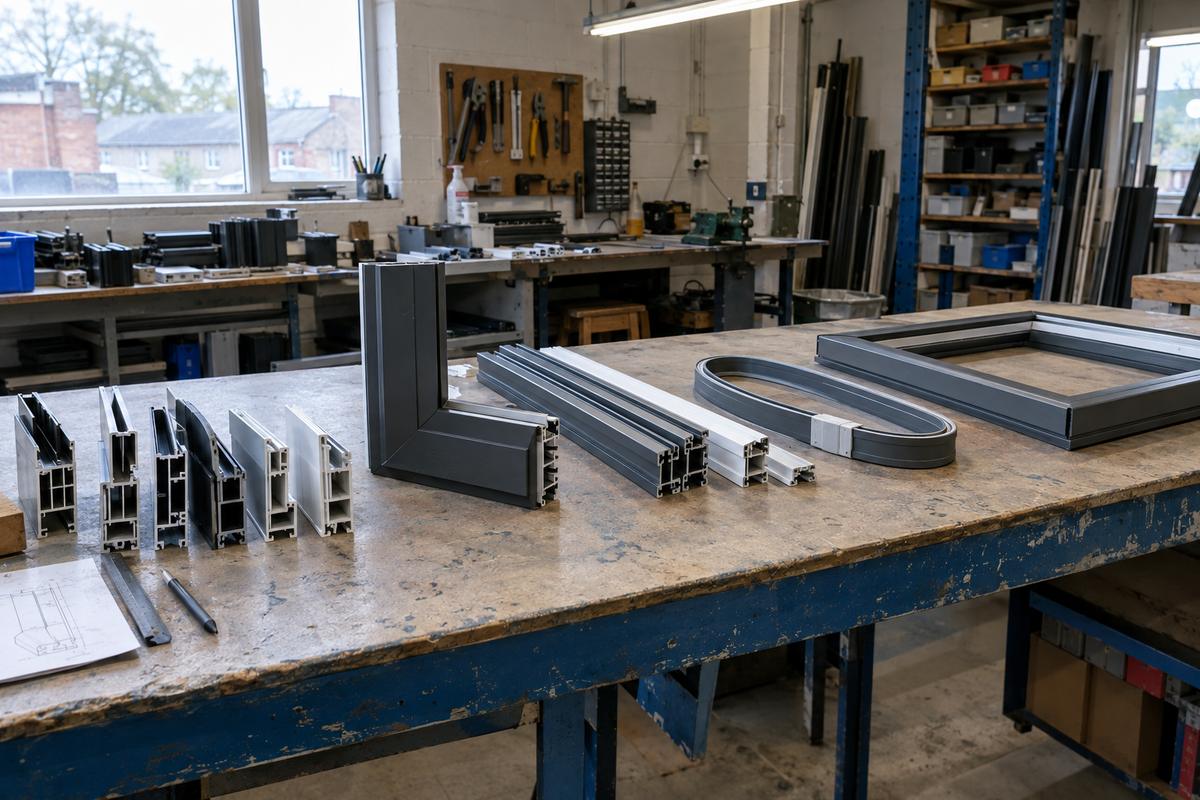
Straight runs joined into closed frames with moulded or bonded corners, so the seal arrives as one piece ready to fit.
How a profile programme runs
The profile design is where most of the performance is decided, so that's where we spend the time.
We look at closing force, compression range and how the seal is retained. A small change in wall section makes a big change in feel.
The partner line cuts the die and runs first samples. We check them here against your housing.
Sections are cut to length, spliced or corner-moulded into frames, and checked for joint strength.
Profiles and frames are inspected and packed with the batch record, alongside any moulded parts in the same order.
To quote it
A drawing of the section, or the housing it has to seal, with the closing direction.
If you're not sure, tell us the closing force you can afford and we'll suggest one.
Coils, cut lengths or joined frames — each changes the finishing work.
Extrusion economics are set by length run, so an honest annual figure matters.
Related routes
Silicone and rubber gaskets moulded to your drawing, in the grade and hardness your sealing job actually needs. Enclosure gaskets, static fluid…
Read moreDeflash, trim, print, bond, assemble, inspect and pack. Everything that has to happen between the press opening and the part being ready for your…
Read moreSolid silicone or rubber pre-formed, loaded into a heated steel tool, and pressed under cure. Sensible tooling cost, thousands of parts per tool, and…
Read moreGet in touch
Rough annual volume, target unit price, and any deadlines. That's enough to work out whether compression, LSR injection or something else is the right tool.
Real people, a real workshop
No call centre and no middlemen. When you contact TCI Products, you speak to the team who design, build and check your mould.
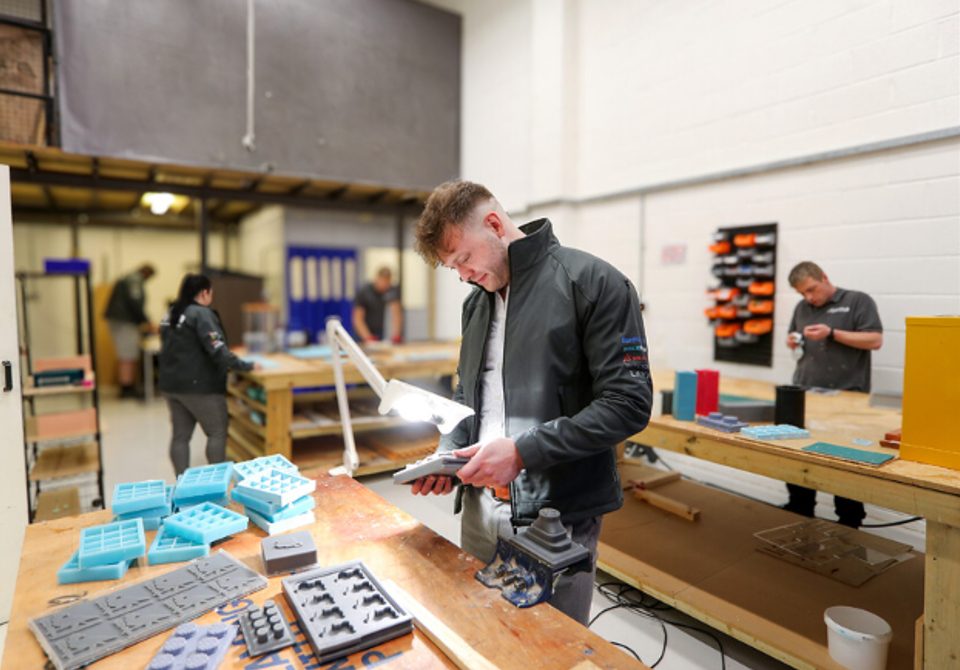

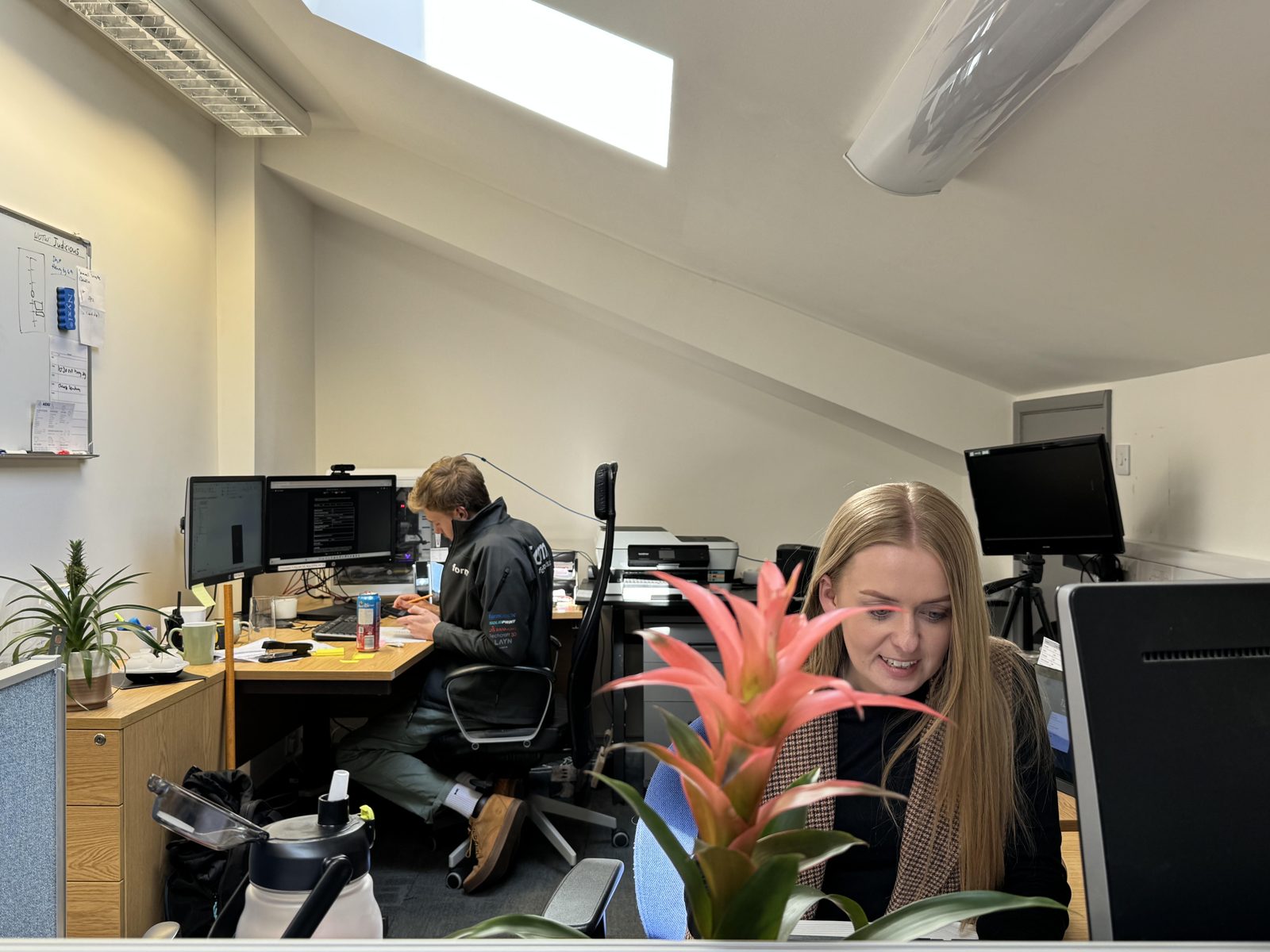
 Thomas LaneManaging Director
 George PrestonDesign & Project Manager
 Kelly BallingerHead of Partnerships
 Jim AndertonProduction Manager
 TheodoreEmployee Welfare