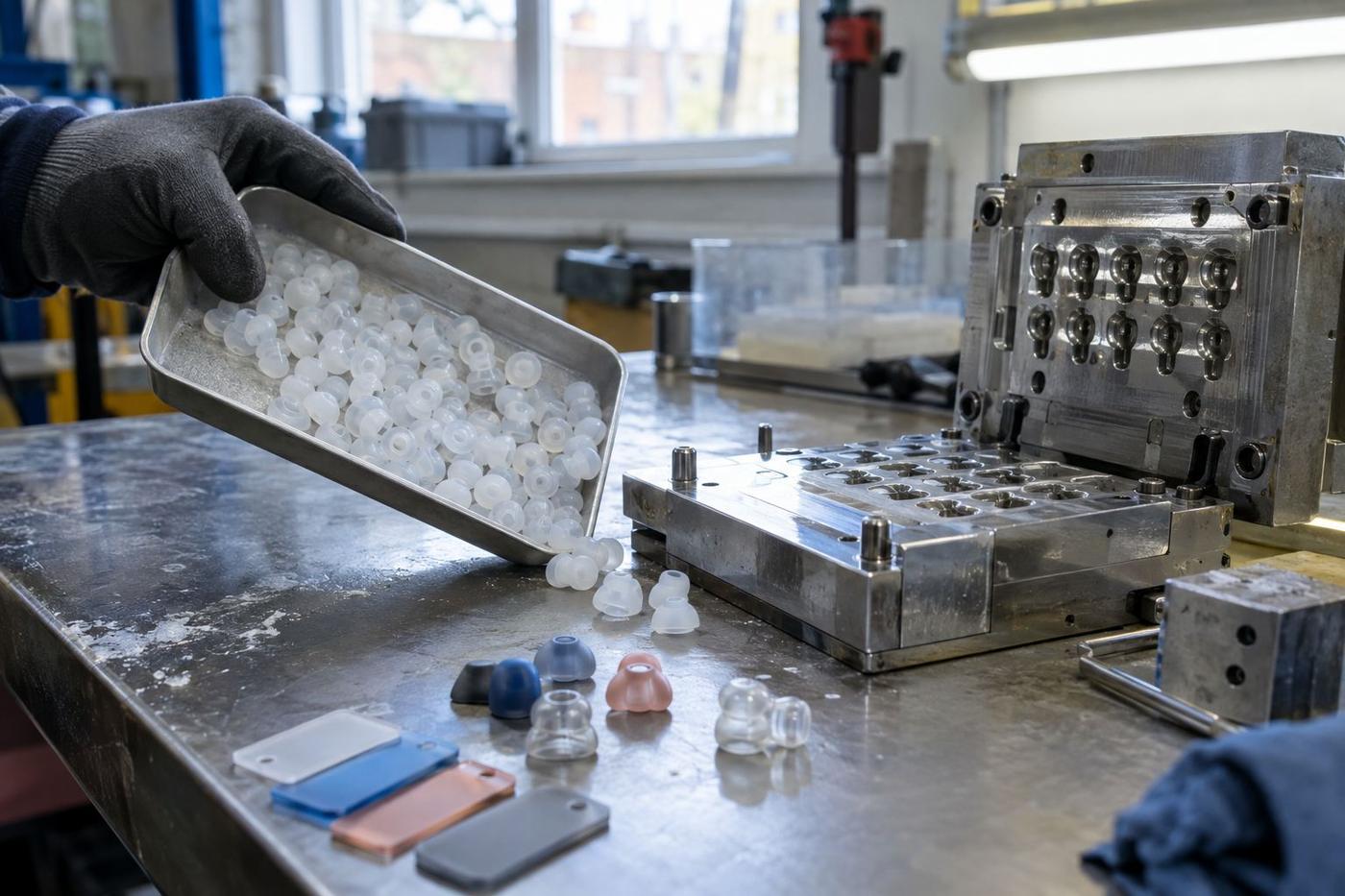
LSR injection moulding
Two-part liquid silicone metered, mixed, injected cold and cured hot. The cleanest route we have for medical, wearable and electronics parts at…
See the serviceProject record · Consumer audio · LSR
Small, soft, colour-critical parts that customers hold to their heads for hours. Hand-cast pilot samples proved the design; production tooling had to hold the feel and colour across millions.
The brief
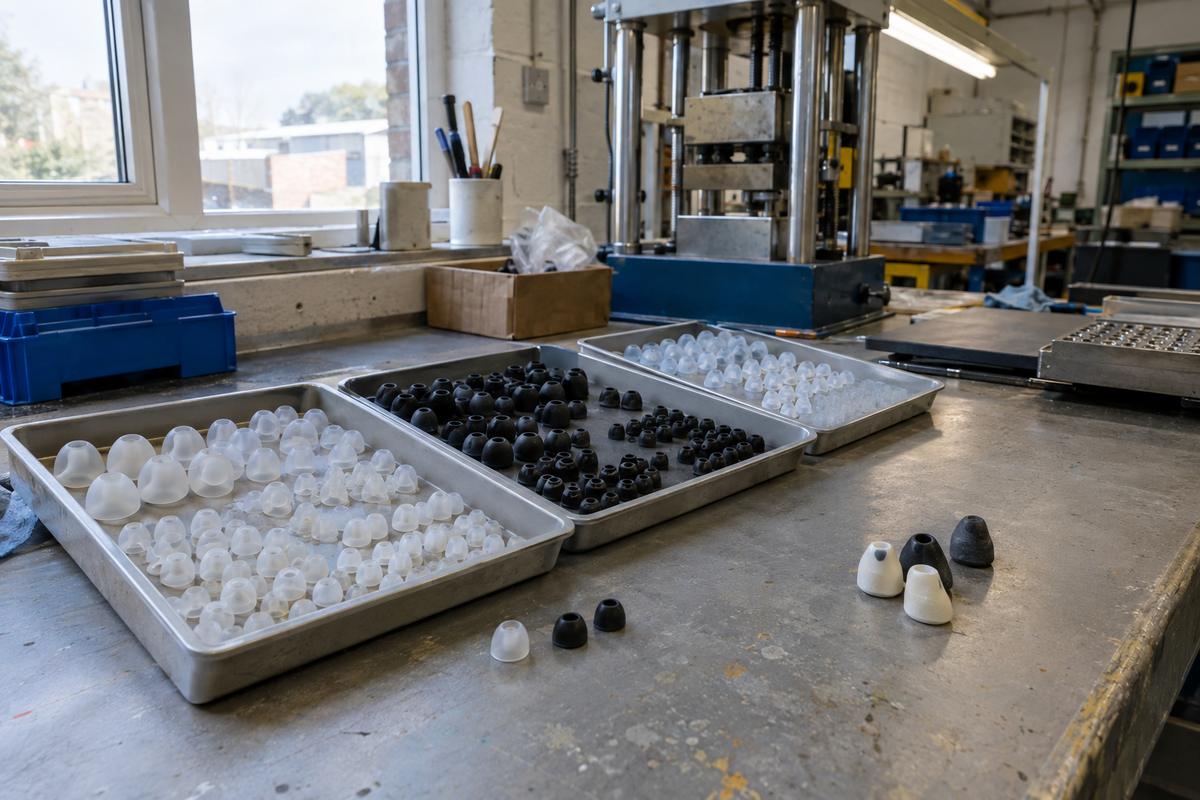
A consumer audio brand had validated a headphone product with hand-cast silicone ear tips. The pilot samples had been made in small numbers by another supplier, and had gone through several rounds of feel and fit testing before the design was signed off.
For production, they needed the same tip geometry in three sizes (small, medium, large) and two colours (matching the two headphone colourways). Annual volume expectations were in the hundreds of thousands per size. Feel had to be indistinguishable from the pilot samples the design had been signed off against.
They came to us to plan and execute production tooling — cavity count, colour matching, batch consistency, and packaging into the finished product boxes.
The problem
Hand-cast pilot samples don't feel identical to LSR-moulded production parts, even in the same grade. Cure conditions differ; surface finish differs; internal residual stress differs. Moving to production without addressing that would produce ear tips that met the drawing but didn't feel like what had been signed off.
We proposed making a set of LSR sample parts in the intended production grade, at the intended production cavity finish, and comparing them to the pilot samples. Any discernible difference would drive an adjustment to grade or finish before the production tool was cut.
Colour matching was the other challenge. The customer's two colours were subtle — a warm off-white and a soft charcoal — that photographed differently under different lighting. Matching had to be against physical chips under standard lighting, then held stable across every batch.

What we changed
The pattern was: prove the production route matches the signed-off feel, lock colour, then commit to tooling.
Sample parts in the intended grade and finish. Direct comparison with hand-cast pilot samples. Two minor grade adjustments identified.
Two colours matched against physical silicone chips, not against Pantone. Signed off by the customer's product manager. Pigment recipes recorded.
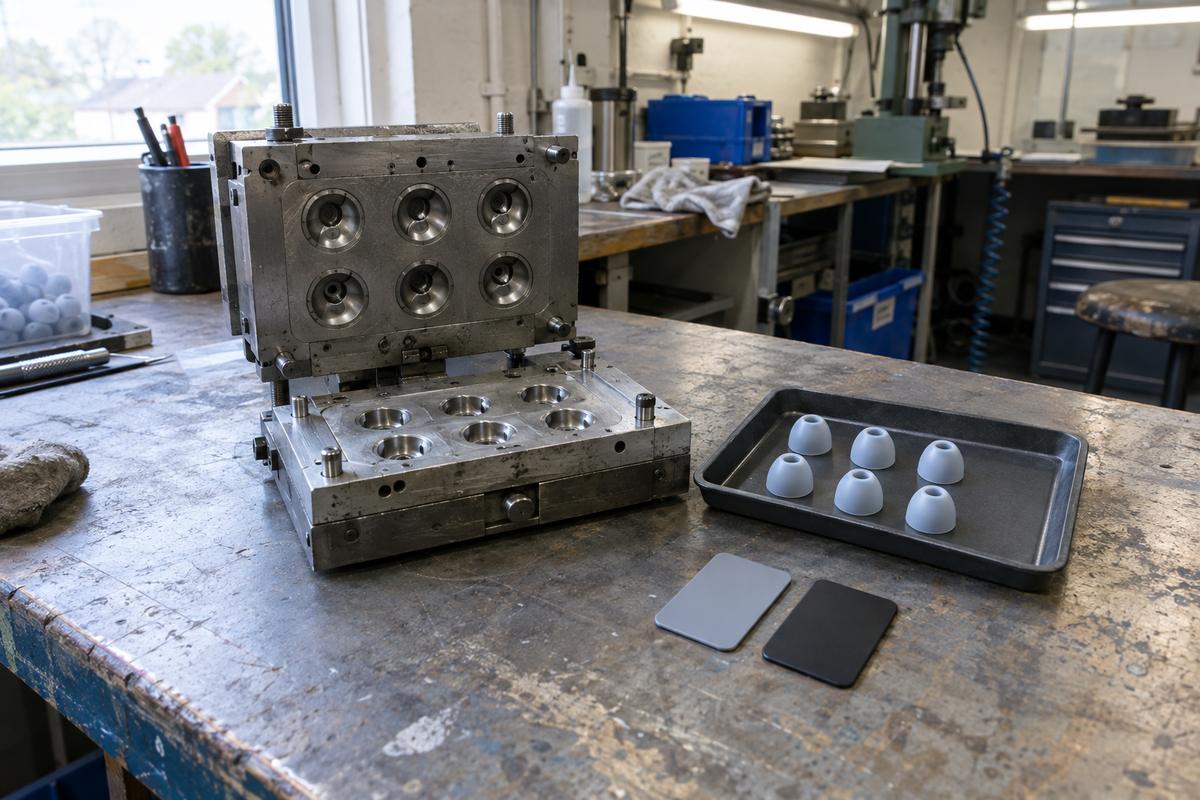
Tool designed with three cavity sizes on one base — three sizes per shot. Efficient tooling amortisation across the product family.
Cold-runner tool design meant essentially no witness on the ear tip surface. Critical for a part that goes into an ear.
First production ear tips signed off against the retained pilot samples. Feel confirmed. Colour confirmed. Production released.
Ear tips packed into finished product boxes at our facility. Boxes shipped direct to the customer's distribution warehouse.
The commercial shape
Six-cavity LSR tooling with in-tool colour separation is a significant investment. The programme was scoped for three years of volume at forecast, with the tool paying back inside the first eighteen months.
Per-part cost dropped substantially versus what hand-cast pilot production had been costing. The customer's total landed cost dropped further through consolidated packaging — one supplier delivering ear tips already in retail boxes.
The colour recipes are now locked. Two years into the programme, ear tips still match the original signed-off chips under inspection lighting. The programme has since expanded to a fourth size, added on a shared tool base.
“The tips out of the production tool felt like the ones we'd signed off. That mattered more than any spec sheet number.”
Services used
Two-part liquid silicone metered, mixed, injected cold and cured hot. The cleanest route we have for medical, wearable and electronics parts at…
See the serviceSilicone parts for products people wear, hold, or wipe every day — ear tips, straps, grips, sleeves, applicators. Made to a colour and feel you sign…
See the serviceSilicone products moulded, finished, packaged and labelled to your brand — ready to ship into your retail, e-commerce or wholesale channel. Your…
See the serviceMore project records
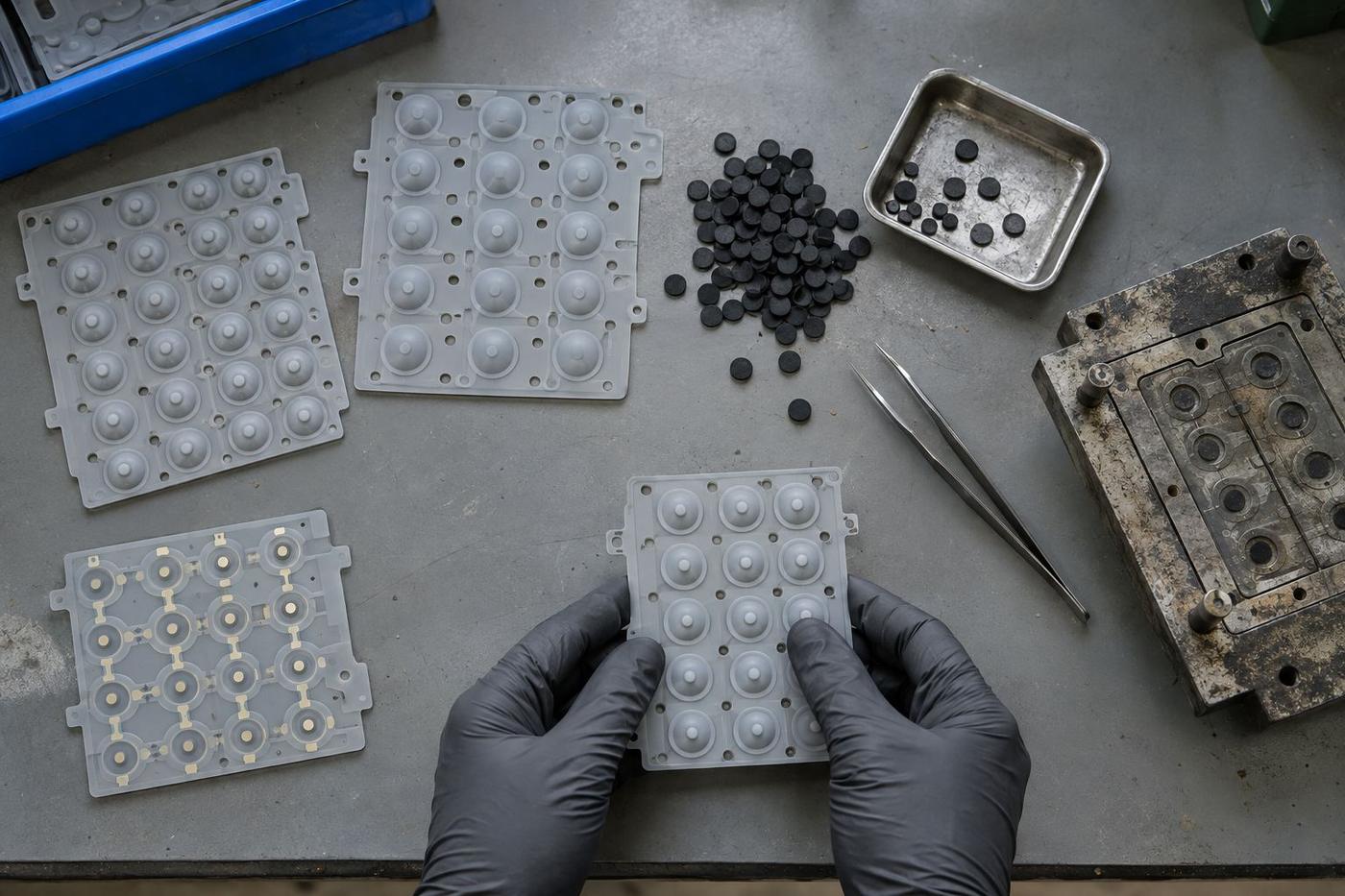
A silicone keypad mat for a hand-held industrial device. Buttons that had to feel decisive without being noisy, conductive contacts that had to make circuit…
Read the record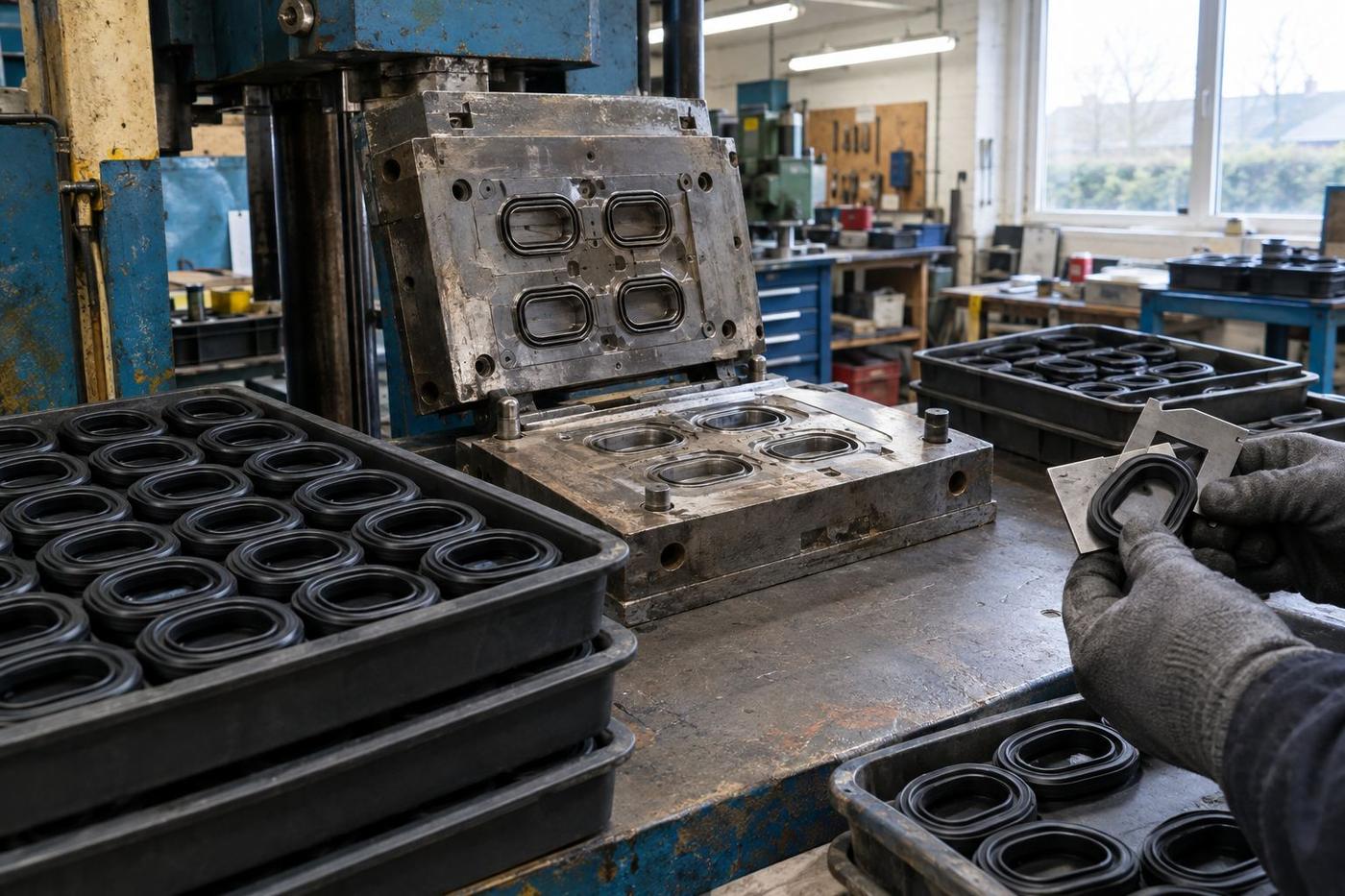
A rubber sealing component supplied into a tier-1 that fits it into a vehicle. Not exotic; not complex; just needs to arrive when the build schedule needs it.…
Read the record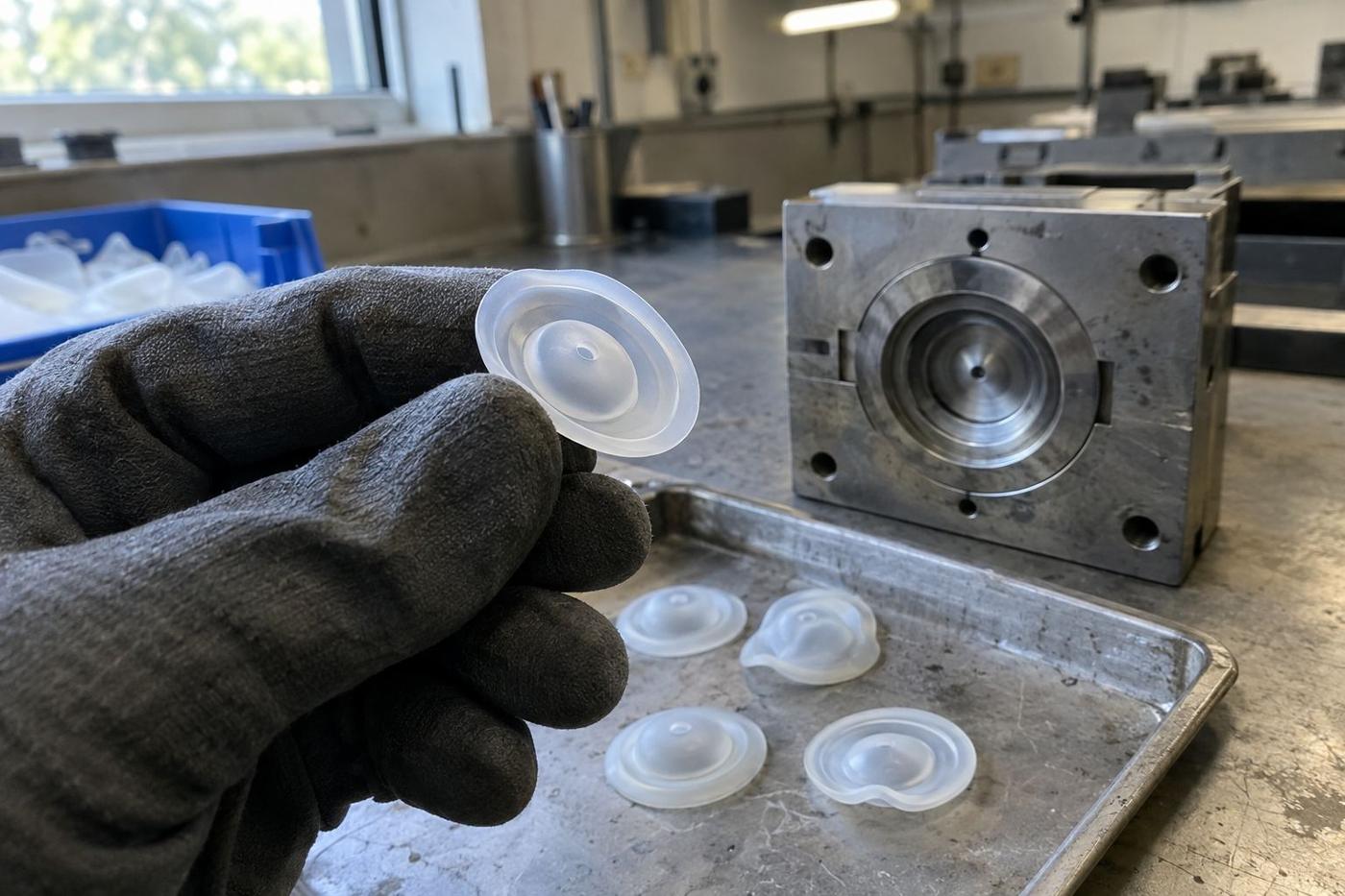
A precision-shaped silicone diaphragm that generates haptic feedback in a small consumer device. Prototype casting proved the design; production LSR held it…
Read the recordNext step
The commercial shapes described in our project records are examples of what's worked, not prices we're quoting today. Every programme sizes differently based on part geometry, annual volume, material family and paperwork requirements.
For a first conversation about whether we'd be the right supplier for your part, send a drawing or a sample with your rough annual volume. That's enough to know if the fit is real.
Get in touch
Rough annual volume, target unit price, and any deadlines. That's enough to work out whether compression, LSR injection or something else is the right tool.
Real people, a real workshop
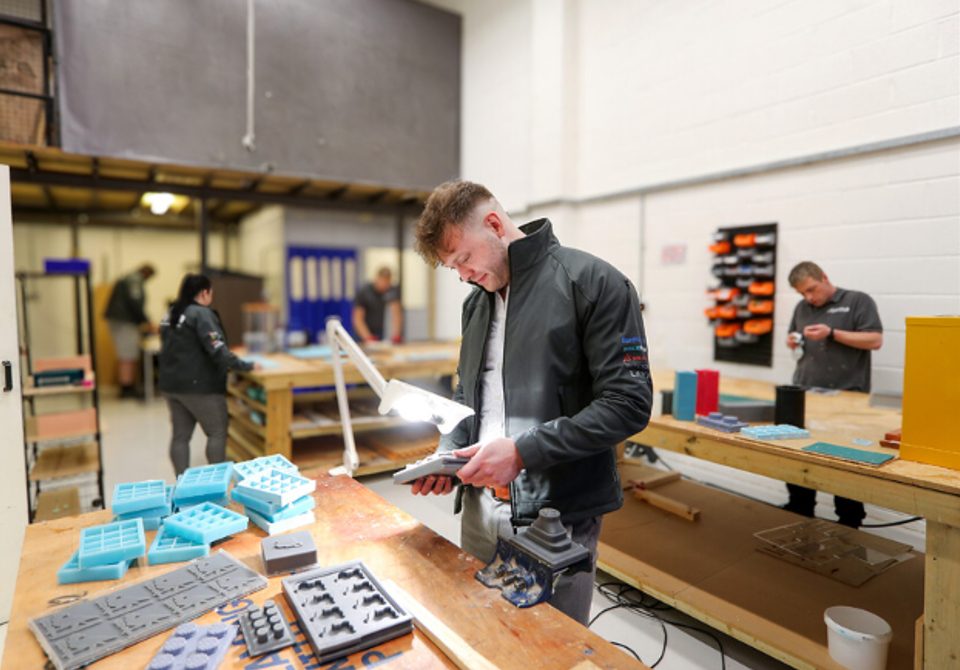
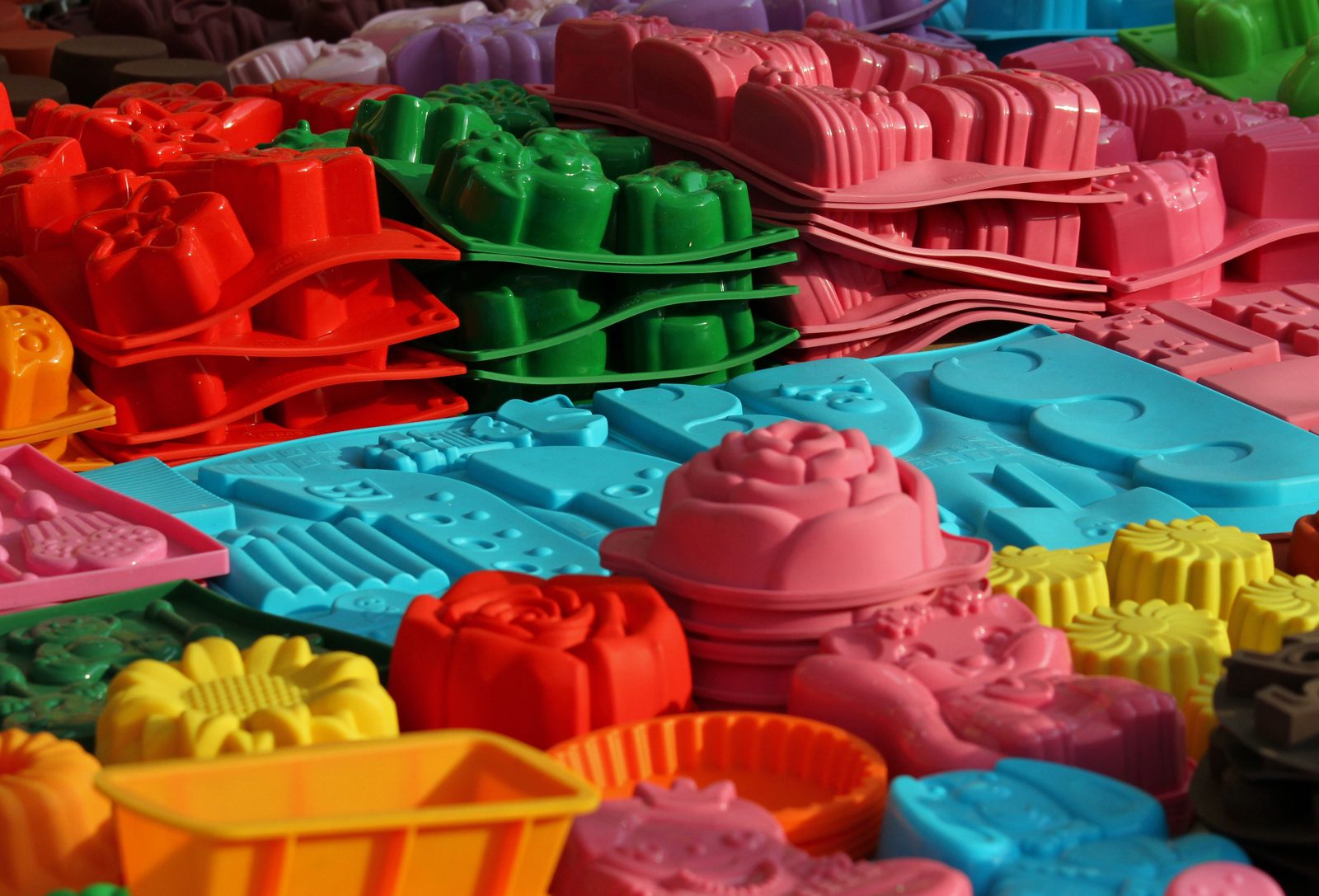
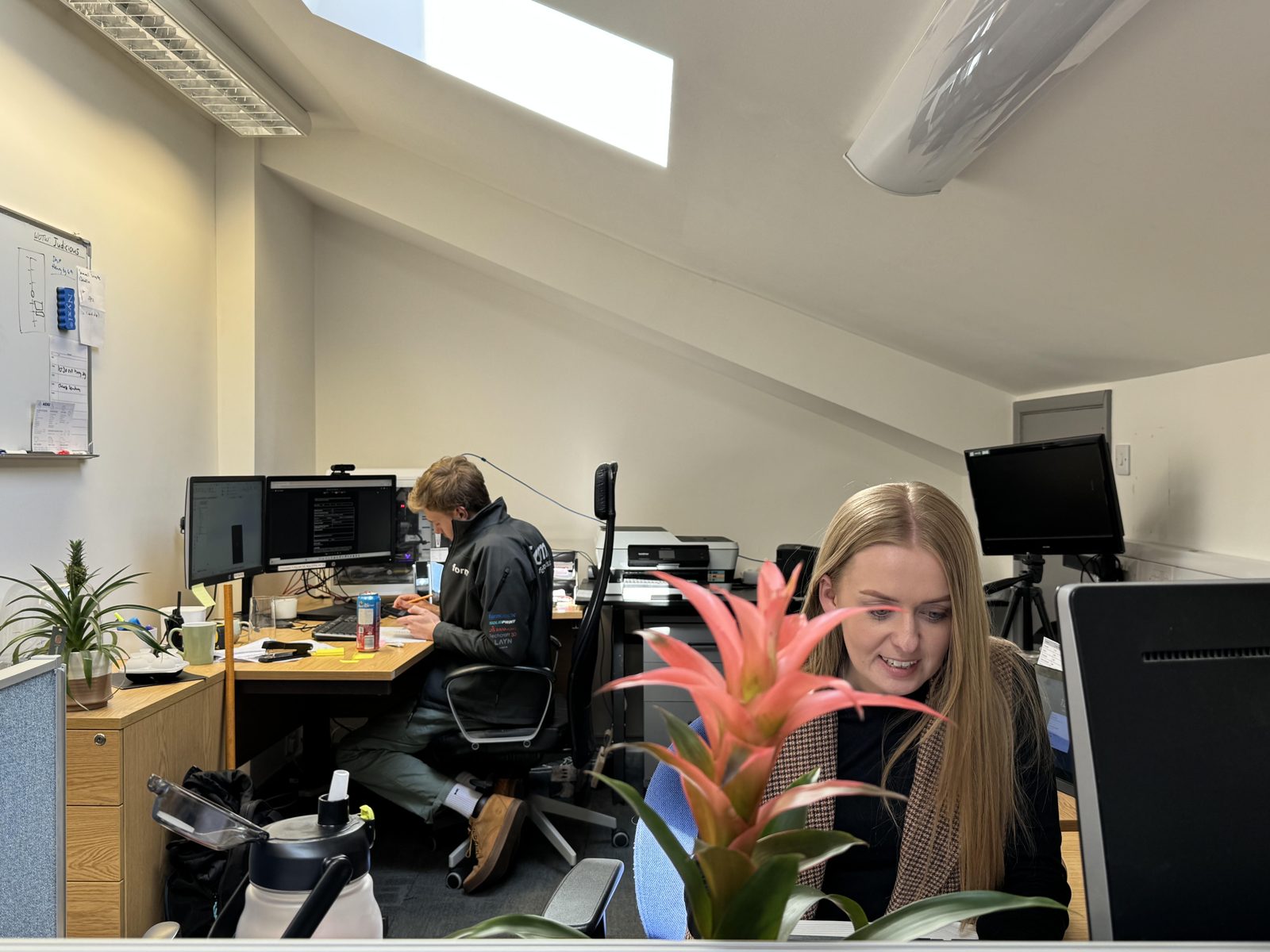
No call centre and no middlemen. When you contact TCI Products, you speak to the team who design, build and check your mould.
 Thomas LaneManaging Director
 George PrestonDesign & Project Manager
 Kelly BallingerHead of Partnerships
 Jim AndertonProduction Manager
 TheodoreEmployee Welfare