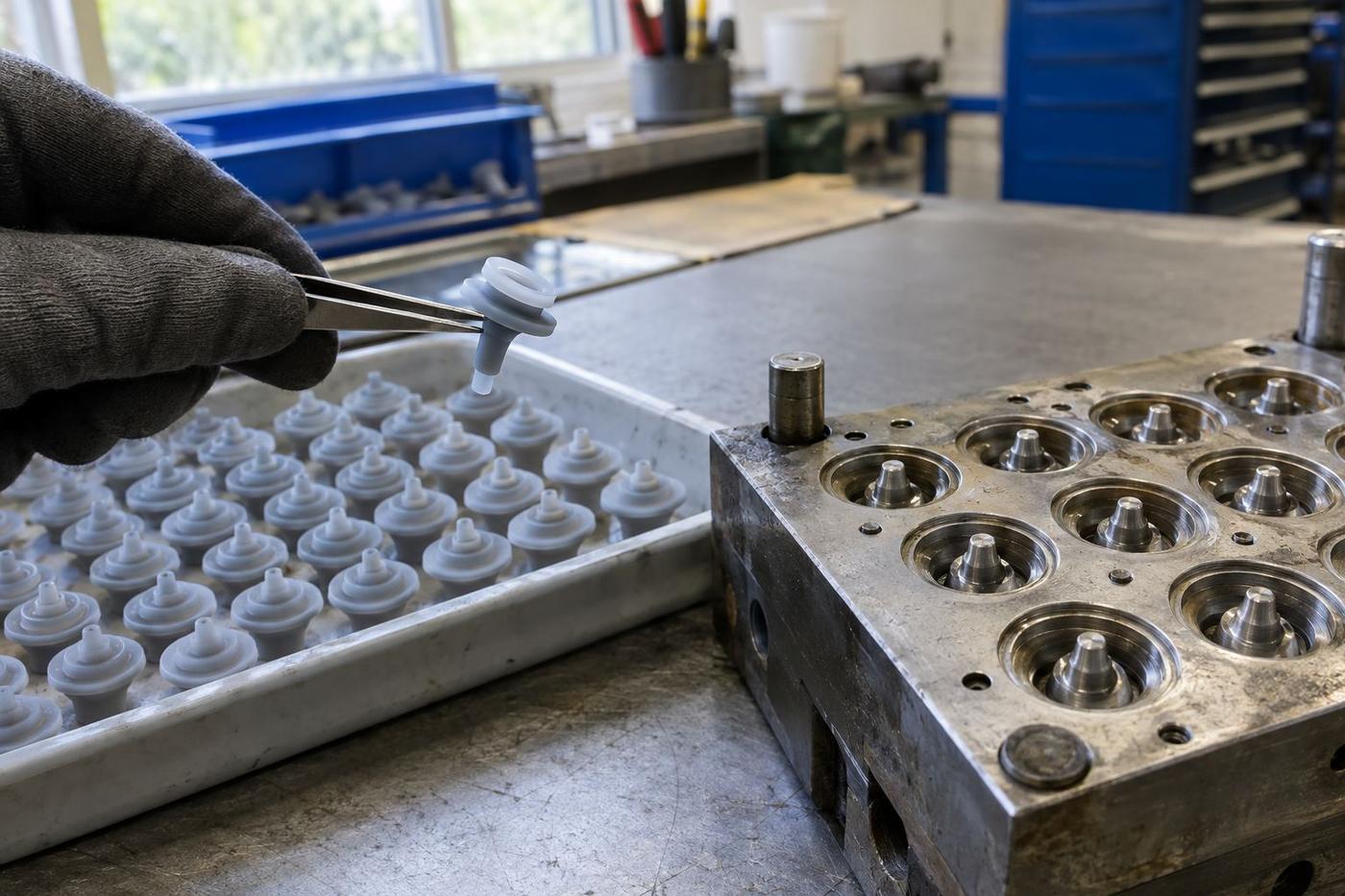
LSR injection moulding
Two-part liquid silicone metered, mixed, injected cold and cured hot. The cleanest route we have for medical, wearable and electronics parts at…
See the serviceProject record · Domestic appliances · LSR
A small silicone valve inside a domestic appliance. Not seen by the user, but does its job millions of times over the appliance's life. Long-run supply into a mature appliance programme.
The brief
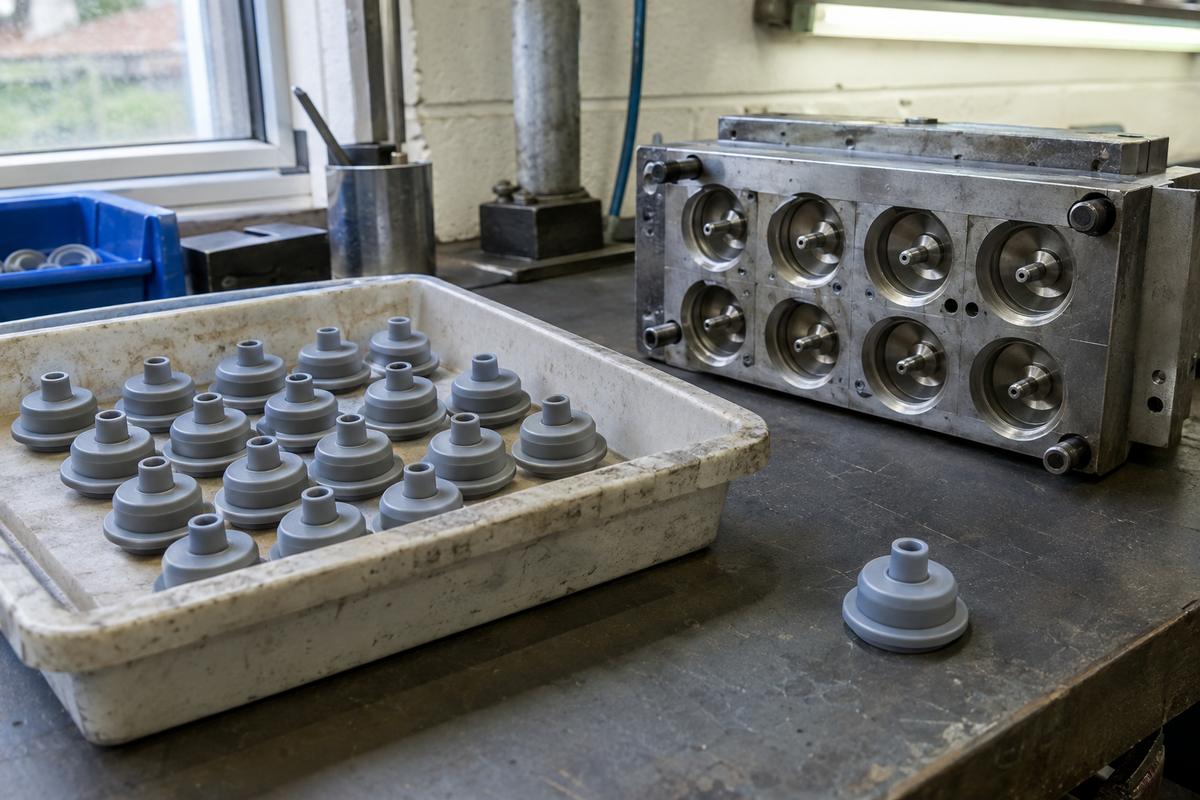
A UK-based domestic appliance OEM manufactures kitchen appliances sold globally. Inside one of their appliance families is a small silicone valve component that regulates fluid flow. It's not visible to the user; it's not marketed; it just has to work every cycle for the life of the appliance.
The appliance family is a mature product — the valve had been in supply for seven years by the time we picked up the programme. The previous supplier had been consolidated into a larger group, communication had degraded, and batch quality had started to be inconsistent.
The OEM needed a UK-based supplier who would hold the valve stable across the remaining product life — probably another five to seven years — with the material and process discipline the mature programme required.
The problem
The valve wasn't complex. LSR-moulded, single-cavity tool, straightforward geometry. But it had a specific hardness, a specific colour (not for visibility — for internal quality identification), and a specific dimensional tolerance on the sealing face. All three had to be held stable.
Under the previous supplier, one grade change and one colour drift had made it through to shipped batches. The OEM had spent internal quality time investigating field returns and traced both to material inconsistency. Nothing catastrophic, but the pattern was troubling for a mature programme with no design revisions planned.
We proposed taking over the programme with formal material and process specification, physical golden sample retention, and communication cadence that would surface any change before it hit a batch.
What we changed
Nothing exotic. Just discipline applied to a mature part, consistently, for years.
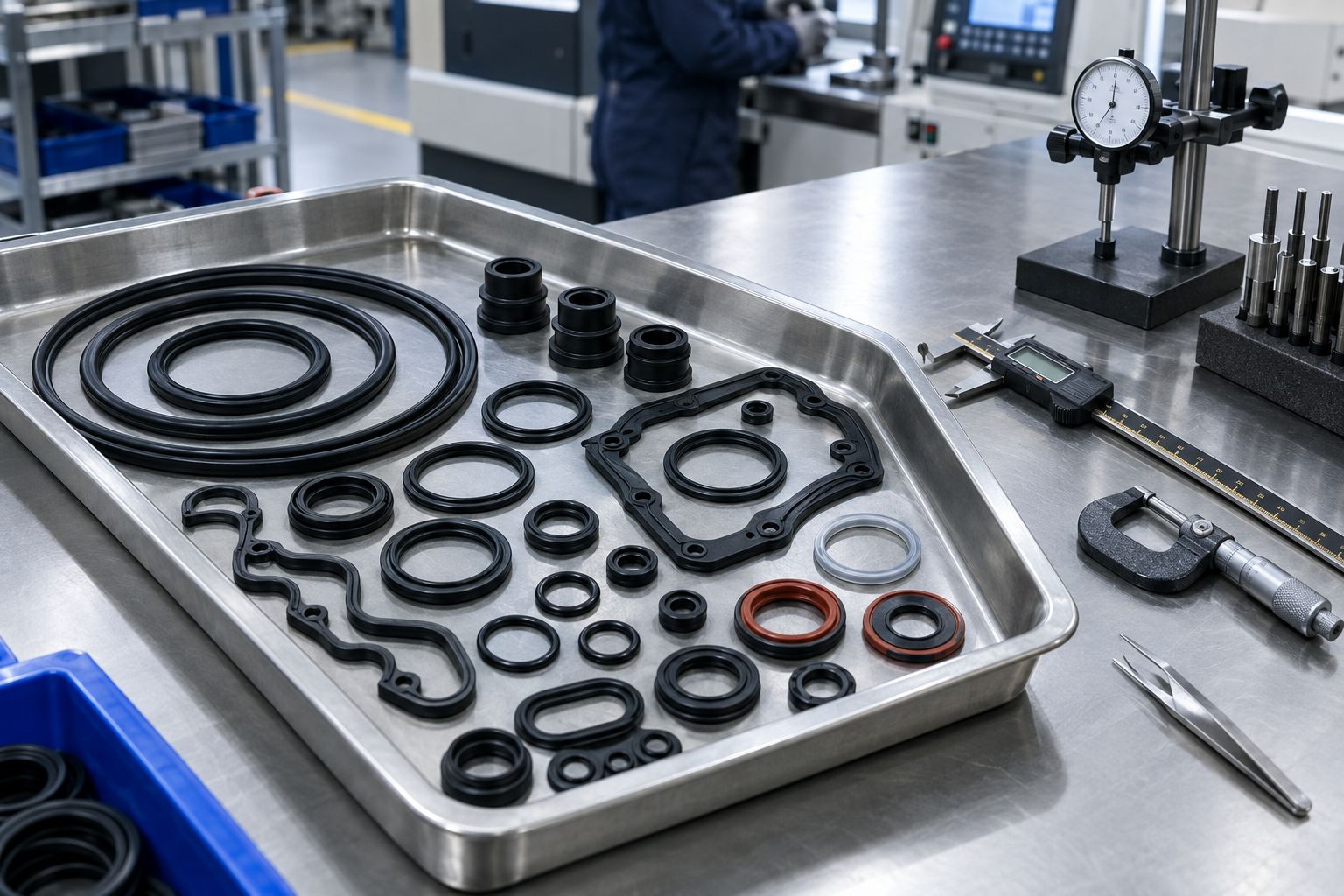
Existing LSR tool transferred from previous supplier. Cavity inspected, dimensions verified against the drawing. Minor refurb performed.
LSR grade documented and locked. Supplier documentation on file. Any change requires OEM sign-off before implementation.
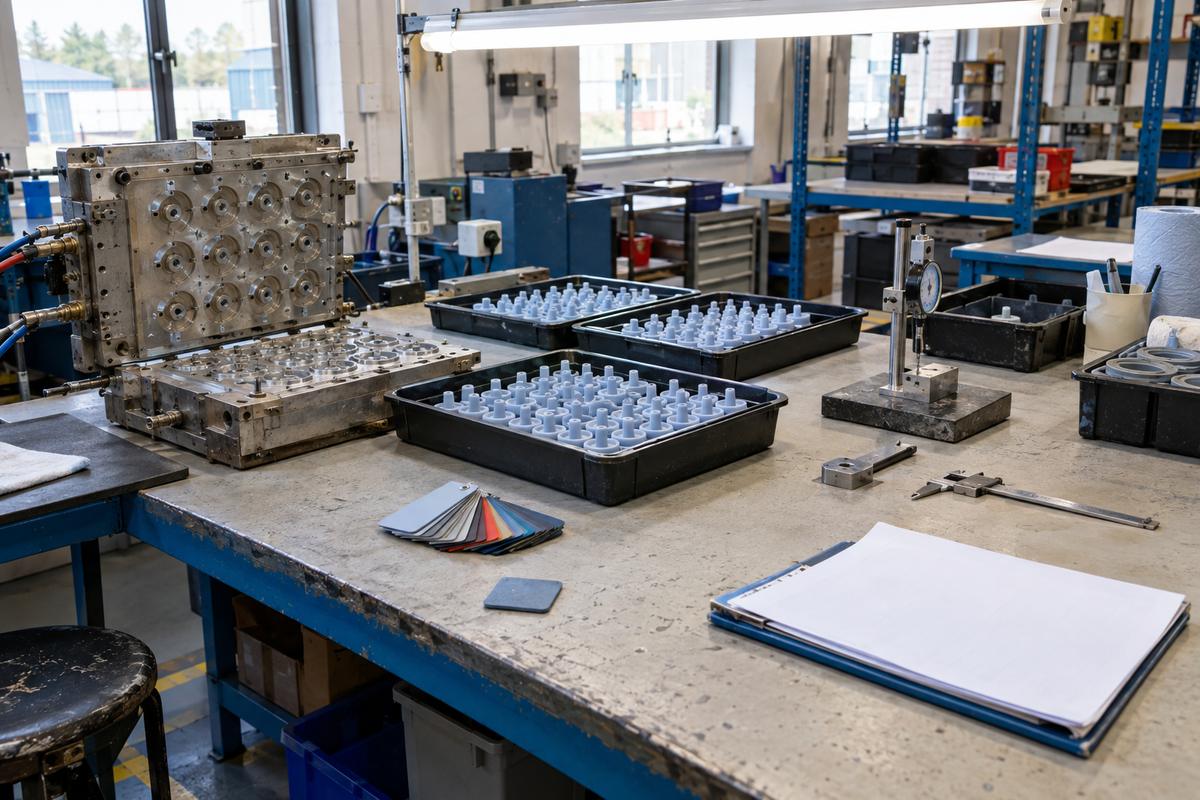
The identifying colour matched against a retained sample from the OEM's approved batches. Pigment recipe recorded.
The critical sealing face dimension checked at first-off on every batch. Any drift caught before ship.
Batch record delivered in the format the OEM's quality system expected. No reformatting at their end.
One engineer owns the programme. OEM's engineering team has their direct line. Communication is by phone or email, not through a portal.
The commercial shape
Unit cost was comparable to the previous supplier. Tooling was already sunk (owned by the OEM). The commercial value came from the reduction in field returns and internal quality investigation time.
For a mature programme, unit cost negotiation is a small lever. Reliability and communication cadence are much larger levers. Getting those right is worth more per year than a few percent on unit price would be.
The programme is now in its second year with us. Field return rate on the valve has dropped back to baseline. Internal quality investigations related to this component have stopped. The appliance programme continues as planned.
“The valve stopped being a problem. That's the outcome we needed.”
Services used
Two-part liquid silicone metered, mixed, injected cold and cured hot. The cleanest route we have for medical, wearable and electronics parts at…
See the serviceFor parts that will be in production for years — components inside a device family, sealing parts on long-lived equipment, consumer parts on a…
See the serviceSilicone and rubber gaskets moulded to your drawing, in the grade and hardness your sealing job actually needs. Enclosure gaskets, static fluid…
See the serviceMore project records
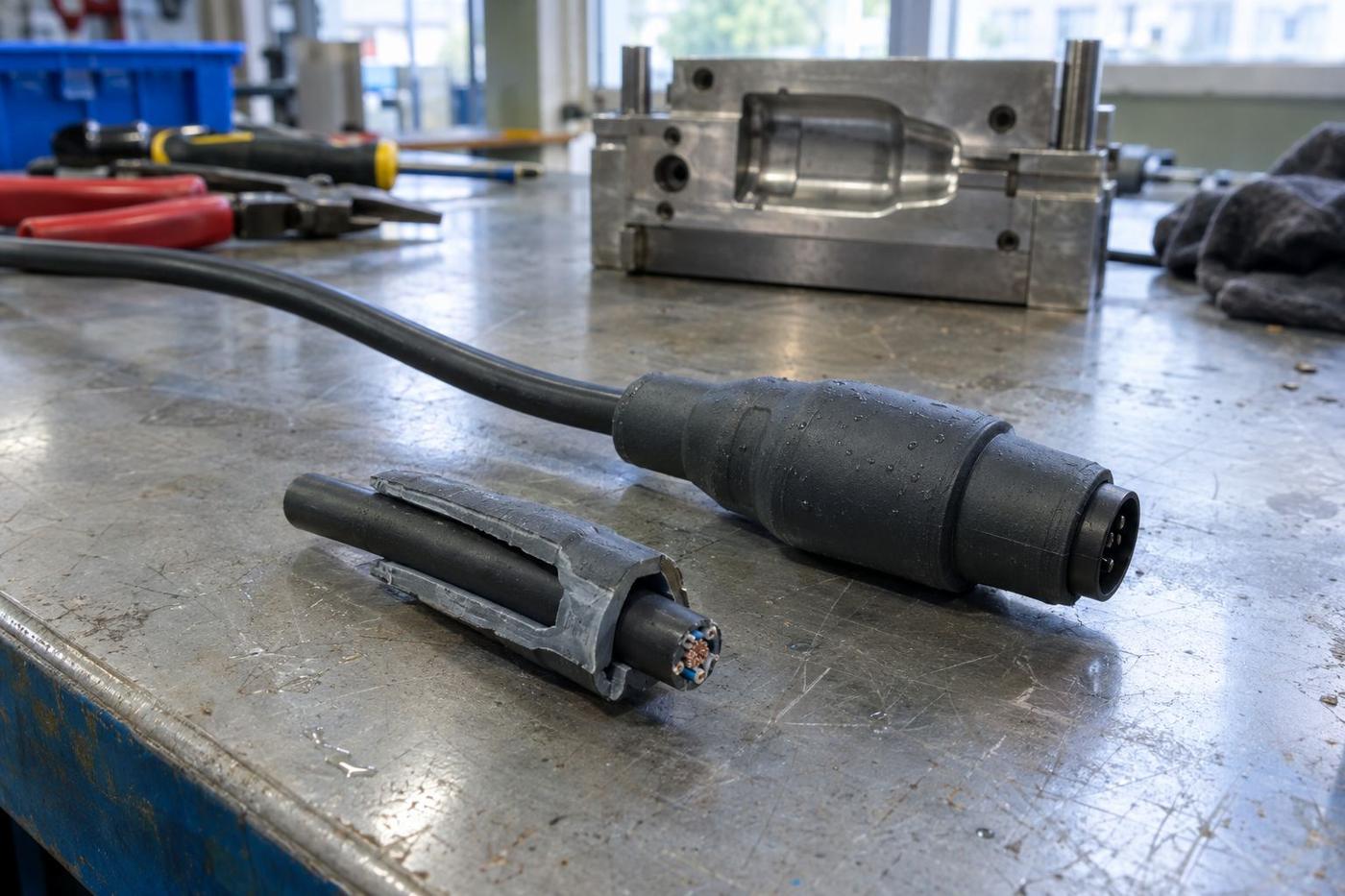
Salt water was finding its way along the cable jacket and into the connector. We replaced a potted joint and heat-shrink with a single silicone overmould…
Read the record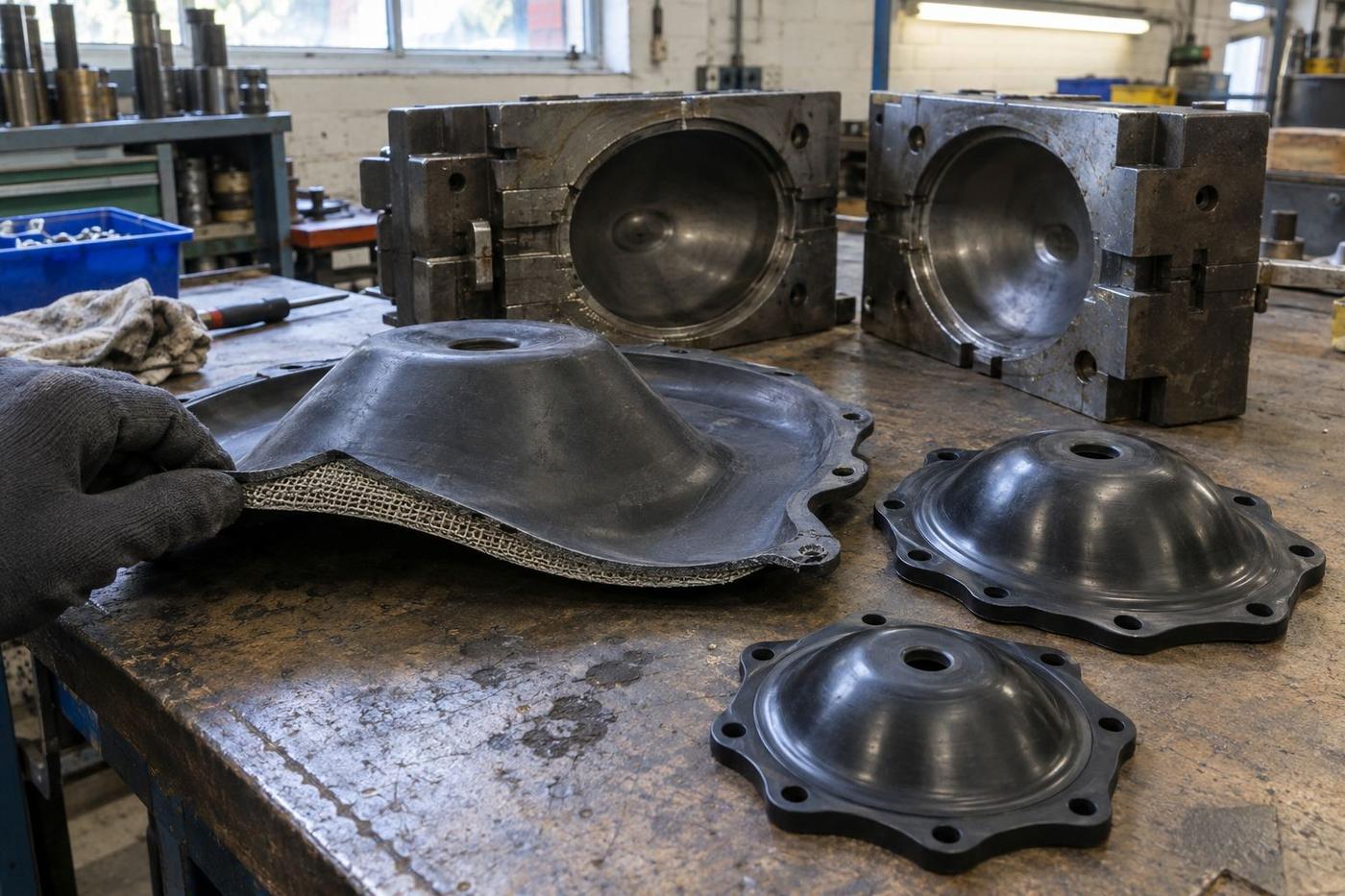
A long-standing diaphragm supplier had stopped supplying and the replacement parts from elsewhere were failing early. We re-tooled the diaphragm in compression…
Read the record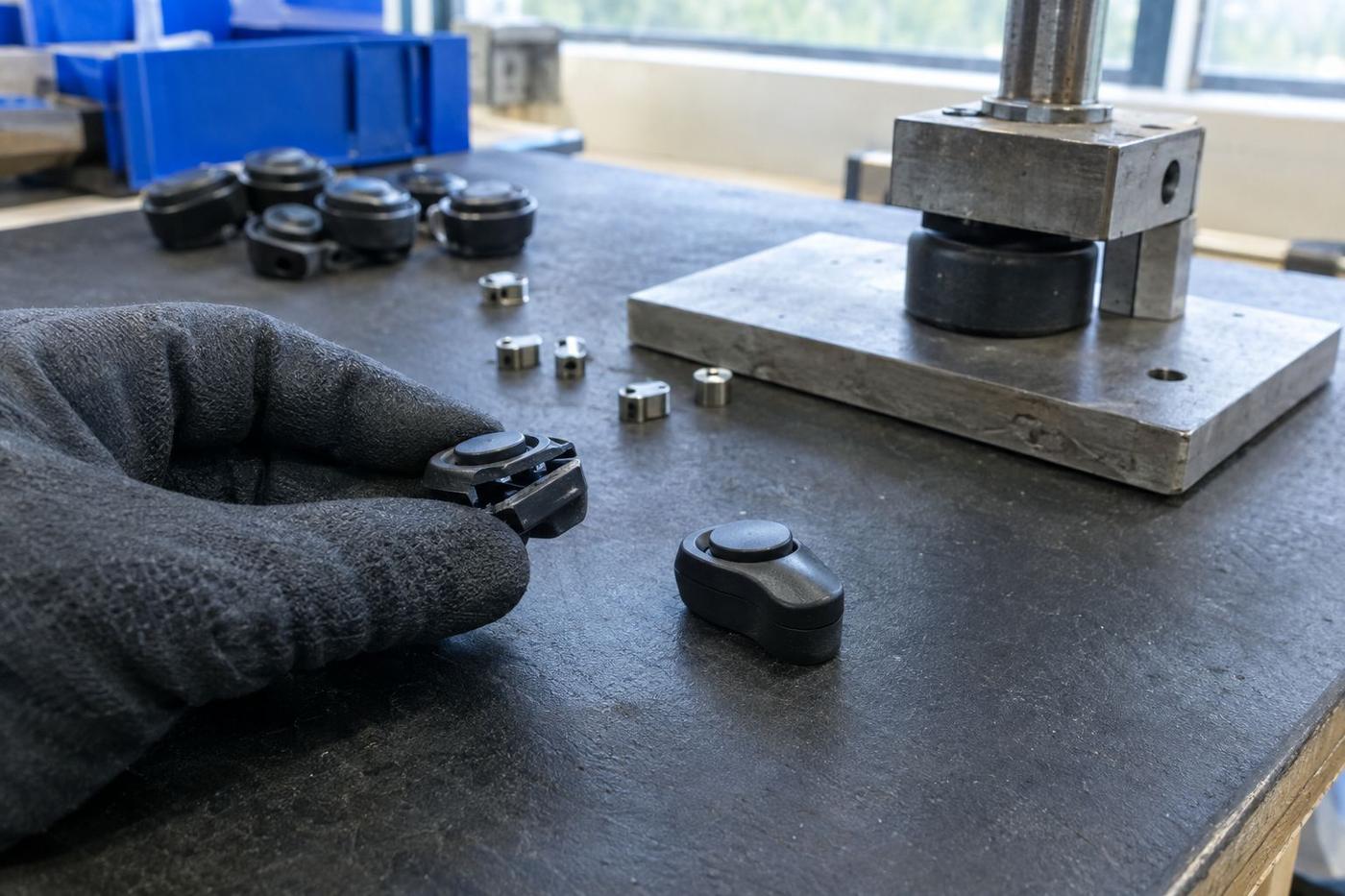
Three separate parts, bonded together by hand, kept failing the drop test at the bond line. We moved the assembly to a single overmoulded part. The bond became…
Read the recordNext step
The commercial shapes described in our project records are examples of what's worked, not prices we're quoting today. Every programme sizes differently based on part geometry, annual volume, material family and paperwork requirements.
For a first conversation about whether we'd be the right supplier for your part, send a drawing or a sample with your rough annual volume. That's enough to know if the fit is real.
At a glance
How overmoulding works
Swipe to see the whole diagram
Get in touch
Rough annual volume, target unit price, and any deadlines. That's enough to work out whether compression, LSR injection or something else is the right tool.
Real people, a real workshop
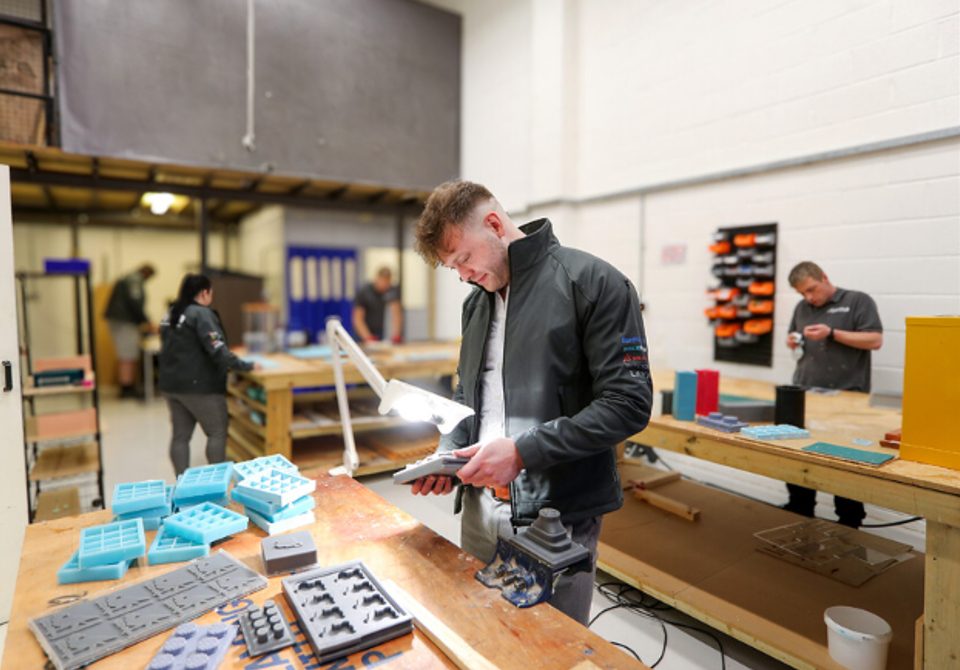
No call centre and no middlemen. When you contact TCI Products, you speak to the team who design, build and check your mould.

 Thomas LaneManaging Director
 George PrestonDesign & Project Manager
 Kelly BallingerHead of Partnerships
 Jim AndertonProduction Manager
 TheodoreEmployee Welfare