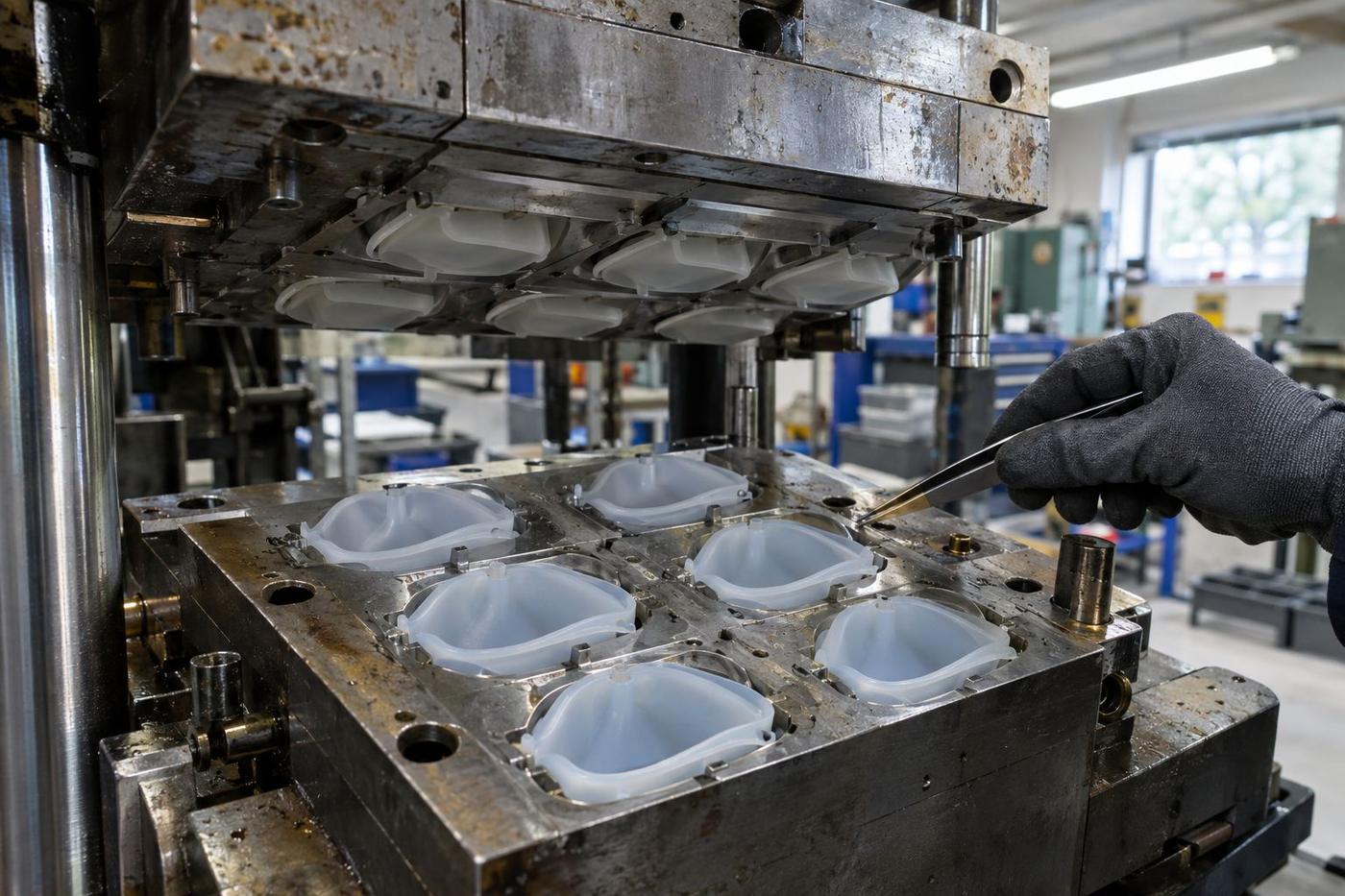
HCR injection
High-consistency silicone is the solid, putty-like form of the material. Injected into a hot steel tool, it gives you the speed of…
Open this variantVolume route · high-consistency silicone
High-consistency silicone injected under heat into steel tooling. For a component you'll buy every quarter for years, this is the lowest cost per part we can offer — and the wrong answer for almost anything else.
The arithmetic
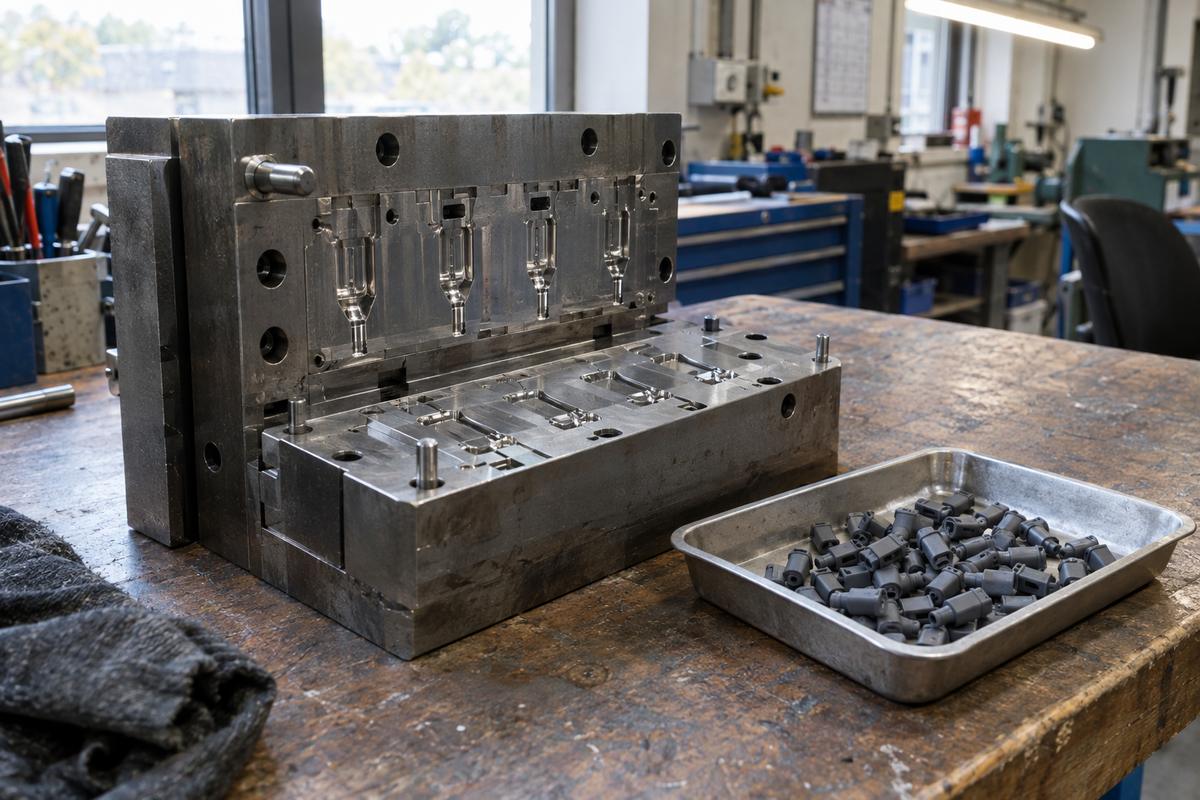
There's no clever way around it: an injection tool is hardened steel, machined and polished to hold detail for a very long time. It costs what it costs before you have a single part in your hand. That cost is then divided across every part the tool produces over its lifetime.
Spread across a season's worth of parts, the tooling line looks painful. Spread across five years of a component that sits inside a product you sell continuously, it fades into the background — and the unit cost stays lower than anything else we can offer.
So before we look at the part itself, we ask how many you expect to buy, over what period, and how confident you are in that number. A confident annual quantity across several years makes injection obvious. A hopeful one-year forecast makes it a gamble with your money.
If you're not there yet, that's completely normal. A sensible route is to prove the part with short-run compression or transfer first, then convert the tooling once the design and the volumes have stopped moving.
Drill down
Each variant has its own page with the specifics: where it fits, how we run it and what to send us.
High-consistency silicone is the solid, putty-like form of the material. Injected into a hot steel tool, it gives you the speed of…
Open this variantMore cavities means more parts per cycle and a lower cost per part. It also means a more expensive tool and more places for things to vary.…
Open this variantRubber moves, shrinks and flexes, so precision in silicone means something different from precision in metal. It means parts that come out…
Open this variantPreconditions
Once the tool has been cut, changing a feature means reworking hardened steel or cutting a new tool. Small edits are sometimes possible; most aren't, and none are cheap. Finalise the part first.
Not aspirational. A tool sized for a forecast that never arrives is the most expensive mistake on this page. You spend the money up front with nothing to recover it from.
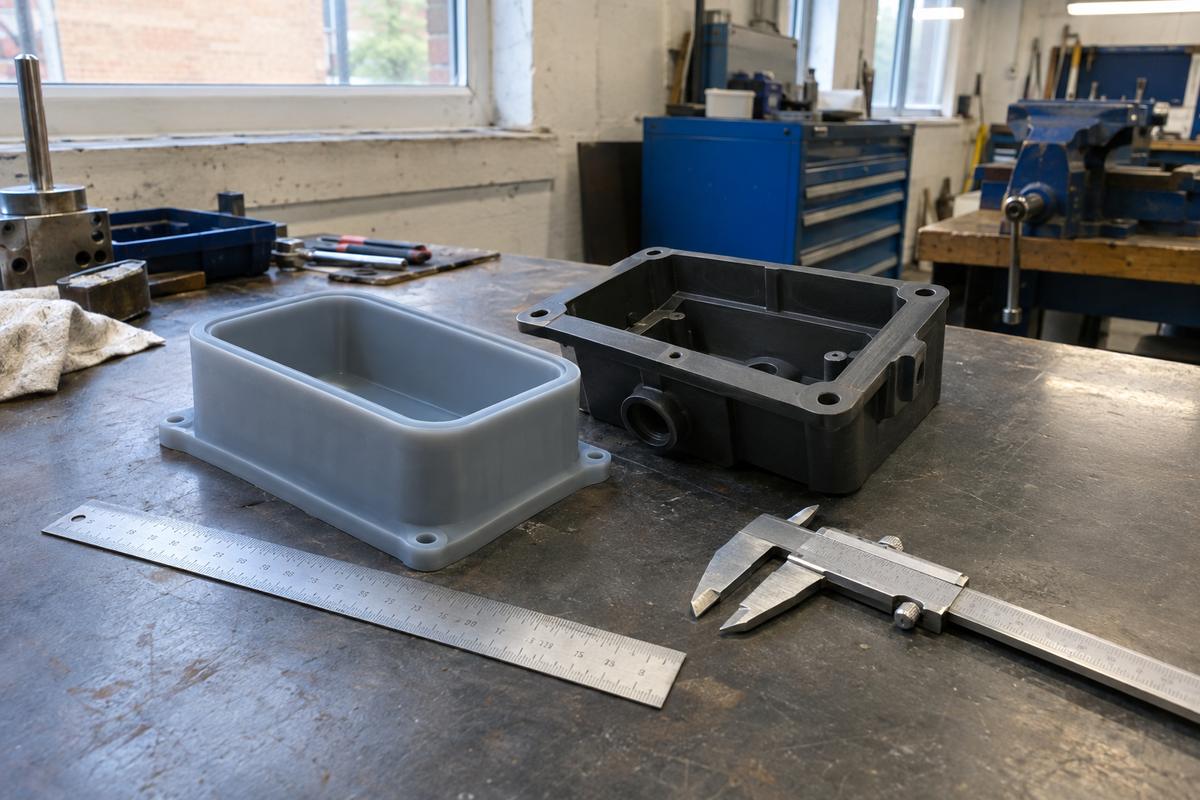
Even walls, proper draft, no features that trap air, and a parting line that doesn't cross a face you care about. Injection is far less forgiving of awkward geometry than a flexible tool that shrugged it off in prototype.
How it runs
High-consistency silicone arrives as a solid gum that's been milled, coloured and catalysed. The process is built around handling that material cleanly and cycling it fast.
The gum is weighed, coloured to your recorded shade, and fed into the injection barrel. Colour is matched against a physical chip you signed off, not a screen swatch.
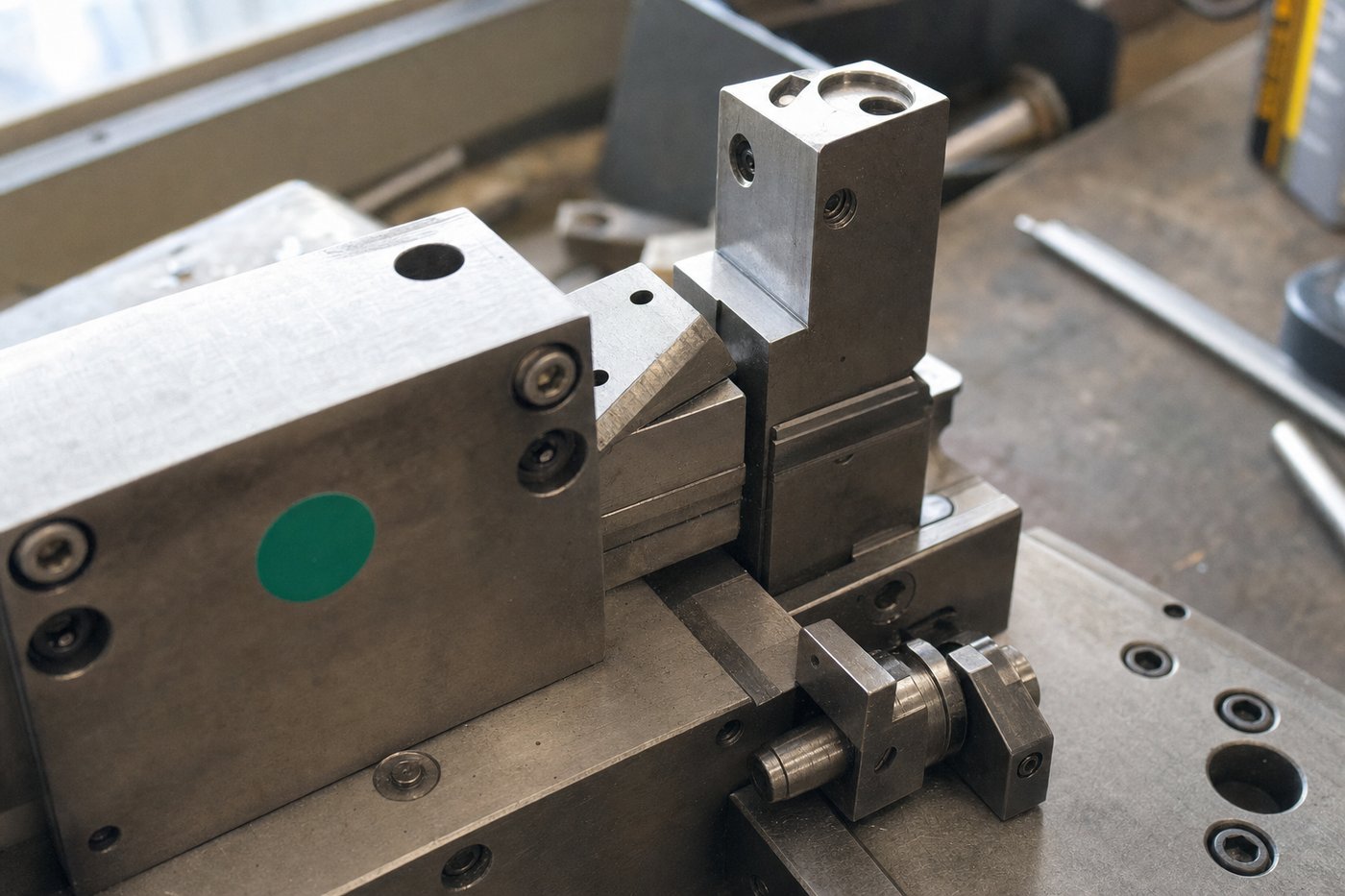
The screw injects the silicone into a heated steel tool. The heat cures the material in the cavity within seconds. Cycle time comes from cure chemistry, not from the size of the shot.
Parts release straight off the tool. Before a run continues, first-off parts are checked against the approved sample. If the job has a specified grade, we record the material batch against the order.
A well-designed injection tool leaves very little for you to remove. If flash is unavoidable, we deal with it inline — cryogenic trim, tumble deflash, or hand finish — rather than leaving it for you to find.
Parts are counted, packed to your spec, and shipped with a paperwork bundle that lists the material batch, the tool ID and the run date.
To quote it
Use the number you can commit to, not the best case. It sets both the cavity count and the tooling specification. An inflated figure leaves you with a tool you can't fill.
A component that stays in production for years calls for a different tool from one made for a single model or a single season. Both are valid; the choice affects steel grade and tool life.
Whether you need medical-grade material to a documented spec, high-temperature silicone, or electronics-grade insulation, the grade affects tool design and cycle behaviour, not just material cost.
Many parts that arrive requesting injection run perfectly well in compression at a fraction of the tooling cost. We'll work through both and show you the comparison.
Related routes
Two-part liquid silicone metered, mixed, injected cold and cured hot. The cleanest route we have for medical, wearable and electronics parts at…
Read moreSolid silicone or rubber pre-formed, loaded into a heated steel tool, and pressed under cure. Sensible tooling cost, thousands of parts per tool, and…
Read moreFor parts that will be in production for years — components inside a device family, sealing parts on long-lived equipment, consumer parts on a…
Read moreAt a glance
Which route suits your quantity
Swipe to see the whole diagram
Get in touch
Rough annual volume, target unit price, and any deadlines. That's enough to work out whether compression, LSR injection or something else is the right tool.
Real people, a real workshop
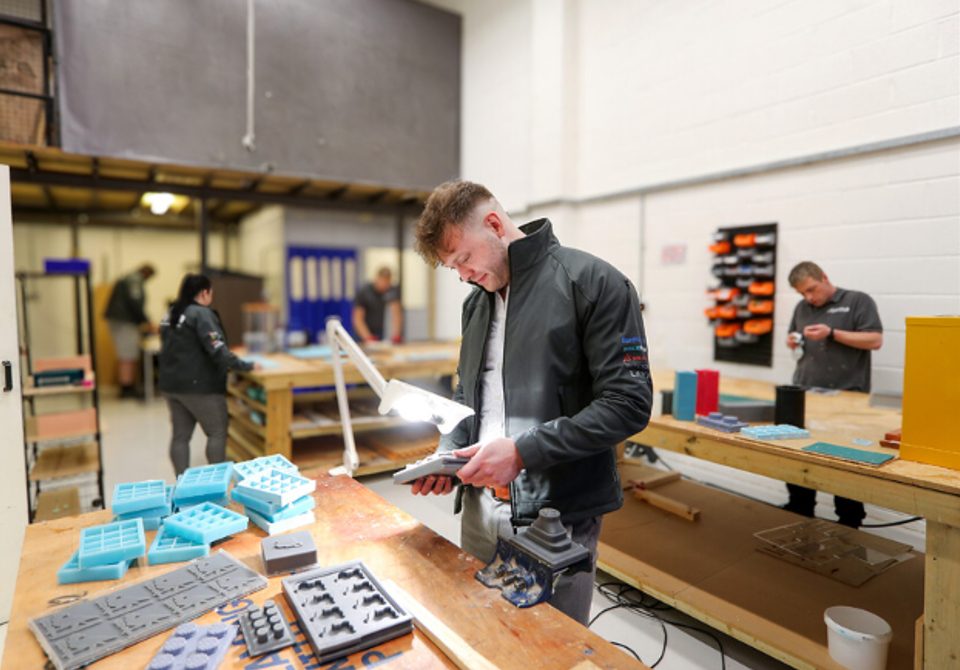
No call centre and no middlemen. When you contact TCI Products, you speak to the team who design, build and check your mould.

 Thomas LaneManaging Director
 George PrestonDesign & Project Manager
 Kelly BallingerHead of Partnerships
 Jim AndertonProduction Manager
 TheodoreEmployee Welfare