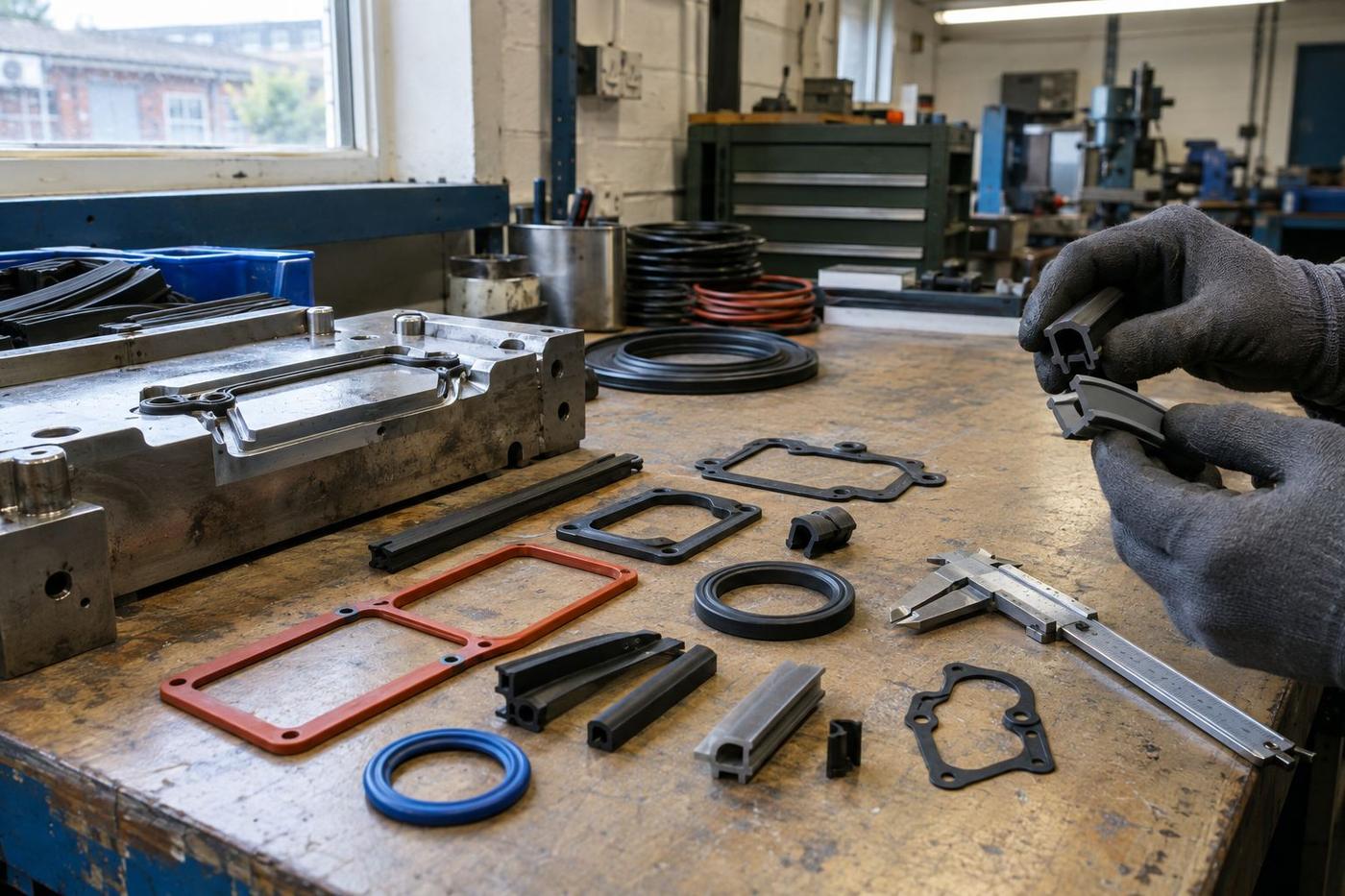
O-rings
The simplest seal there is, and the one most often specified wrongly. We supply custom O-rings, and we'll tell you when a standard one…
Open this variantOEM route · sealing components
Silicone and rubber gaskets moulded to your drawing, in the grade and hardness your sealing job actually needs. Enclosure gaskets, static fluid seals, dynamic seals, sealing lips and O-ring alternatives — all sit within the same manufacturing capability.
What a gasket has to do
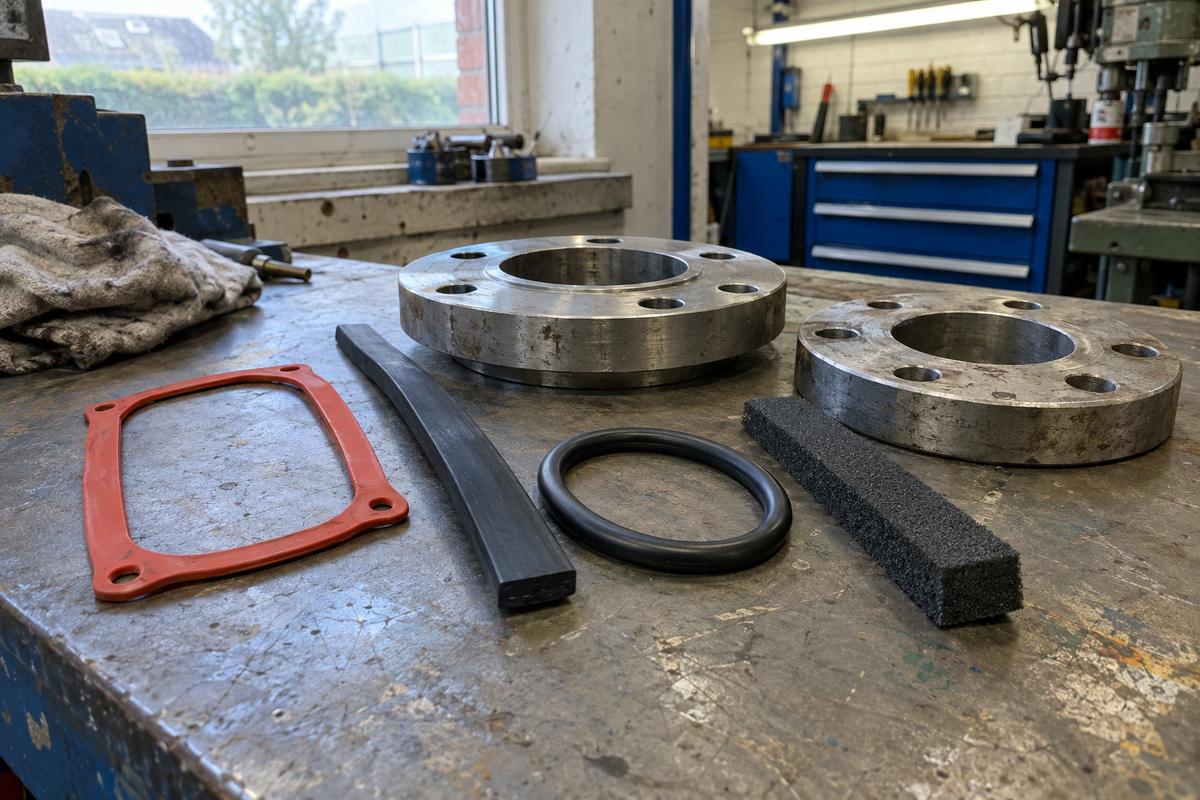
A gasket has a specific job: create and maintain a sealed interface between two mating surfaces. It has to compress to a controlled percentage of its free height, spring back if the joint is opened and reclosed, and survive whatever fluid, temperature, chemical or vibration the interface throws at it.
The material choice is where most gasket work is won or lost. Silicone is excellent across a wide temperature range and for anything food, medical or electronics adjacent. EPDM handles water and mild chemicals well. Nitrile handles hydrocarbons. Fluorosilicone handles both and is expensive. We'll match the grade to the environment, not the other way round.
Geometry matters as much as material. A well-designed gasket has a controlled compression stop, a defined sealing lip or bead, and features that stop it extruding into places it shouldn't. A bad drawing plus a good material still gives you a leaking seal.
For most sealing jobs, compression moulding is the right route below tens of thousands a year. LSR takes over above that. Very thin flat gaskets sometimes make more sense die-cut from sheet — we'll flag that route if it fits.
Drill down
Each variant has its own page with the specifics: where it fits, how we run it and what to send us.
The simplest seal there is, and the one most often specified wrongly. We supply custom O-rings, and we'll tell you when a standard one…
Open this variantEnclosure lids, flanges, pump covers, lighting housings. Flat gaskets do a lot of quiet work, and the right way to make one depends mostly…
Open this variantA lip seal works by flexing against a moving surface. The quality of that lip — its thickness, angle and edge — decides whether it seals,…
Open this variantSome seals don't fit any category. A seal that wraps a corner, locates on pegs, seals two faces and doubles as a cushion. Those are the…
Open this variantWhere sealing gets specific
Sealing lips on electronics or medical enclosures. Usually LSR-injected in silicone, designed to hit an IP rating without over-clamping the housing.
Flat and shaped gaskets between two rigid mating faces. Compression-moulded in silicone, EPDM or nitrile depending on what's on the other side.
Sealing lips on moving components — wipers, shaft seals, valve seats. Material chosen for wear as much as for sealing.
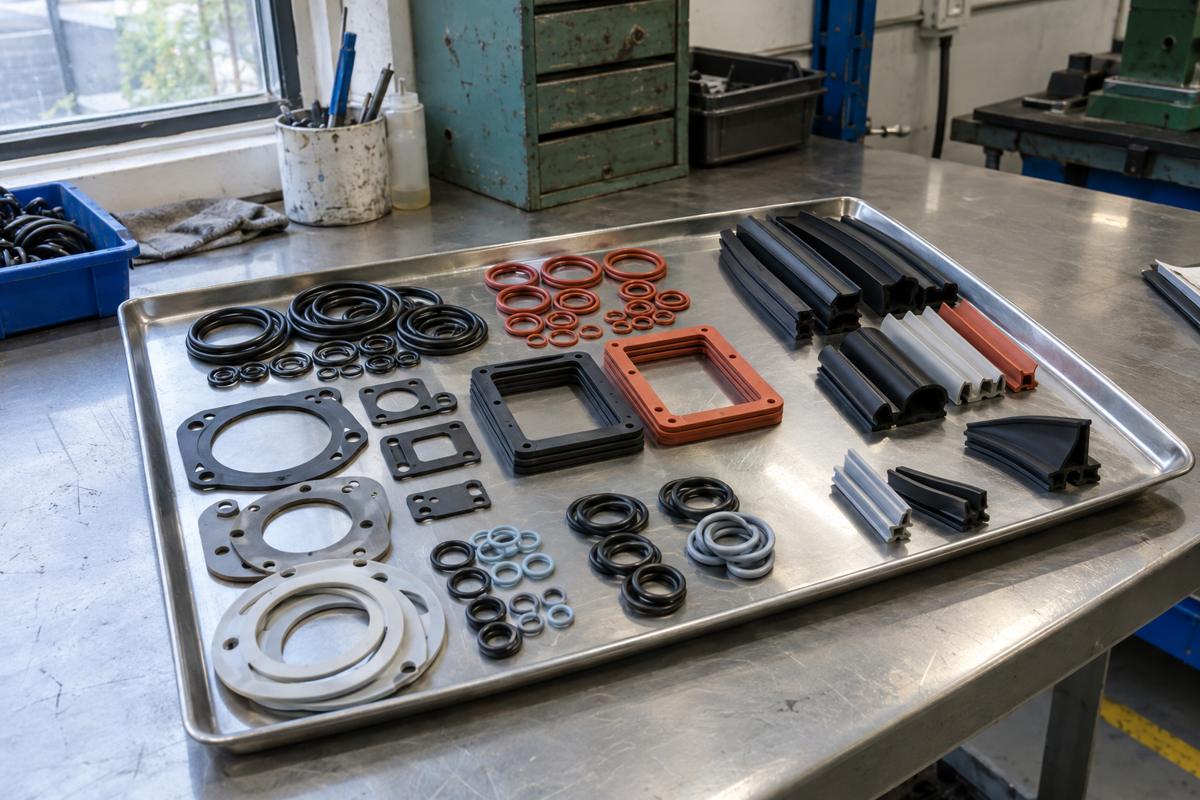
How a gasket job runs
Same manufacturing route as any moulded part. The difference is in the material selection conversation and the inspection criteria on the sealing feature.
We ask what the gasket seals against — fluids, temperatures, chemicals, how often the joint is opened. That drives material selection and grade recommendation.
A quick DFM pass on your drawing: compression percentage, sealing bead geometry, any features that need adjusting to seal reliably at volume.
Cavity layout, gate position (away from sealing faces), flash groove placement, and cavity count sized to the annual quantity.
Standard moulded cycle. First-off gaskets are inspected on the sealing face, not just for overall dimensions. If the seal lip has a witness line, the tool is corrected before the run continues.
Material batch recorded against every run. For sealing parts that end up in regulated environments, the batch record is part of what you buy.
To quote it
What's on either side — housing material, mating face finish, joint style. That's more useful than the gasket drawing on its own.
Temperature range, fluids or gases in contact, chemical exposure, expected life. We match the material to that, not to a datasheet default.
Whether the joint is bolted, snap-fitted, or under permanent compression. Different compression profiles suit different assembly methods.
Small sealing gaskets often run compression across a mixed programme; large annual volumes justify dedicated LSR tooling.
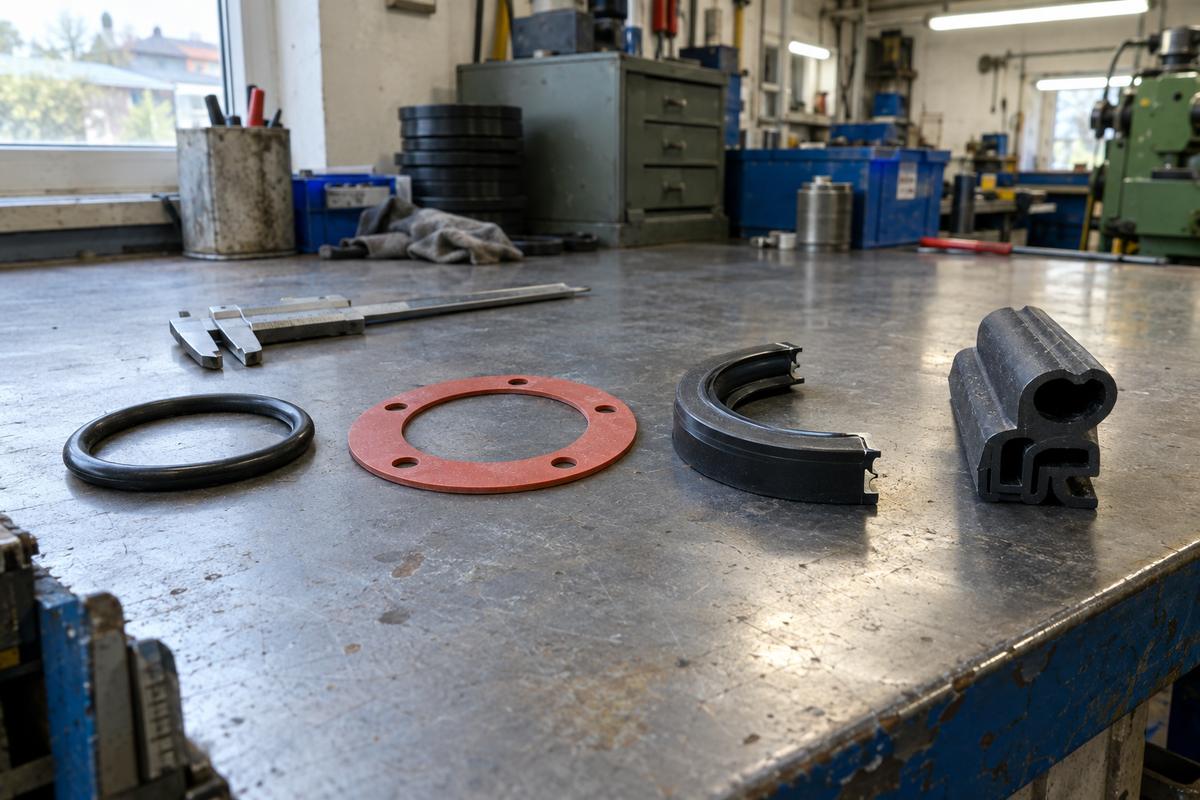
Related routes
Solid silicone or rubber pre-formed, loaded into a heated steel tool, and pressed under cure. Sensible tooling cost, thousands of parts per tool, and…
Read moreTwo-part liquid silicone metered, mixed, injected cold and cured hot. The cleanest route we have for medical, wearable and electronics parts at…
Read moreSilicone moulding for electronics OEMs — insulating gaskets, sealing membranes, keypad mats, connector boots, enclosure seals. Electronics-grade…
Read moreAt a glance
From drawing to delivered parts
Swipe to see the whole diagram
Get in touch
Rough annual volume, target unit price, and any deadlines. That's enough to work out whether compression, LSR injection or something else is the right tool.
Real people, a real workshop
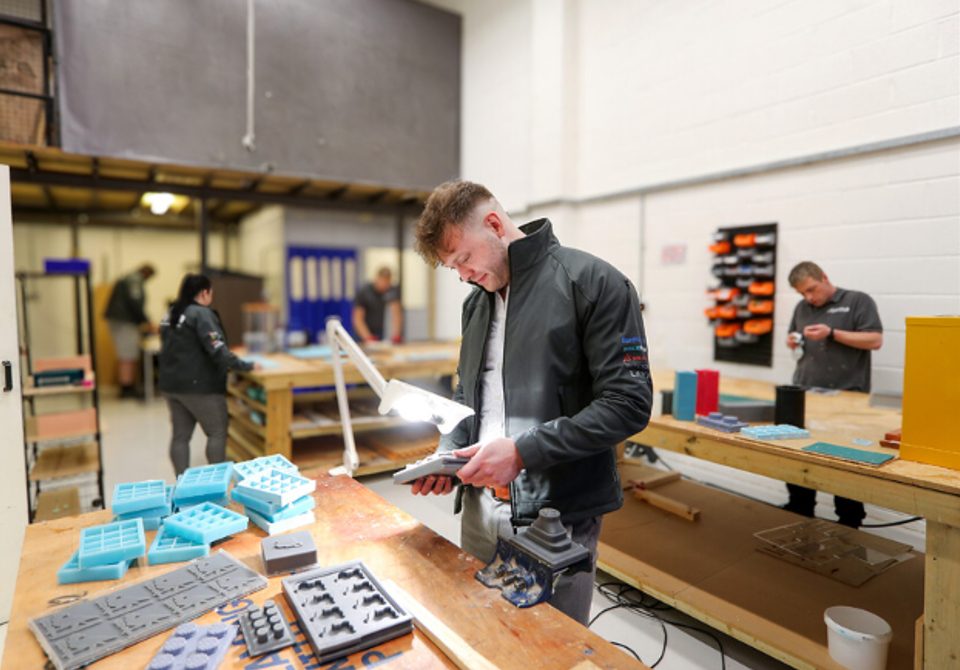
No call centre and no middlemen. When you contact TCI Products, you speak to the team who design, build and check your mould.


 Thomas LaneManaging Director
 George PrestonDesign & Project Manager
 Kelly BallingerHead of Partnerships
 Jim AndertonProduction Manager
 TheodoreEmployee Welfare