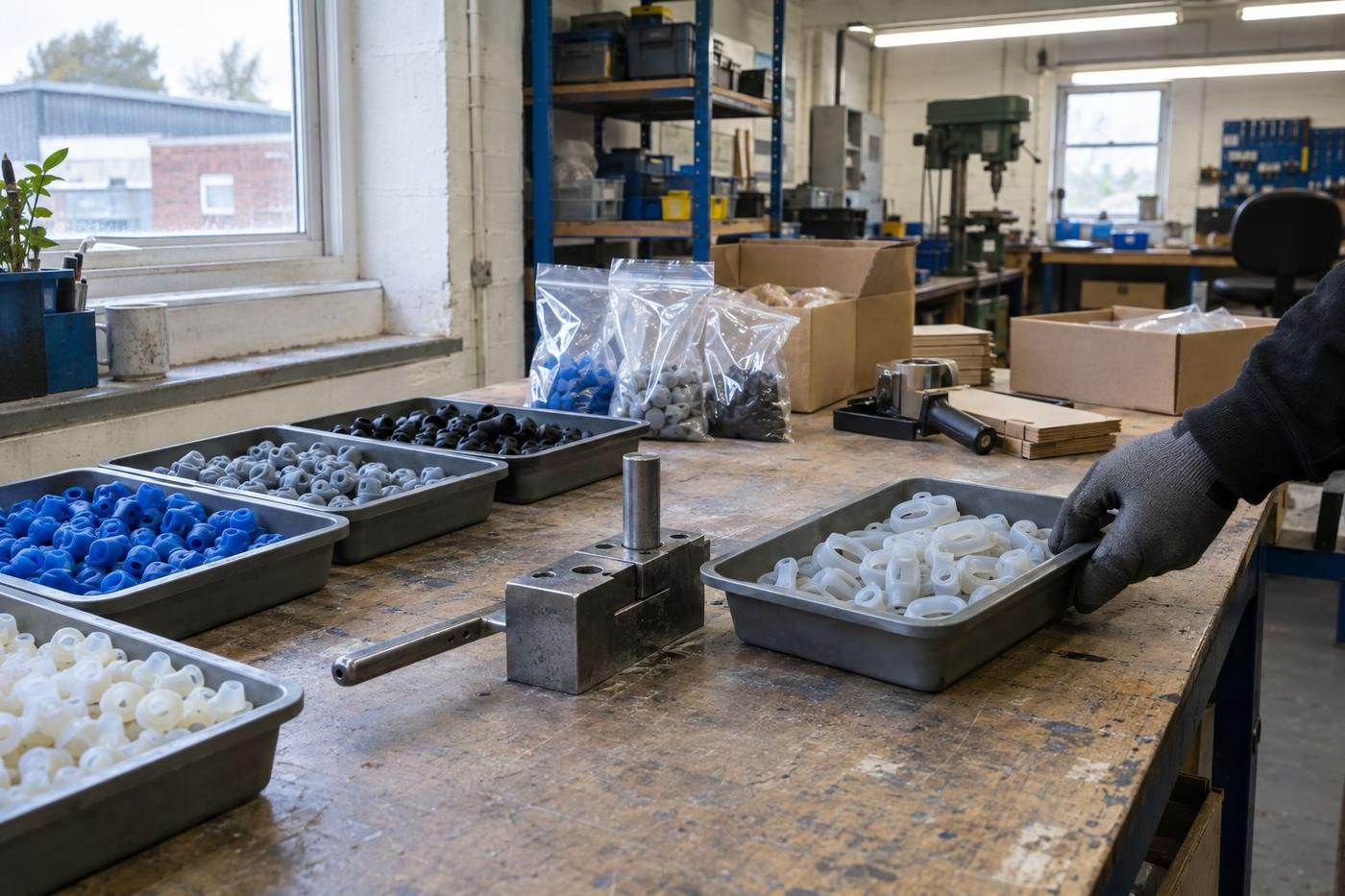
Short-run batches
Not every part needs thousands. Some need a few hundred a year, made properly, with the same paperwork as a big programme.
Open this variantOEM route · discrete batches
For volumes measured in the hundreds or low thousands per batch, released on your schedule rather than ours. Bridge tooling, dedicated compression, or single-cavity LSR — whichever route gives you the right unit cost for the volume you actually need.
Why batch, not continuous
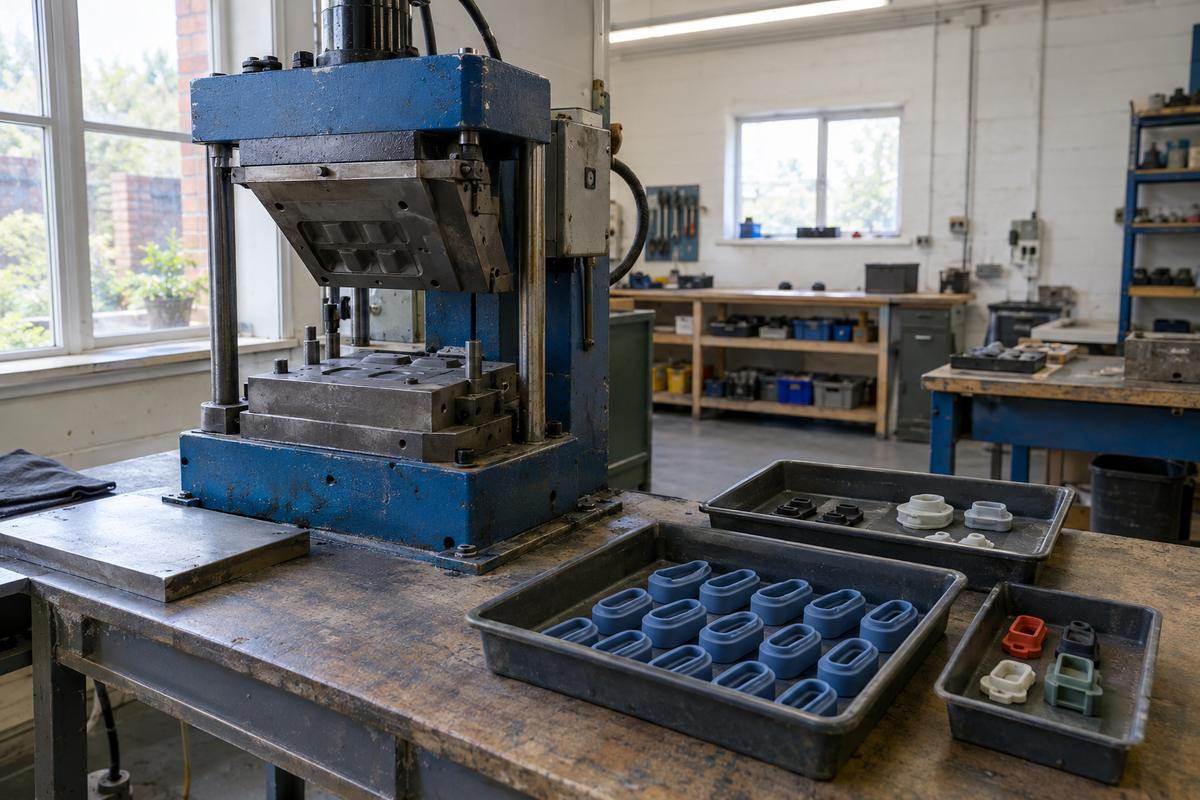
Continuous production only makes sense when volume can justify the tooling investment. Below that threshold — for prototypes, bridge production, pilot runs, seasonal products, or long-tail spares — batch manufacturing gives you moulded parts at sensible unit cost without the tooling commitment.
The route depends on the batch size. A hundred parts a year is best served by compression moulding on a simple tool, or by casting for very small numbers. A few thousand a year justifies dedicated compression tooling with a modest cavity count. Ten thousand a year usually starts to make single-cavity LSR viable.
For customers scaling up from prototype to full production, batch is often the right first step. Prove the design at real volume without a continuous-production tool commitment; migrate to continuous once the volume forecast is confident.
For customers with a stable part they only need occasionally — a spare, a service part, a long-tail SKU — batch is often the right permanent answer. We hold the tool, run the batch when you order, and don't tie up your money in continuous scheduling.
Drill down
Each variant has its own page with the specifics: where it fits, how we run it and what to send us.
Not every part needs thousands. Some need a few hundred a year, made properly, with the same paperwork as a big programme.
Open this variantYou know roughly how many parts you'll need over the year, but not exactly when. Call-off scheduling lets us plan production while you draw…
Open this variantThree shapes of batch work
You've validated the design in prototype. You need real parts at real volume while the continuous-production tool is being cut. Batch bridges the gap without waste.
You want to test the market before committing to production tooling. Batch produces a real product to sell, on soft tooling that costs a fraction of continuous.
You have a stable part with occasional demand. We hold the tool, run the batch when you order it, don't fill your warehouse with unused stock.
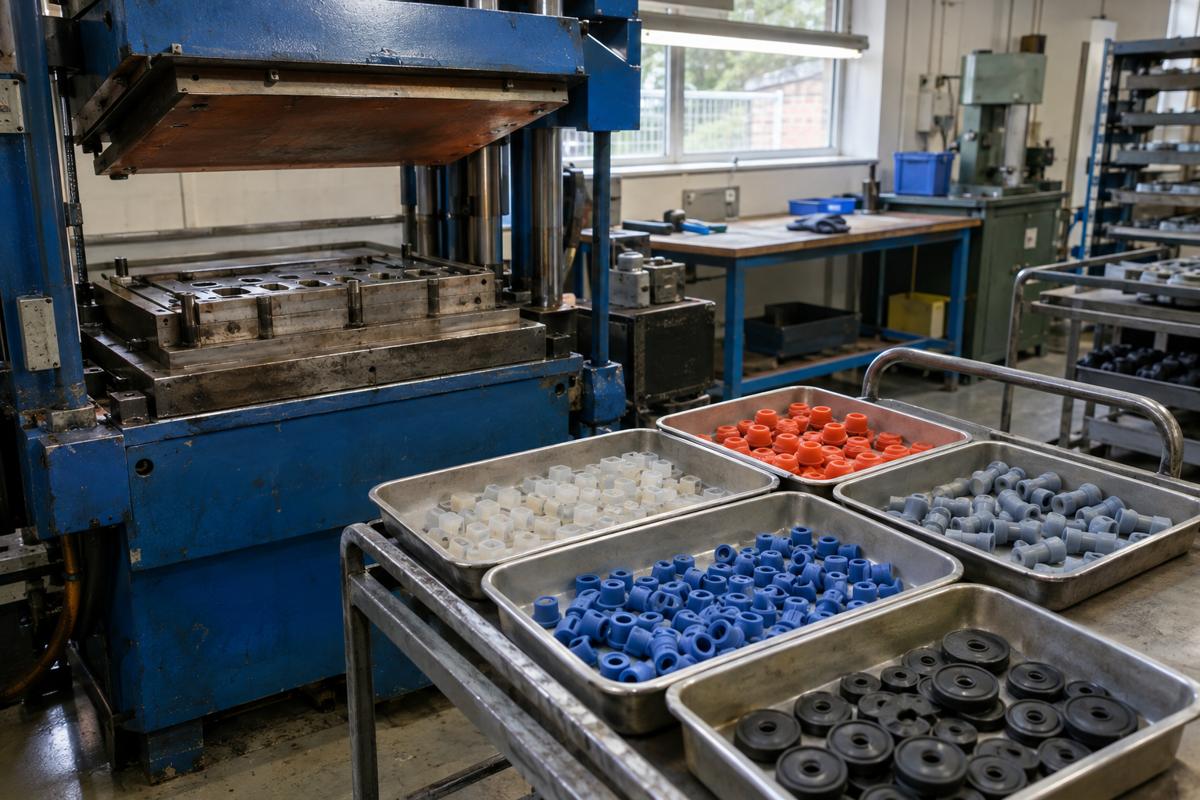
How a batch runs
The workflow is deliberately light. You order, we schedule, we mould, we ship. Paperwork is proportionate to the size and criticality of the batch.
Volume, delivery date, material batch to use (or fresh if none specified). Priced against the tooling investment already made.
The tool is inspected, cleaned, and set on the press. Any wear that's crept in since the last batch is addressed before the run starts.
The batch runs against your order. First-off inspected as usual; batch documentation matched to your existing programme paperwork.
Parts inspected against the drawing and — if a golden sample exists — against the reference. Packed to your spec, ready for dispatch.
Batch delivered to the date agreed at order. Any changes flagged early rather than at delivery.
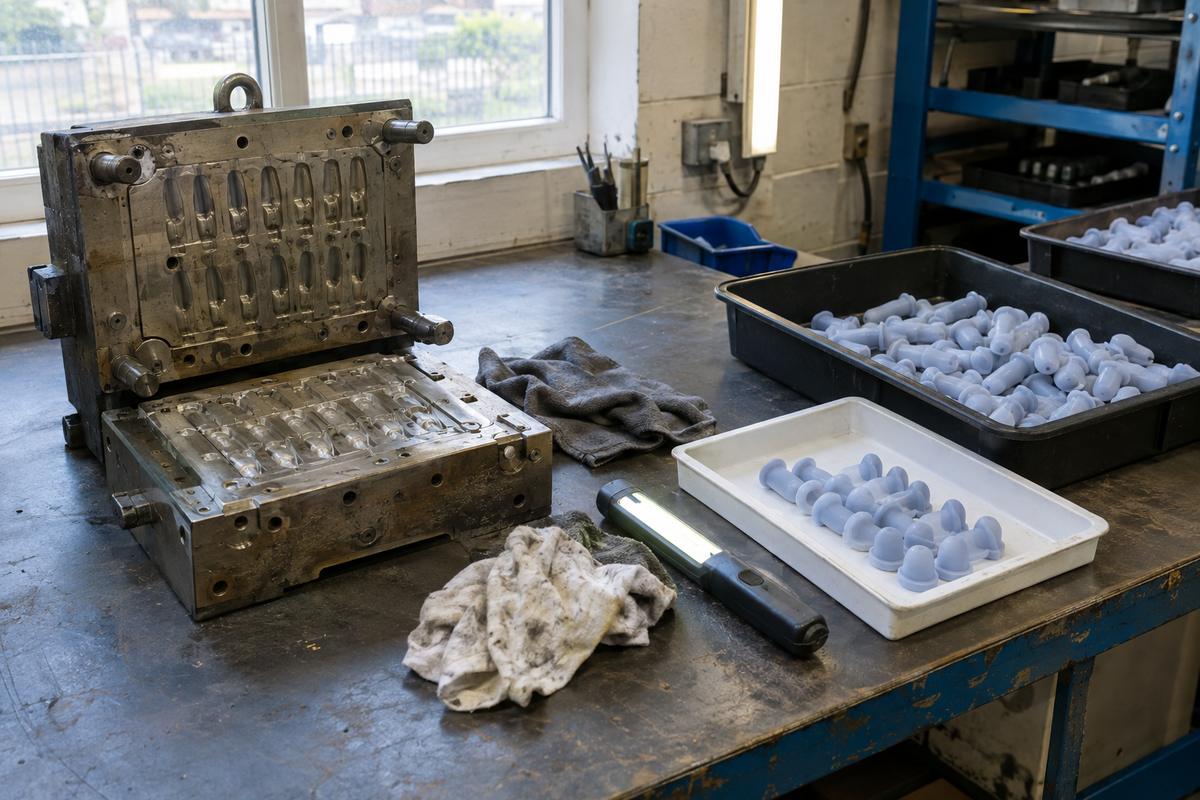
To quote it
Not the annual volume — the batch you actually want to release. That drives route selection more than any other factor.
One-off, quarterly, whenever you need it. That determines whether we hold the tool, or whether it makes sense to run once and archive.
How much notice you can give for a repeat batch. That shapes how we schedule shared tooling and shared cell time.
If volume is likely to grow, we'll flag the migration path from batch to continuous before you're forced into it.
Related routes
Solid silicone or rubber pre-formed, loaded into a heated steel tool, and pressed under cure. Sensible tooling cost, thousands of parts per tool, and…
Read moreFor parts that will be in production for years — components inside a device family, sealing parts on long-lived equipment, consumer parts on a…
Read moreDeflash, trim, print, bond, assemble, inspect and pack. Everything that has to happen between the press opening and the part being ready for your…
Read moreAt a glance
Which route suits your quantity
Swipe to see the whole diagram
From drawing to delivered parts
Swipe to see the whole diagram
Get in touch
Rough annual volume, target unit price, and any deadlines. That's enough to work out whether compression, LSR injection or something else is the right tool.
Real people, a real workshop
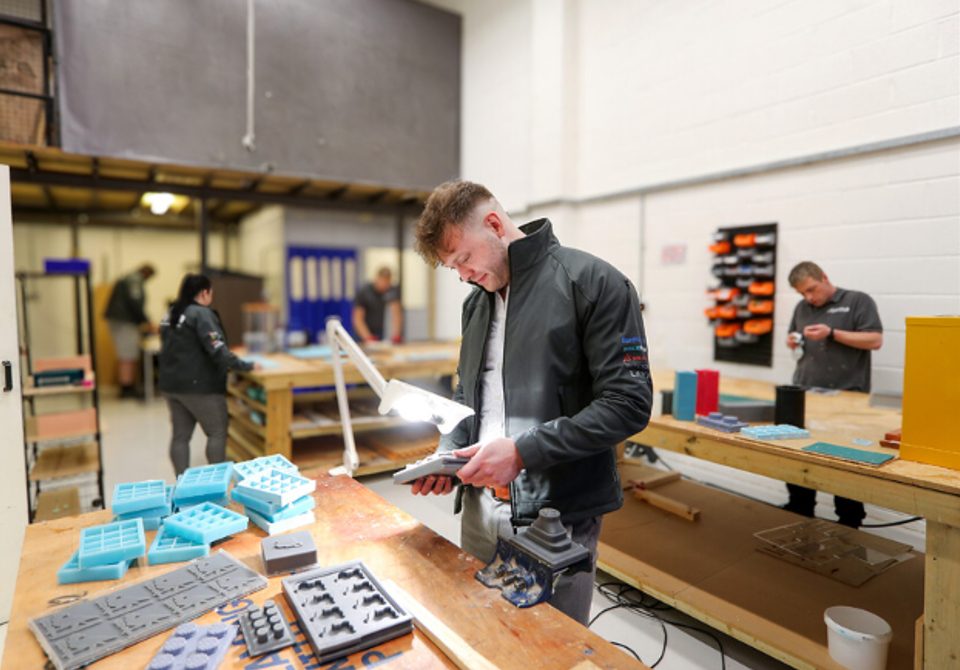
No call centre and no middlemen. When you contact TCI Products, you speak to the team who design, build and check your mould.


 Thomas LaneManaging Director
 George PrestonDesign & Project Manager
 Kelly BallingerHead of Partnerships
 Jim AndertonProduction Manager
 TheodoreEmployee Welfare