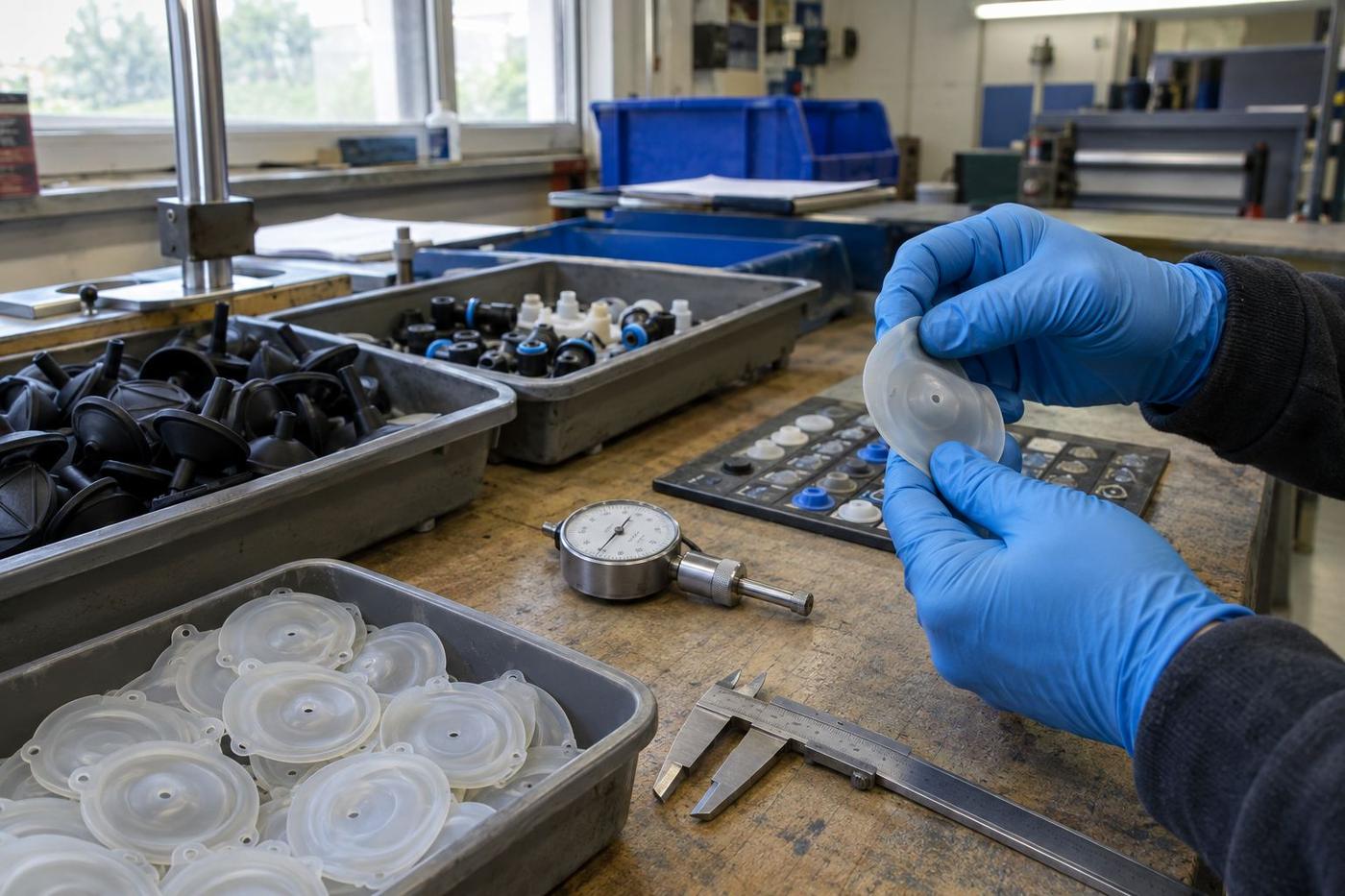
Duckbill valves
Two lips, pressed together, that open under forward pressure and seal against backflow. Simple in principle, precise in practice.
Open this variantFlow control · valves and diaphragms
A valve is judged on one thing: does it open and close the way it's supposed to, every time. That comes down to wall section, material hardness and consistency between batches. It's precise work in a forgiving material.
Why valves are different
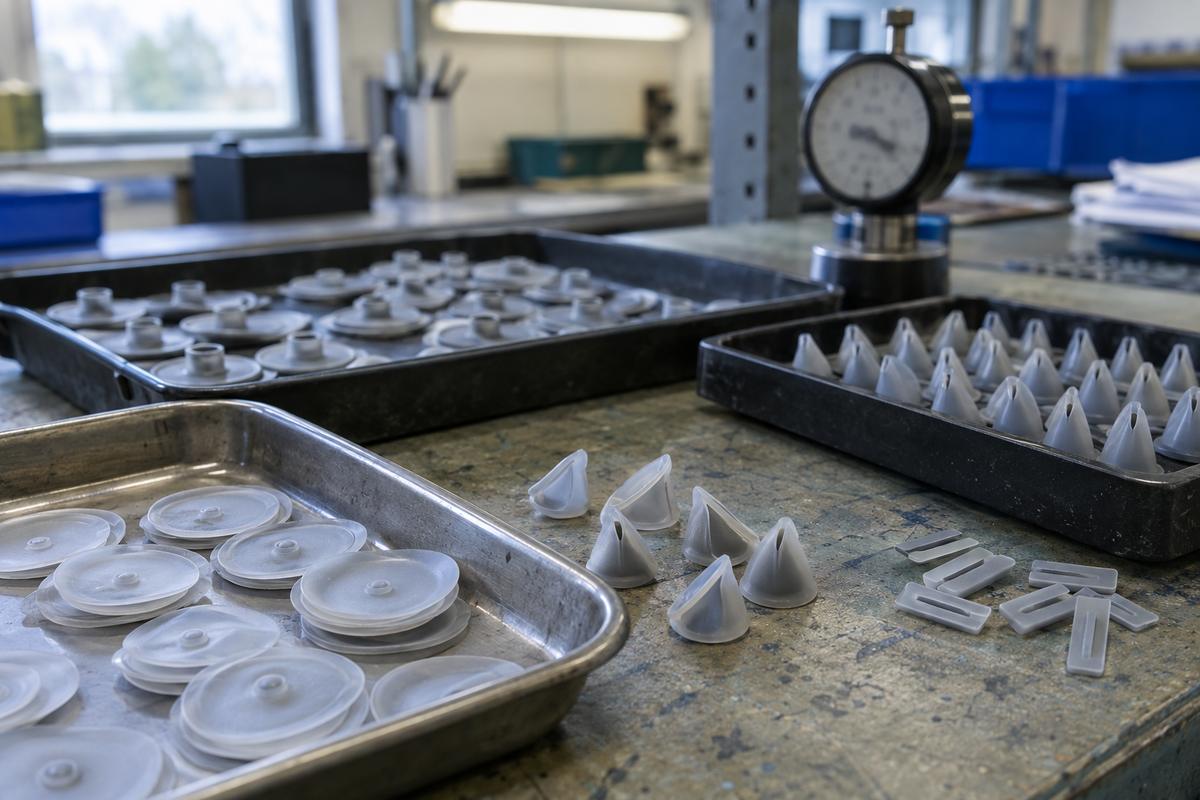
A gasket that's slightly softer than specified usually still seals. A valve that's slightly softer opens at a different pressure, leaks back, or chatters. The margin for drift is much narrower, even though the material is the same.
That's why valve and diaphragm programmes get extra attention on three things: the exact durometer of each batch, the consistency of thin wall sections, and — for slit valves and duckbills — the quality of the slit or lip itself.
Most valves we make run in LSR, which suits thin sections and gives very consistent cure. Larger industrial diaphragms often run in compression, sometimes with fabric reinforcement.
We don't publish opening pressures or tolerances as selling points. We agree a functional test with you and run it on every batch.
Drill down
Each variant has its own page with the specifics: where it fits, how we run it and what to send us.
Two lips, pressed together, that open under forward pressure and seal against backflow. Simple in principle, precise in practice.
Open this variantA diaphragm flexes thousands or millions of times. Its life depends on material, section and how evenly it was moulded.
Open this variantWhat we make
One-way valves that open under forward pressure and seal under back pressure. Used in dispensing, medical and appliance fluid paths. See duckbill valves.
A domed disc seated over ports that lifts under pressure. Compact and simple to assemble.
Flat, domed or convoluted membranes for pumps, regulators and actuators. See diaphragms.
How we keep them consistent
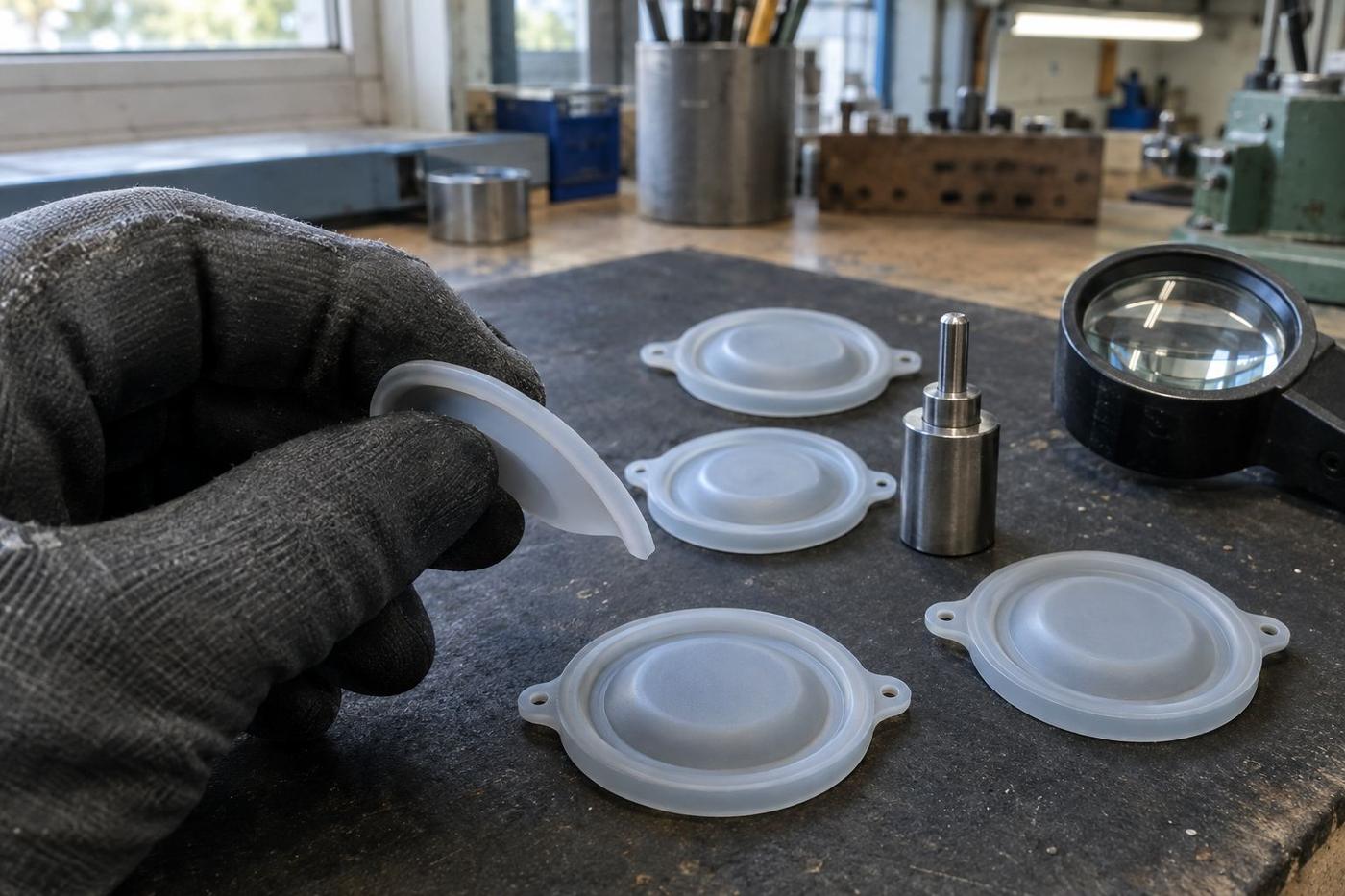
Opening behaviour depends on geometry and material together. We control both and check the result.
Gating and venting placed so thin walls fill evenly and cure without knit lines across the working area.
Durometer checked per batch against the agreed band, and recorded.
Where valves need a slit, it's cut in a controlled fixture after moulding, then inspected.
An agreed crack-pressure or leak test on a sample from every batch, against your acceptance criteria.
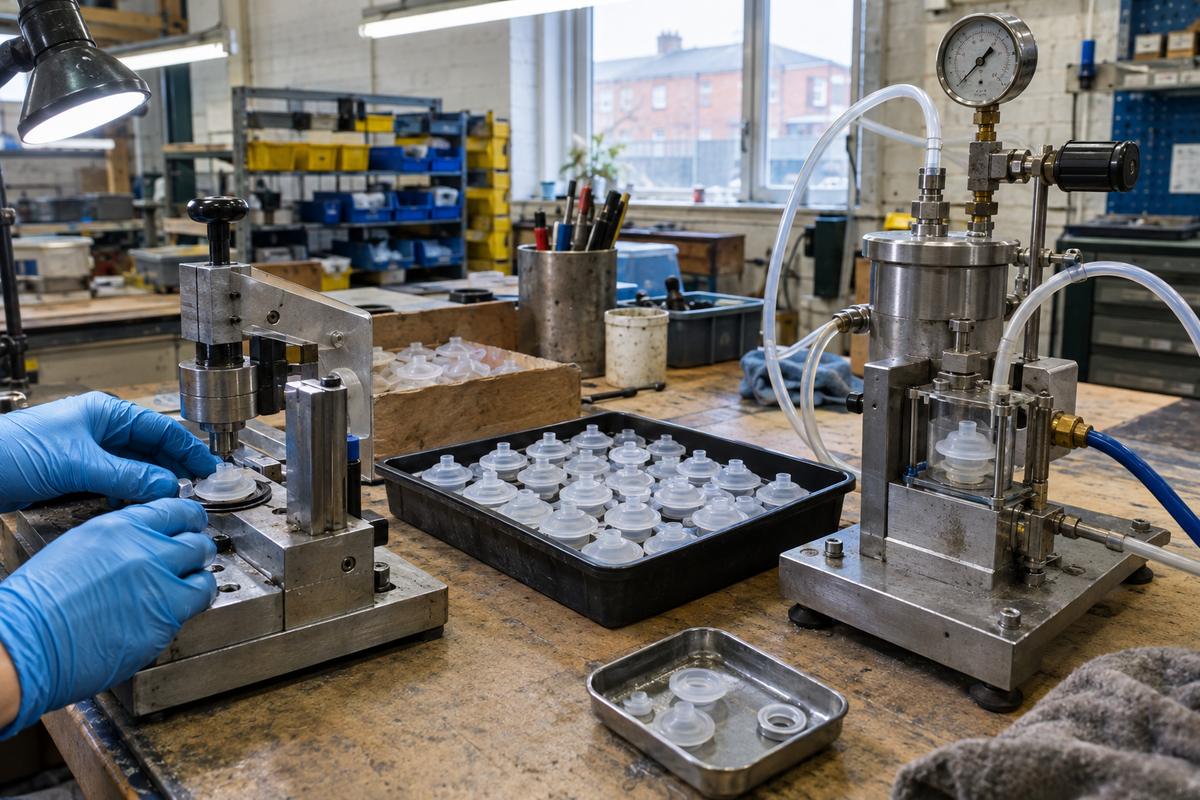
To quote it
Or a sample of the current part if you're replacing a supplier.
Water, air, food, medication, oil or chemicals, and the temperature range.
Roughly when it should open, how it should seal, and how you currently test it.
Whether you need a medical-grade material record or food-contact grade documentation.
Related routes
Two-part liquid silicone metered, mixed, injected cold and cured hot. The cleanest route we have for medical, wearable and electronics parts at…
Read moreSilicone moulding for medical device makers using medical-grade materials to a documented specification, with batch traceability from drum to…
Read moreSolid silicone or rubber pre-formed, loaded into a heated steel tool, and pressed under cure. Sensible tooling cost, thousands of parts per tool, and…
Read moreGet in touch
Rough annual volume, target unit price, and any deadlines. That's enough to work out whether compression, LSR injection or something else is the right tool.
Real people, a real workshop
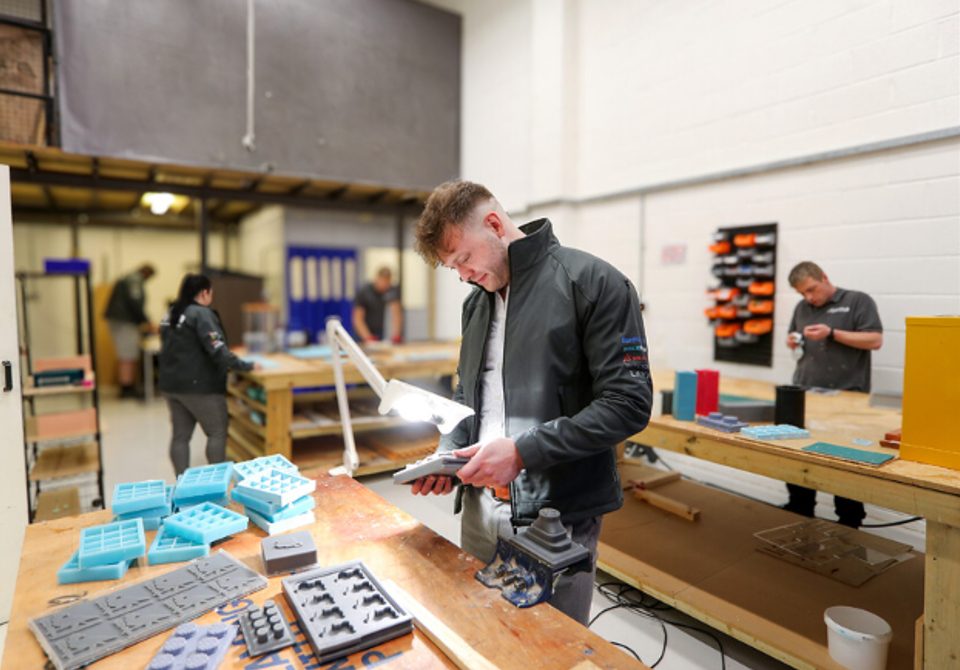
No call centre and no middlemen. When you contact TCI Products, you speak to the team who design, build and check your mould.


 Thomas LaneManaging Director
 George PrestonDesign & Project Manager
 Kelly BallingerHead of Partnerships
 Jim AndertonProduction Manager
 TheodoreEmployee Welfare