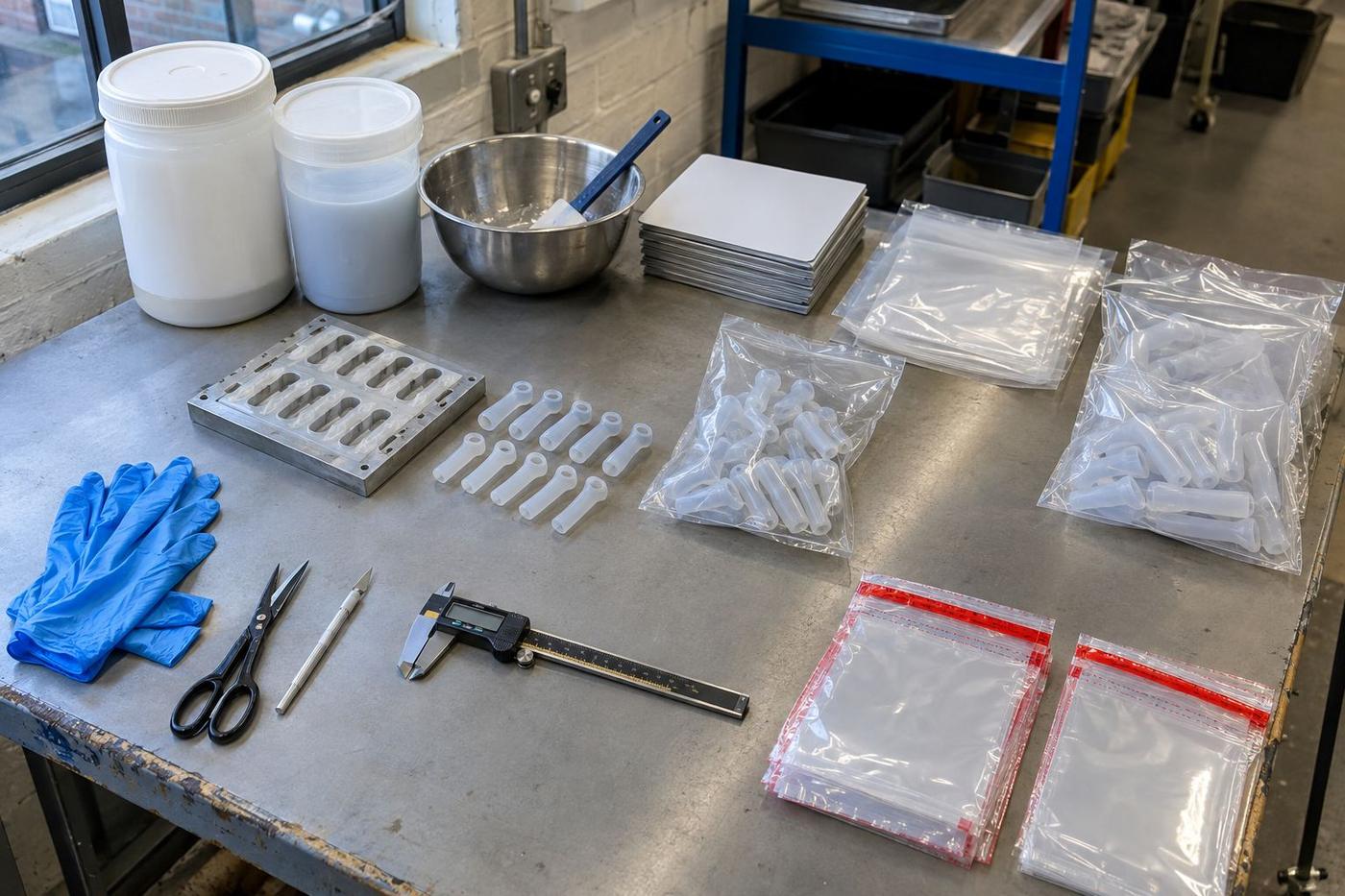
Skin-contact parts
Silicone is chosen for skin contact because it's soft, stable and well documented. The manufacturing job is to keep it that way: the right…
Open this variantOEM route · medical device components
Silicone moulding for medical device makers using medical-grade materials to a documented specification, with batch traceability from drum to shipment. Not a certification claim we'd make lightly, but a working system we run for OEM customers.
How this actually works
There is a version of this page — on other sites — that lists certification numbers and cleanroom class ratings. We're not going to do that here, because certifications belong to the finished device and the notified body that assessed it, not to a moulding supplier's marketing page.
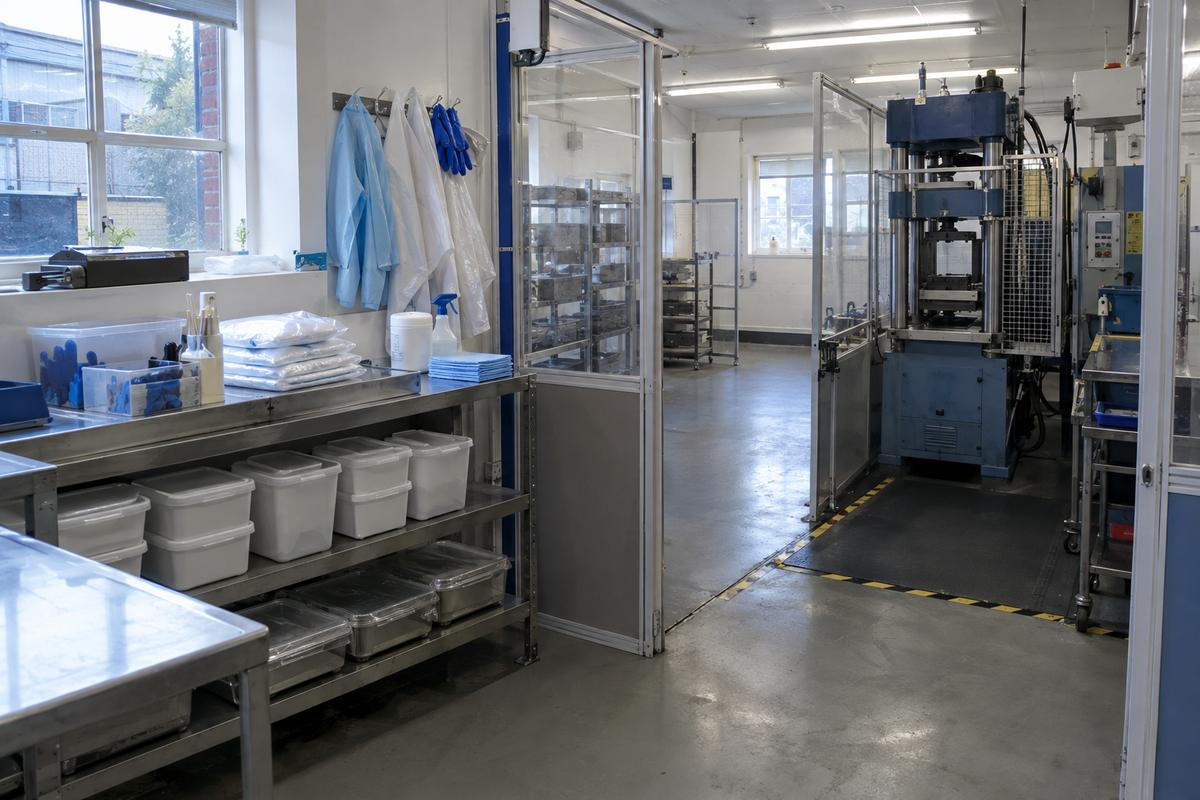
What we do offer, in plain terms: we source silicone from grades documented as suitable for medical device applications, we record the material batch against every run, and we handle moulding in a segregated cell with cleaning and gowning protocols appropriate to the work.
For every medical-grade job, you'll receive a run record listing the material batch, the tool ID, the run date, the operator, and any inspection results. That record is designed to slot into your device history file without your regulatory team needing to reformat it.
If your device has specific regulatory requirements — a defined biocompatibility standard, a specific extractables profile, a documented sterilisation compatibility — tell us at the enquiry stage. We'll spec a grade that supports what you need, or tell you honestly if we're not the right supplier for that job.
Drill down
Each variant has its own page with the specifics: where it fits, how we run it and what to send us.
Silicone is chosen for skin contact because it's soft, stable and well documented. The manufacturing job is to keep it that way: the right…
Open this variantSeals inside medical devices keep fluids in, contaminants out and mechanisms working. They're small parts with a lot of responsibility.
Open this variantWhat we deliver on medical jobs
Every drum or gum batch is recorded against the run. Repeat orders reference the same material specification, and any batch change is documented and communicated.
Tool ID, run date, cycle count, operator, first-off inspection result, any deviations. Designed to attach to your device history file without reformatting.
Medical-grade work runs in its own cell, on its own tools, cleaned and gowned appropriately. No cross-contamination from general silicone or rubber work.
The route through the workshop
It's not a special production line. It's the same presses and the same engineers, running to a stricter set of controls, with the paperwork built into the process rather than added at the end.
You share your device requirements. We propose a silicone grade documented for medical device use, with the supplier's TDS and biocompatibility documentation. You sign off before we quote the run.
The tool is designed with rounded corners, minimal dead spaces, and finish appropriate to the grade. Cleaning between colours or materials is documented before the first run.
Material arrives in sealed drums or containers, batch numbers logged against the run. Handling happens in the medical cell only.
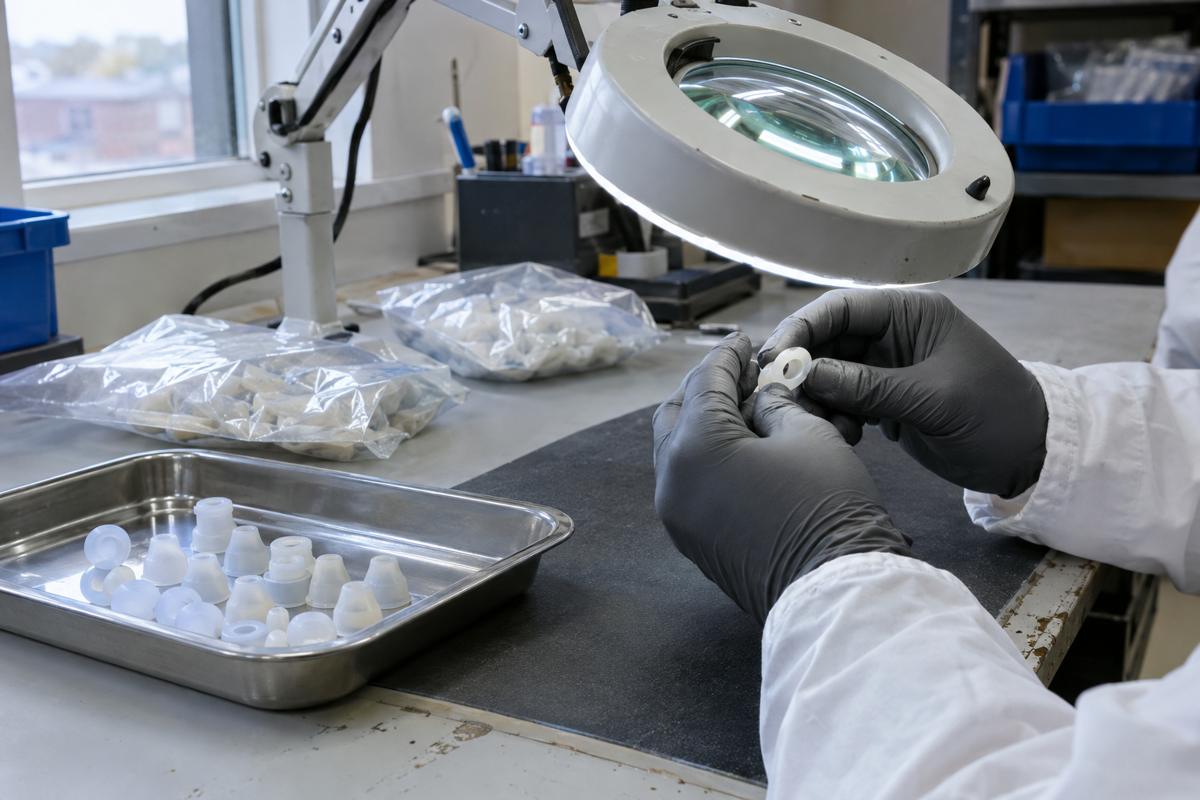
Standard cycle, extra inspection. First-off parts are checked to the drawing plus any additional visual criteria specified for medical work.
Parts packed to your spec, run record attached. Shipment lists material batch, tool ID, run date. Ready to attach to your device history file.
To quote it
A rough description of the device and where the silicone part sits in it. That tells us what regulatory frame we're supporting, without needing your full technical file at enquiry stage.
If your regulatory pathway names a specific biocompatibility standard or extractables profile, tell us. We'll match a grade that supports it or refer you elsewhere honestly.
Medical parts are usually long-lived. Tell us the volume you can commit to and how long the programme is expected to run.
If your device history file needs run records in a specific format, share the template at quote stage. It's easier to build the record correctly than to retrofit it later.
Related routes
Two-part liquid silicone metered, mixed, injected cold and cured hot. The cleanest route we have for medical, wearable and electronics parts at…
Read moreSilicone moulding for electronics OEMs — insulating gaskets, sealing membranes, keypad mats, connector boots, enclosure seals. Electronics-grade…
Read moreFor parts that will be in production for years — components inside a device family, sealing parts on long-lived equipment, consumer parts on a…
Read moreGet in touch
Rough annual volume, target unit price, and any deadlines. That's enough to work out whether compression, LSR injection or something else is the right tool.
Real people, a real workshop
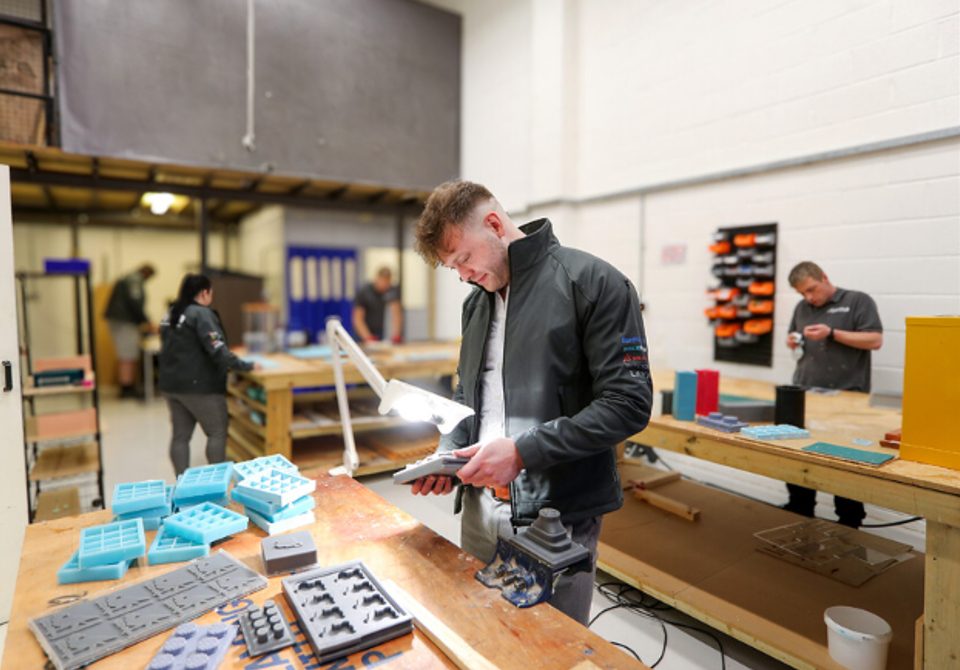
No call centre and no middlemen. When you contact TCI Products, you speak to the team who design, build and check your mould.


 Thomas LaneManaging Director
 George PrestonDesign & Project Manager
 Kelly BallingerHead of Partnerships
 Jim AndertonProduction Manager
 TheodoreEmployee Welfare