The material and its cost per kilo
Pot and sprue waste matters more on expensive grades.
Middle route · rubber and silicone
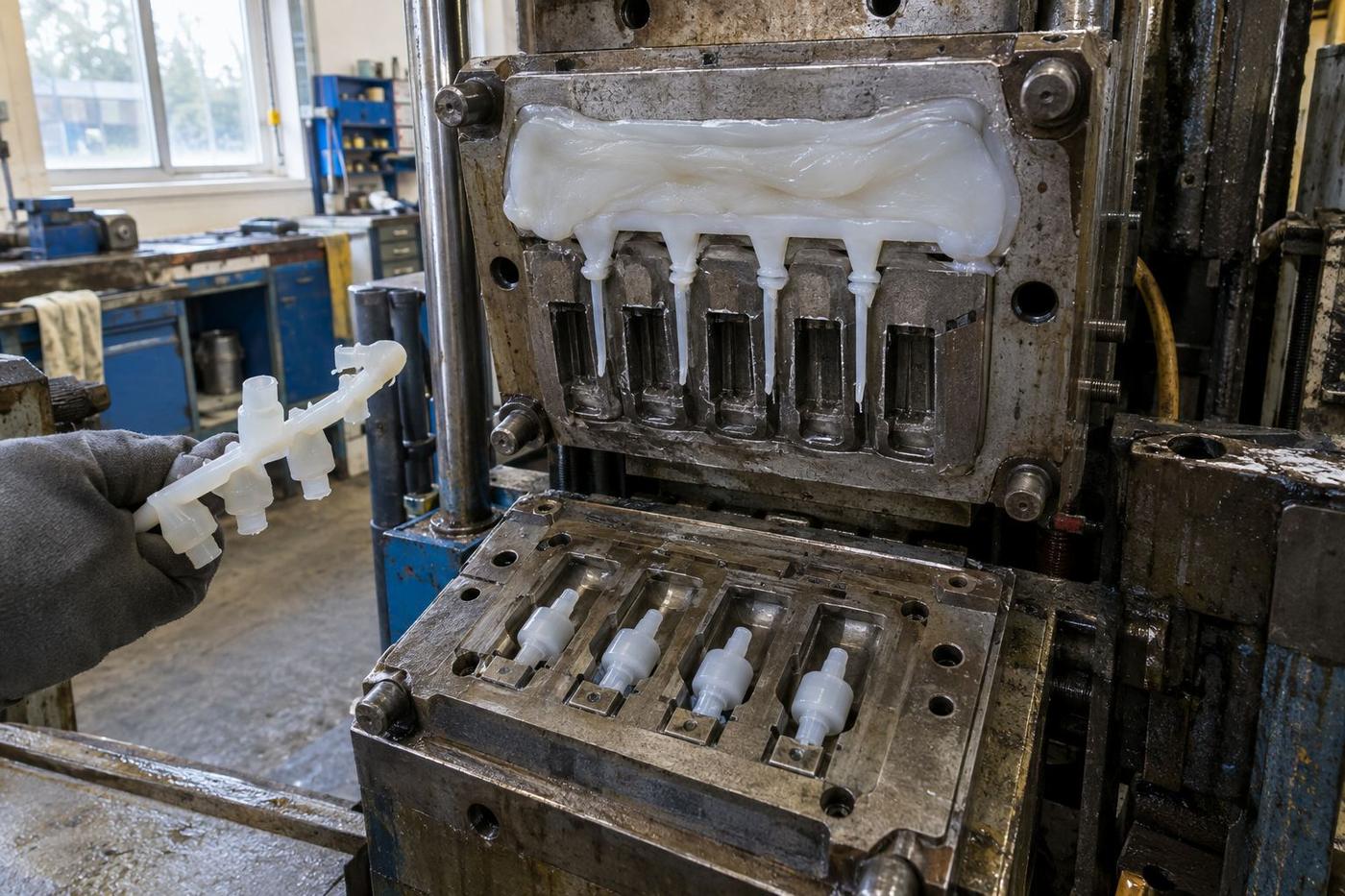
Material is loaded into a pot above the tool and pushed through sprues into closed cavities. It fills more evenly than compression and costs less to tool than injection. For the right part, it's the sensible middle.
Where it fits
In compression, the rubber sits in an open cavity and the tool closes on it. That's simple and cheap, but it can push inserts out of position and leaves flash along the whole parting line.
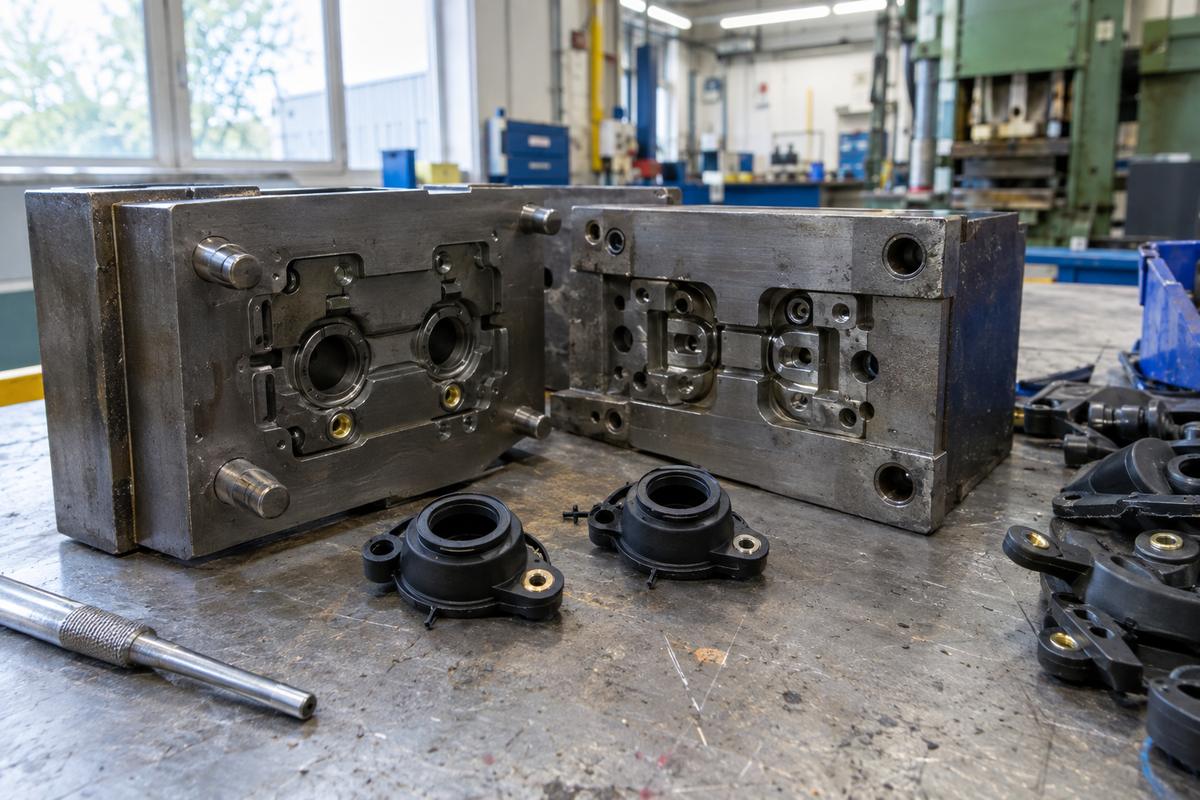
Transfer moulding closes the tool first, then forces material in through small channels. Inserts stay where they were placed, fine features fill more consistently, and flash is thinner and easier to remove.
It uses the same solid-gum materials as compression — silicone, EPDM, nitrile, fluorocarbon — so the material choice stays wide. And the tooling is simpler than a full injection tool, which keeps the upfront investment proportionate for mid-volume parts.
The trade-off is waste: the material left in the pot and sprues is cured and scrapped. For expensive grades we look hard at whether injection or careful compression would be kinder on material cost.
What it's good at
Metal bushes, threaded inserts and rigid carriers stay located because the tool is closed before material moves. See insert moulding.
One pot can feed many cavities evenly, which suits grommets, small seals and boots in steady mid-volume demand.
Material pushed under pressure fills thin ribs and deep pockets more reliably than a pre-form squeezed in an open cavity.
How it runs
The cycle is slightly longer than compression, but the parts that come out need less work.
Where the part has inserts, they're primed where needed and placed in the closed-tool locations.
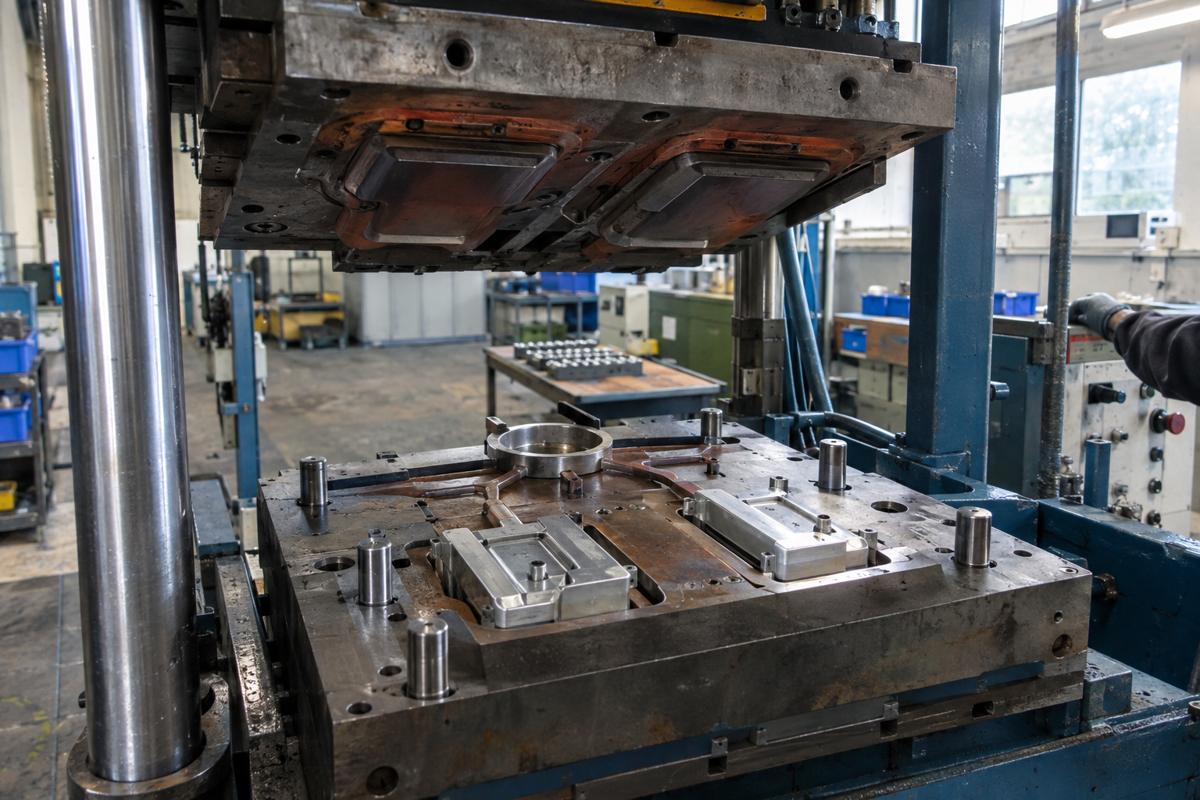
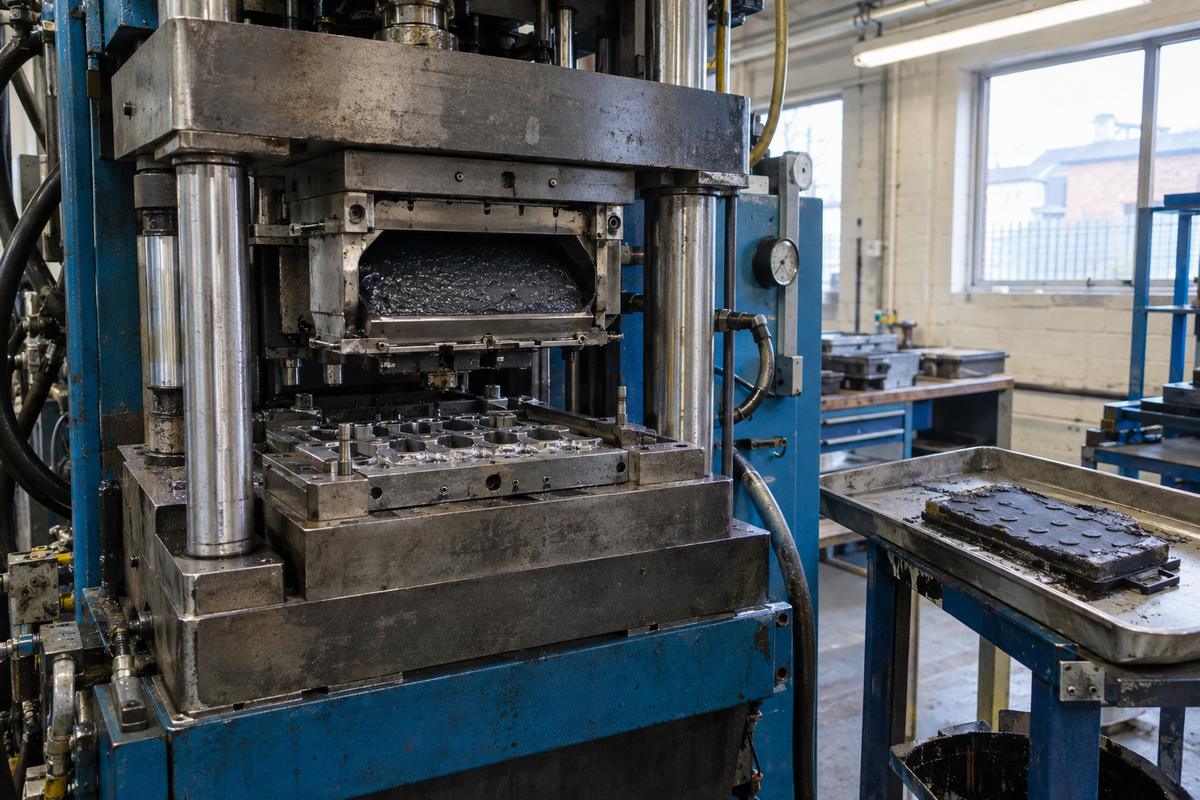
A measured slug of prepared compound goes into the transfer pot above the cavities.
A plunger forces the material through sprues into the heated cavities. Fill is even and controlled.
Parts cure in the tool, release, and move to deflash. The pad left in the pot is removed and scrapped.
To quote it
Pot and sprue waste matters more on expensive grades.
Inserts push the decision towards transfer or injection and away from open compression.
Transfer suits the middle band. Very low volumes favour compression; very high volumes usually favour injection.
Transfer leaves less than compression, more than well-tooled injection. We'll show you samples.
Related routes
Solid silicone or rubber pre-formed, loaded into a heated steel tool, and pressed under cure. Sensible tooling cost, thousands of parts per tool, and…
Read moreA pre-made insert — a threaded stud, a metal contact, a printed circuit, a stiffening plate — placed into the tool cavity, then silicone or rubber…
Read moreHigh-consistency silicone injected under heat into steel tooling. For a component you'll buy every quarter for years, this is the lowest cost per…
Read moreAt a glance
Which route suits your quantity
Swipe to see the whole diagram
Get in touch
Rough annual volume, target unit price, and any deadlines. That's enough to work out whether compression, LSR injection or something else is the right tool.
Real people, a real workshop
No call centre and no middlemen. When you contact TCI Products, you speak to the team who design, build and check your mould.

 Thomas LaneManaging Director
 George PrestonDesign & Project Manager
 Kelly BallingerHead of Partnerships
 Jim AndertonProduction Manager
 TheodoreEmployee Welfare