Master & tool
Make an SLA or CNC master and cast a silicone tool.
Manufacturing services · Chapter A · Method 03
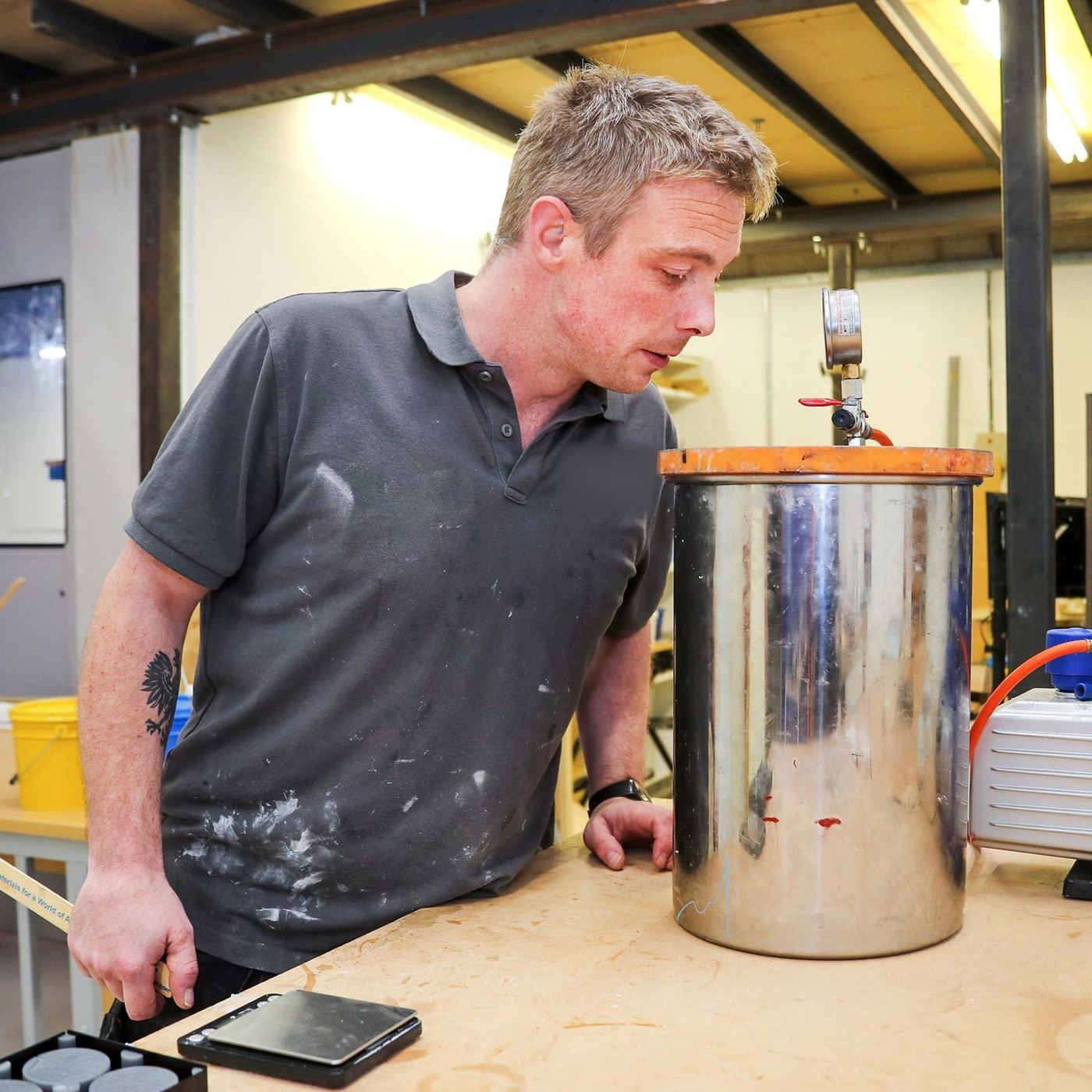
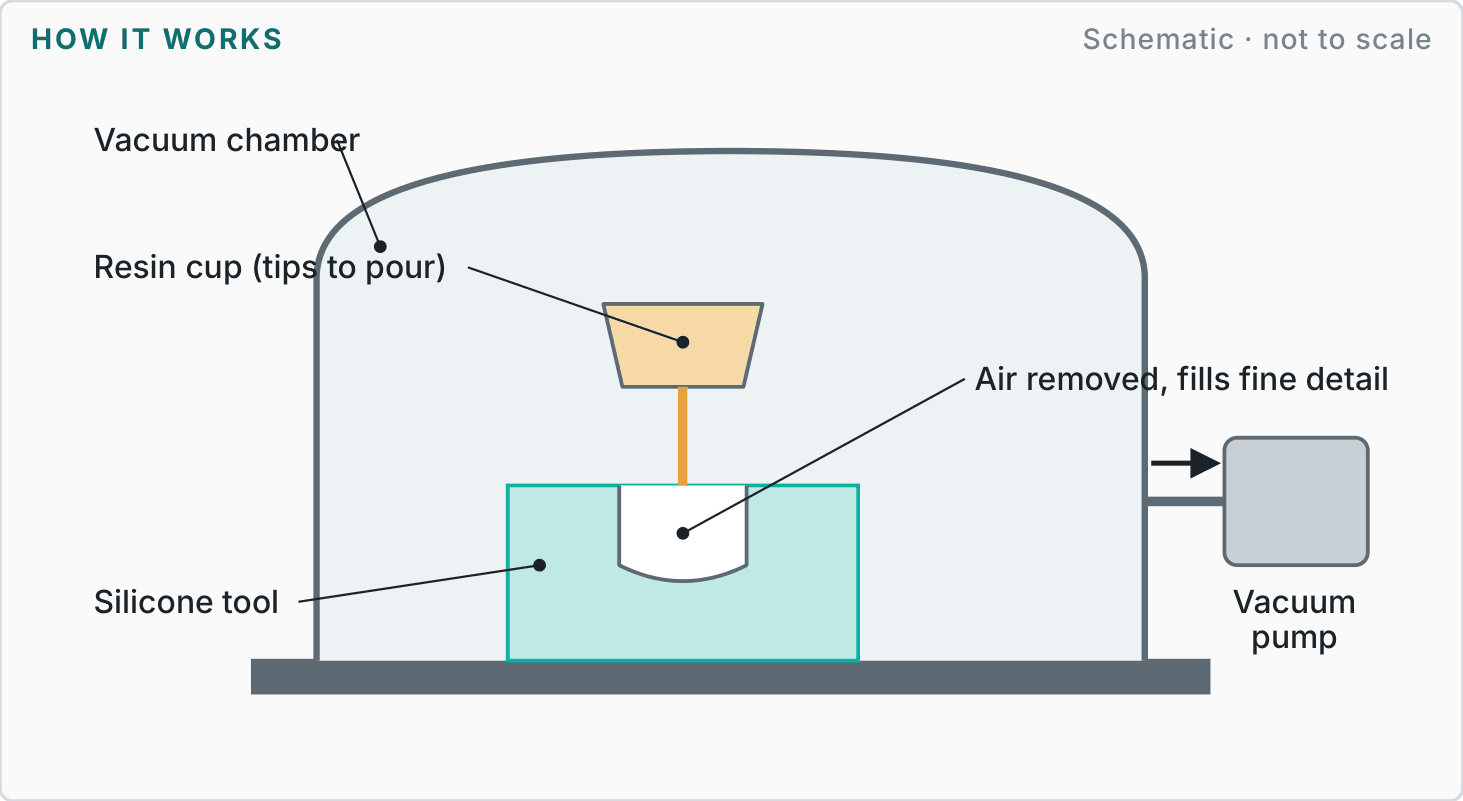
Resin is mixed and poured into a silicone tool under vacuum, removing air so thin walls and fine detail fill cleanly. The bridge from prototype to low-volume production.
How it works
A labelled schematic of the process (not to scale), and the four steps every job goes through.
Make an SLA or CNC master and cast a silicone tool.
Degas the resin and silicone in the vacuum chamber.
Pour under vacuum; release to atmosphere to push resin in.
Oven cure, demould, trim and finish the parts.
Reference figures
Typical industry values to help you plan. We agree the figures for your part on the drawing.
| Materials | Polyurethane resins simulating ABS, PP, PC and rubber (Shore A 30–95); clear and pigmented grades; cast silicone. |
|---|---|
| Finishes | Matte to gloss from the master; colour matched in the resin; painted or soft-touch coated after casting. |
| Design guidance |
|
| Best suited to | Pre-production samples, marketing models, low-volume end-use parts and bridge tooling. |
| Watch-outs | Material properties approximate, not equal, injection-moulded plastics. Tools wear with each shot. |
More in chapter A
Next step
Send a sketch, photo, sample or CAD file with your quantity and target date. We will recommend the most sensible route and explain the trade-offs before quoting.
Reference figures are typical published industry values for planning, not a guarantee; final tolerances, materials and finishes are agreed in writing for each project.