Questions we get every week
Questions and answers.
Six categories of the questions we get most often at enquiry stage. If yours isn't here, get in touch — we'll answer it, and if it's a good one we'll add it to this page.
How this page works
Six categories, twenty-plus questions, honest answers.
Every question on this page is one we've been asked in real customer conversations. If your question isn't here, get in touch and we'll answer it — and if it's a common one, we'll add it.
For longer treatment of any of these topics, see the guides section.
At a glance
The idea in a picture.
Which route suits your quantity
Swipe to see the whole diagram
Questions
About the routes
How do I choose between compression and LSR?
Volume is the biggest driver. Below roughly twenty thousand a year, compression is usually right on unit economics; above that, LSR tooling starts to pay back. But material family, finish requirements and design geometry all move that threshold. The route guide walks through the whole conversation.
What's the difference between HCR and LSR silicone?
HCR (high-consistency silicone) is a solid gum that's milled and moulded under heat. LSR (liquid silicone rubber) is a two-part liquid that's metered, mixed and injected. Both cure into the same silicone family, but the process economics and geometry sensitivities are very different.
Can you overmould silicone onto plastic?
Yes — overmoulding silicone onto engineering plastics is one of our core services. See our overmoulding page for how the bond is achieved (chemical bond plus mechanical interlock) and what the design needs to look like.
Do you do two-shot moulding?
Yes — see two-shot moulding. It's the right answer where you need two different materials bonded in a single cycle without an assembly step.
Questions
Materials and grades
Do you work with medical-grade silicone?
Yes. We source silicone from grades documented as suitable for medical device applications, with batch traceability on every run. See medical-grade manufacturing and for medical device makers for how the paperwork works.
Can you match my brand colour?
We colour-match against a physical chip you sign off, not against a Pantone number. The pigment recipe is recorded and used for every subsequent batch. Colour drift is the most common consistency complaint in this industry, and it's entirely preventable.
What silicone hardness range can you mould?
Standard silicone grades run from very soft (shore A 10-20) up to firm (shore A 70+). Most product applications land between 40 and 60. If you're not sure, we can press sample parts in three durometers and let you feel the range before committing.
Can you do EPDM, nitrile or fluorosilicone?
Yes — via compression moulding. These material families are supplied as solid gum, not liquid, so LSR isn't an option, but compression handles them well. See compression moulding.
Questions
Tooling and pricing
How do you quote tooling versus unit cost?
As two clean lines. Tooling is a one-off investment, quoted separately and paid up front or on a milestone schedule. Unit cost is the per-part price at your annual volume. Rolling the tooling into unit cost is confusing and usually hides margin; we prefer the honest split.
Do you offer soft tooling or prototype tools?
Yes — soft or shared tooling is often the right first step for a new part. It lets you prove design and materials at low investment before committing to production tooling. See batch manufacturing for how we handle short runs, or contact us.
What happens to my tool at end of programme?
The tool is yours if you paid for it. We hold it in the workshop for the life of the programme. At end of programme, we ship it to you, transfer it to another location, or hold it in long-term storage — your call. See tooling and part continuity.
Do you have MOQs?
Not fixed ones. Practical minimums depend on route and setup cost. For compression, small runs are viable. For LSR, setup is more involved, so batches usually make more sense at higher quantities. We'll tell you honestly if your volume doesn't fit.
Questions
How we work with OEMs
Can I speak to an engineer, not a service desk?
Yes — every account has a named engineer. Their name, their direct line, a defined escalation route. Email queues don't answer questions about your part.
What paperwork do you provide with batches?
Batch record with material grade, batch number, tool ID, run date, and first-off inspection sign-off. If you need the record in a specific format for your quality system, we'll match it.
Do you sign NDAs?
Yes, routinely. Most OEM programmes start with a mutual NDA before the drawing arrives. Send yours or use ours.
Can you hold safety stock for us?
Yes, on programmes where the volume and cadence warrant it. Small buffer at our facility, replenishment against your forecast. We'll agree the buffer level and review it quarterly.
Questions
Lead times and continuity
What kind of lead times should I expect?
Route-dependent, but we quote lead time as part of every quote and hold to it. If a batch is going to slip, we tell you before you ask. Specific numbers depend on the part, the tool, and current shop load — we're honest at quote stage.
How do you handle long-life programmes?
Tool held in the workshop, material grade documented, cure conditions locked. Batches produced against your schedule for as long as the programme runs. Some of our programmes have been in continuous supply for years without material or process drift.
What if my volumes change during the programme?
We'd rather know early than late. Higher volumes may need cavity count review; lower volumes may need buffer adjustment. Both are conversations, not surprises.
Can you supply spares and service parts long after production ends?
Yes — see tooling and part continuity. Tool held, small batches produced when orders arrive, paperwork intact for as long as you need it.
Questions
Commercial and next steps
What do you need to give me a first quote?
A drawing or a sample, an annual volume, and any deadlines. That's enough for a first conversation and a preliminary quote. Full quotes come after we've talked through material, route and any DFM points.
Do you visit customer sites?
For programmes that warrant it, yes. Usually a first commercial conversation is by phone or video; a site visit happens when the programme is proceeding and there's a specific reason (tooling review, quality integration, escalation).
Can I visit your workshop?
Yes — for customers on active programmes or serious enquiries. Advance notice appreciated, and we ask you to sign in for insurance purposes. See contact page for address and directions.
What if my project doesn't fit contract moulding?
We'll say so. If your part would be better made by another route, or by a different type of supplier, we'd rather tell you at enquiry than take a programme we can't do well. We can often point you toward the right kind of supplier for the actual job.
Get in touch
Tell us the part, the volume, and the timeline.
Rough annual volume, target unit price, and any deadlines. That's enough to work out whether compression, LSR injection or something else is the right tool.
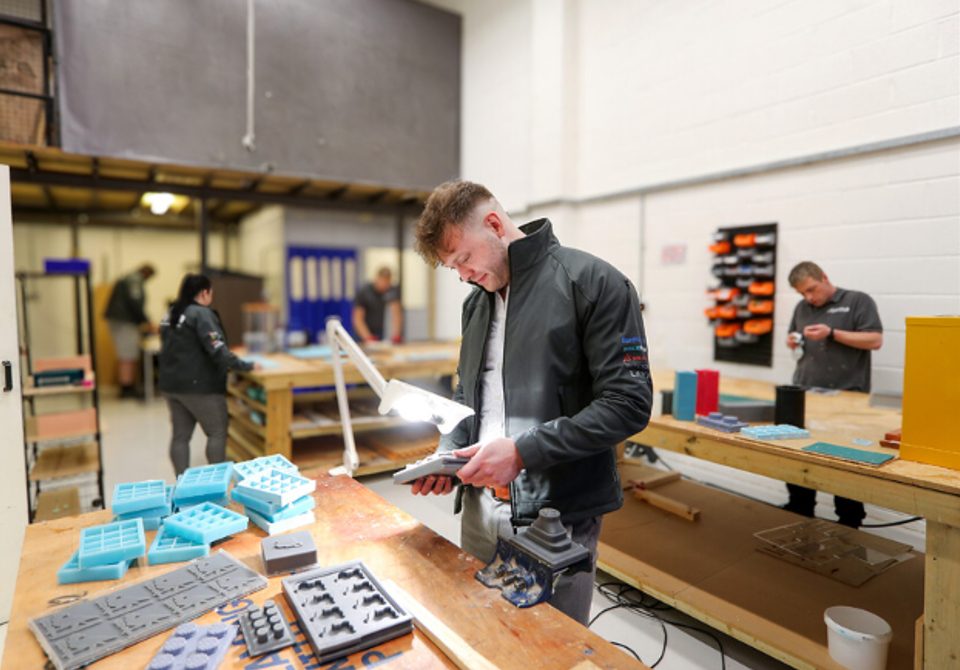
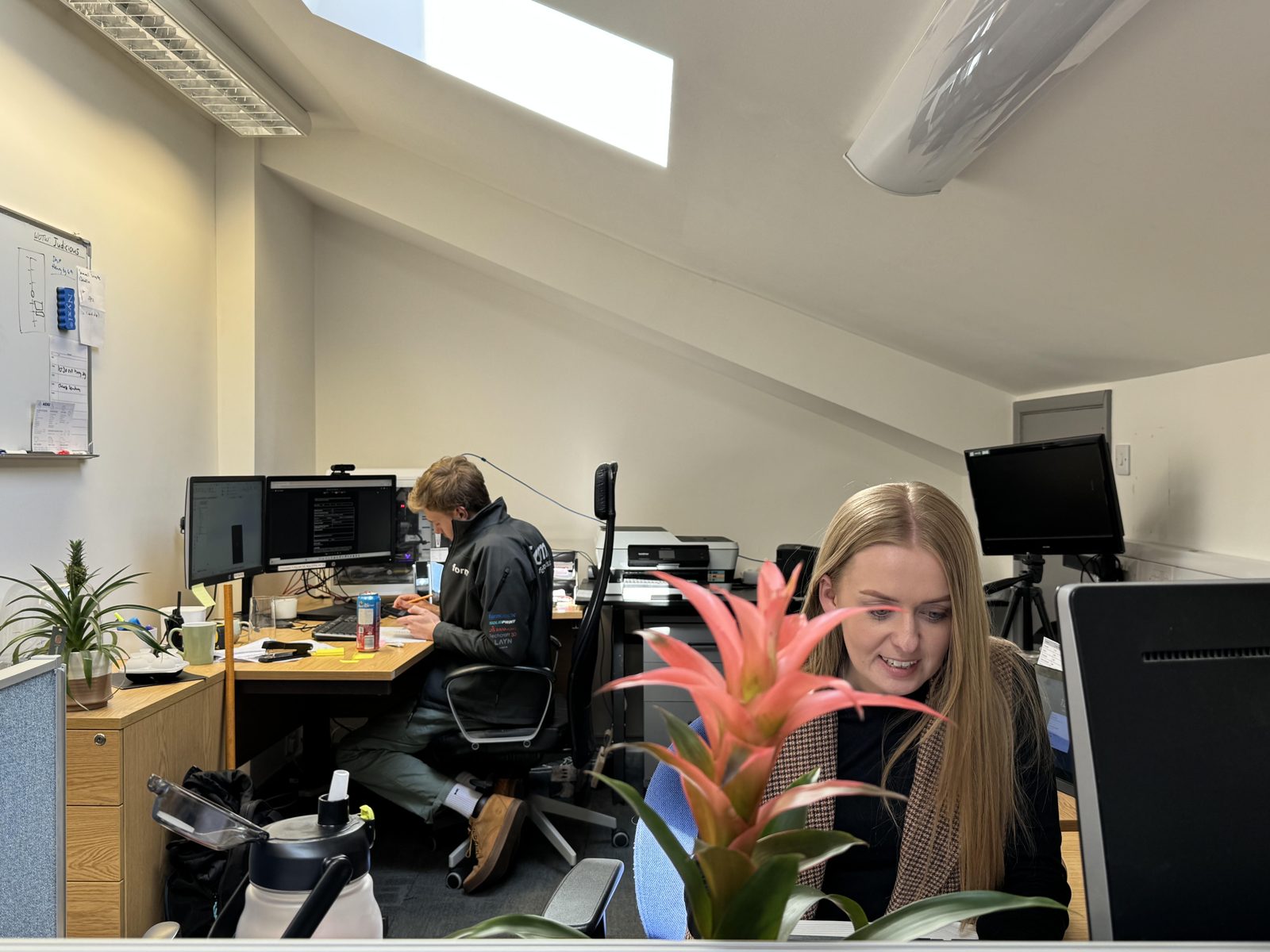
Real people, a real workshop
You deal with the people who make it.
No call centre and no middlemen. When you contact TCI Products, you speak to the team who design, build and check your mould.
- A real Warwickshire workshopUnit 15, Waterloo Park, Bidford-on-Avon, Alcester B50 4JG.
- Real people on the phoneCall the team on 01789 224228, Monday to Friday.
- The same team on every jobDesign, production and aftercare come from the people you see here.
- Part of TCI GroupFive specialist brands, one engineering team. Visit TCI Group.

 Thomas LaneManaging Director
 George PrestonDesign & Project Manager
 Kelly BallingerHead of Partnerships
 Jim AndertonProduction Manager
 TheodoreEmployee Welfare