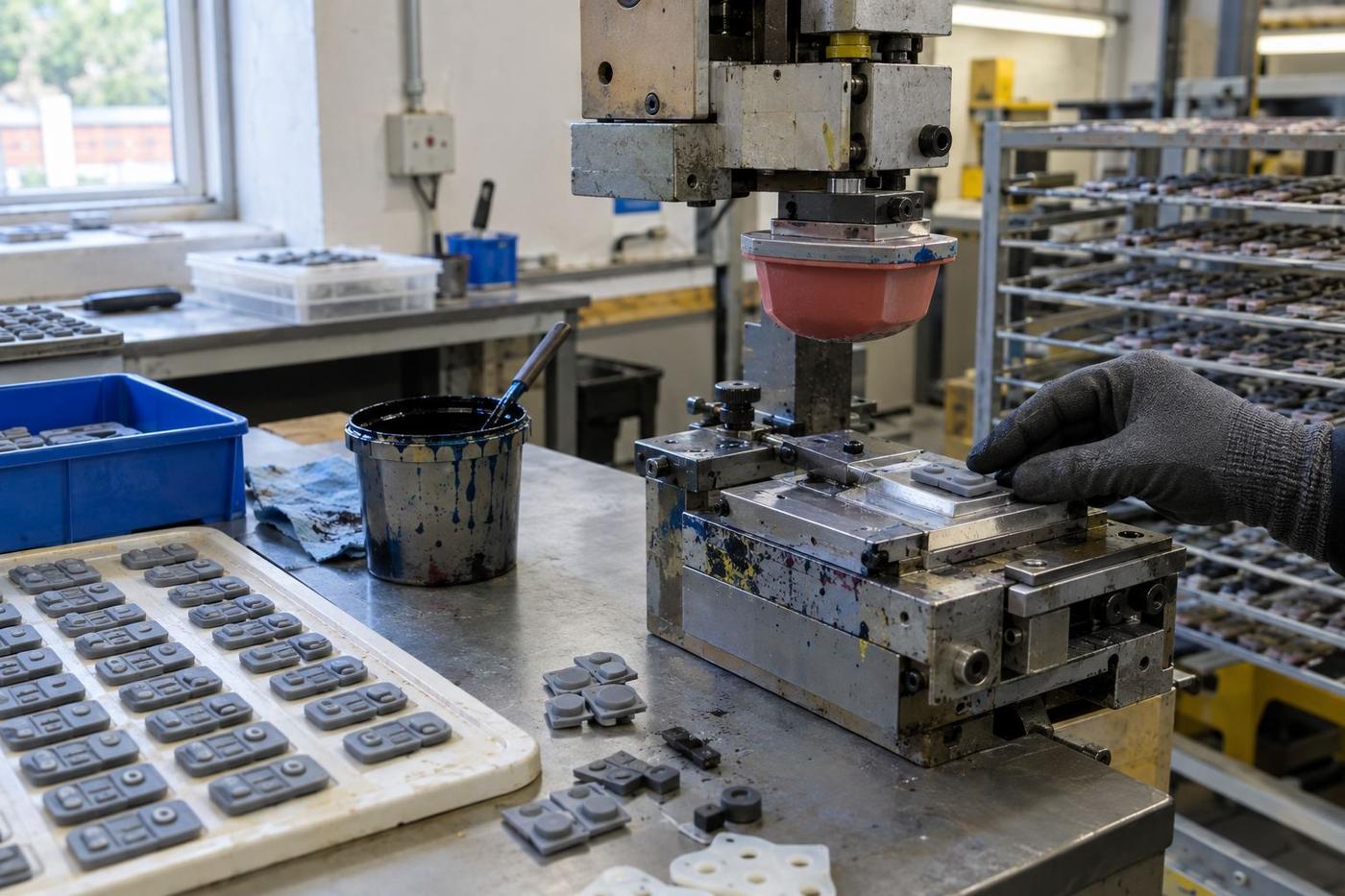
Pad printing
One or more colours of silicone ink.
Post-processing and finishing · Printing and marking
Logos, legends, part numbers and batch codes. Marking silicone takes the right inks, surface preparation and curing, otherwise it rubs off.
The detail
Silicone is deliberately hard to stick things to, which is why print on silicone fails when done carelessly. We use silicone inks, prepare surfaces where needed and cure the print properly.
Where print won't survive the use, we'll suggest laser marking or moulded-in marking instead.
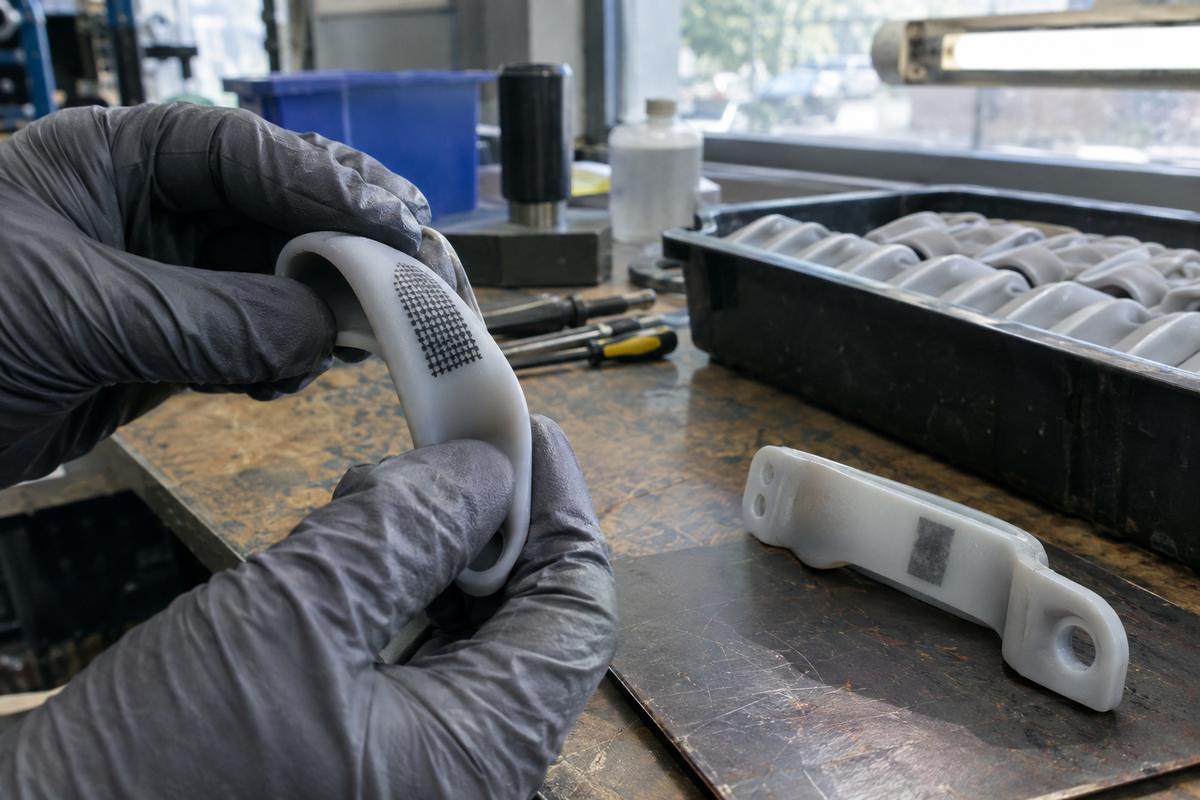
Where it fits
One or more colours of silicone ink.
Durable marks and etched legends.
Logos and text in the tool itself.
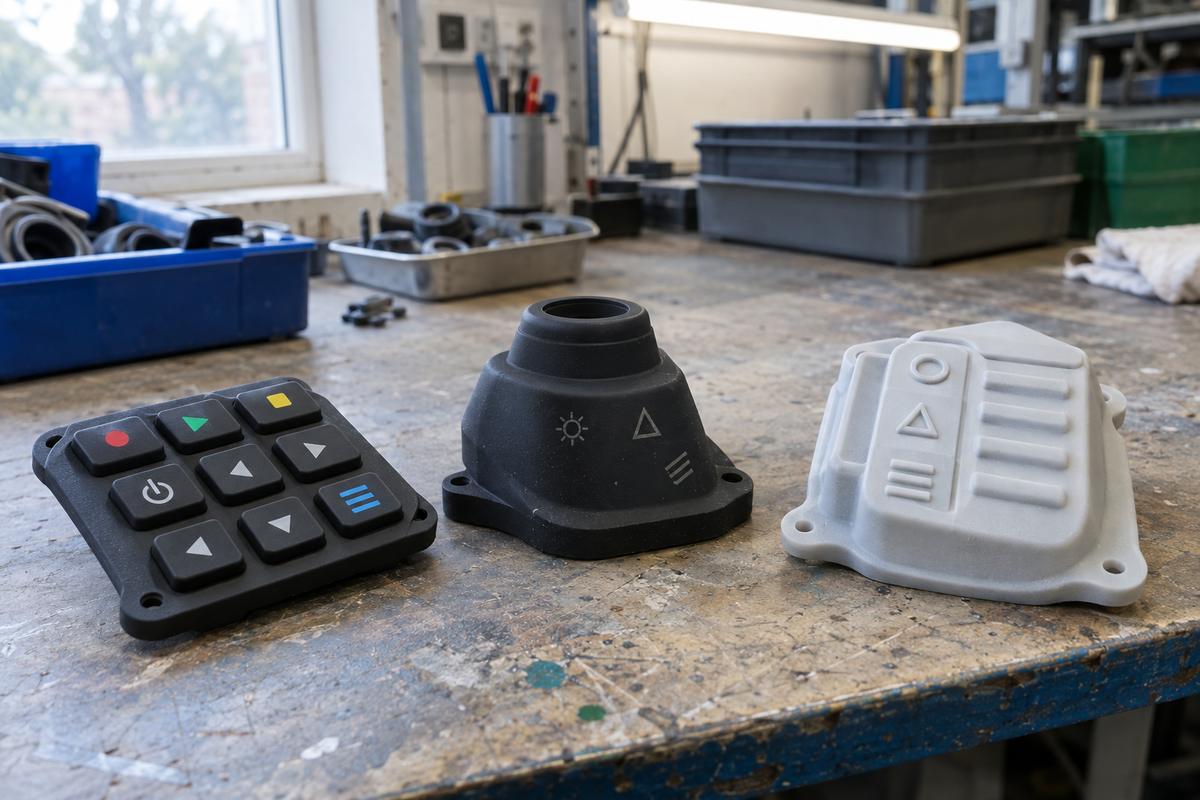
How we run it
Size, detail and colour checked.
Print, laser or moulded-in.
Rub and adhesion checks on samples.
Printed inline with the batch.
To quote it
Vector files.
Where on the part and what shape.
Handling, cleaning, abrasion.
Per batch.
Questions
Yes, silicone inks can be matched to references.
Yes, by print, laser or moulded date wheels.
Keep exploring
Flash is the thin skin of material left at the parting line. Cryogenic deflashing freezes it brittle and knocks it off, leaving clean edges…
Open this variantParts arriving checked, counted and packed the way your line uses them save your goods-in team hours.
Open this variantDeflash, trim, print, bond, assemble, inspect and pack. Everything that has to happen between the press opening and the part being ready…
Back to the overviewGet in touch
Rough annual volume, target unit price, and any deadlines. That's enough to work out whether compression, LSR injection or something else is the right tool.
Real people, a real workshop
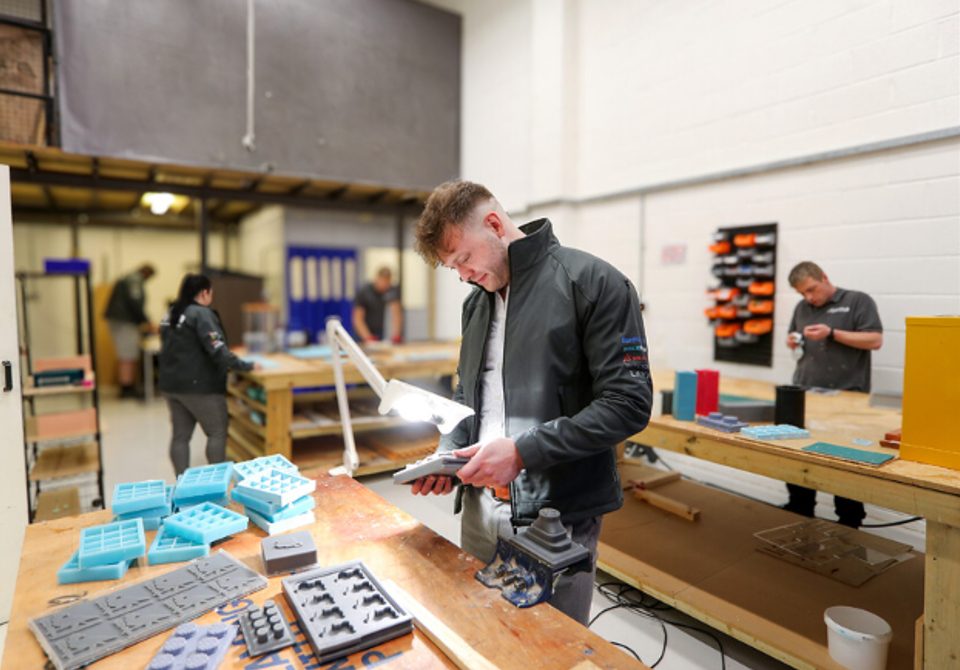
No call centre and no middlemen. When you contact TCI Products, you speak to the team who design, build and check your mould.

 Thomas LaneManaging Director
 George PrestonDesign & Project Manager
 Kelly BallingerHead of Partnerships
 Jim AndertonProduction Manager
 TheodoreEmployee Welfare